
Socotra scops owl
The Socotra scops owl is a small owl species endemic to the island of Socotra, Yemen. It is distinguished by its pale sandy-grey upperparts heavily streaked and barred, paler underparts with dark shaft streaks, vague facial disc margins, and very small ear-tufts. Its vocalization is a low-pitched series of repeated notes, similar to that of the Oriental scops owl.
Key Facts
- ›Endemic to the island of Socotra, Yemen.
- ›Characterized by streaked and barred sandy-grey plumage.
- ›Has very small ear-tufts and yellow eyes.
- ›Inhabits rocky semi-desert with scattered trees and bushes.
- ›Diet likely includes insects and small vertebrates.
- ›Breeding may occur around January to April.

Socotra Scops Owl
- Rocky semi-desert with scattered trees and bushes
- Areas with mature palm trees
Socotra Island
Insects, Small Vertebrates, Grasshoppers, Centipedes, Lizards, Moths
About Socotra scops owl
The Socotra scops owl (Otus socotranus) is a small owl species found exclusively on the island of Socotra, an archipelago located in the Indian Ocean off the coast of Yemen. Previously considered a subspecies of the African scops owl, it has been recognized as a distinct species due to differences in its plumage and vocalizations. Genetic research indicates its closest relatives are the Oriental scops owl and the Seychelles scops owl.
Description and Habitat
This owl is characterized by its pale sandy-grey upperparts, which are heavily streaked and barred, and paler underparts with darker shaft streaks and fine, dark barring. It has a plain facial disc with vague margins, sandy-colored shoulder stripes, very small ear-tufts, and distinct yellow eyes. The Socotra scops owl measures between 15 and 16 centimeters in length. Its preferred habitat includes rocky semi-desert areas dotted with trees and bushes, and it is most abundant in regions with mature palm trees.
Behavior and Diet
Much of the Socotra scops owl's behavior remains undocumented. It is believed to primarily subsist on insects and small vertebrates; stomach content analysis of one specimen revealed a grasshopper, a centipede, and two lizards. Observations have also noted it hawking for moths at dusk, similar to a nightjar. While breeding behavior is poorly understood, evidence suggests eggs are laid in early January, with young observed in February. Nesting likely occurs in natural cavities. A female with enlarged ovaries was found in April, indicating potential breeding activity during this period.
Source: Wikipedia ↗
Frequently Asked Questions
Where is the Socotra scops owl found?
The Socotra scops owl is found exclusively on the island of Socotra, which is located in the Indian Ocean off the Horn of Africa and is part of Yemen. It inhabits over 45% of the island, particularly in areas with mature palm trees.
What does the Socotra scops owl look like?
This small owl has pale sandy-grey upperparts that are heavily streaked and barred. Its underparts are paler with darker shaft streaks and fine dark barring. It features a plain facial disc with vague margins, sandy-colored shoulder stripes, very small ear-tufts, and yellow eyes.
What does the Socotra scops owl eat?
While not extensively documented, the Socotra scops owl is believed to primarily feed on insects and small vertebrates. A specimen's stomach contents revealed a grasshopper, a centipede, and two lizards. They have also been observed hunting moths at dusk.
What are the distinctive sounds of the Socotra scops owl?
The song of the Socotra scops owl is described as a repeated series of low-pitched notes. This vocalization is considered similar to the song of the Oriental scops owl.
What is the habitat of the Socotra scops owl?
The preferred habitat for the Socotra scops owl is rocky semi-desert areas that have scattered trees and bushes. They are most numerous in locations where mature palm trees are present on Socotra.
Related Owl species
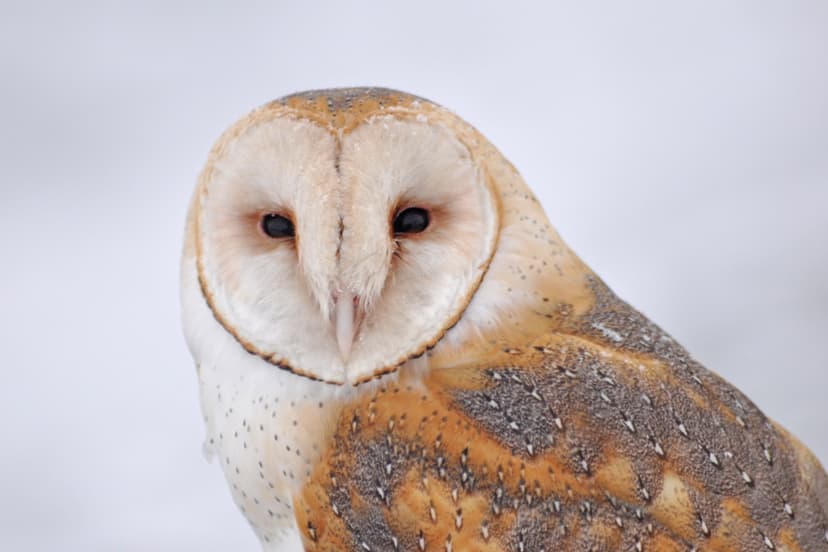
American barn owl
The American barn owl, scientifically known as Tyto furcata, is a widespread owl species native to North and South America. It is distinguished by its pale, heart-shaped facial disc, long wings, and undulating flight pattern, and plays a crucial role in rodent control due to its specialized diet.

Australian boobook
The Australian boobook (Ninox boobook) is the smallest owl species native to mainland Australia, also found in southern New Guinea, Timor, and the Sunda Islands. It is distinguished by its characteristic "boo-book" call and its predominantly dark-brown plumage marked with pale spots. This nocturnal hunter primarily preys on insects and small vertebrates, nesting in tree hollows and is considered of least concern by the IUCN.

Chaco owl
The Chaco owl is a species of owl native to southern South America, inhabiting the Gran Chaco region of Argentina, Bolivia, and Paraguay. It is distinguished by its lack of ear tufts, pale facial disk with dark lines, and barred plumage. Primarily nocturnal hunters, they are vocally active during twilight hours.