
Spot-bellied eagle-owl
The spot-bellied eagle-owl is a large bird of prey native to the Indian subcontinent and Southeast Asia, known for its formidable appearance and distinctive ear-tufts. This forest-dwelling species is characterized by its grayish-brown plumage with pale fulvous underparts marked by horizontal stripes and spots. It is notable for its powerful build and a unique, sometimes described as human-sounding, vocalization.
Key Facts
- ›Measures 50 to 65 cm (20 to 26 in) in length, making it the sixth longest owl species globally.
- ›Possesses very long, conspicuous ear-tufts that slant off to the sides.
- ›Its diet includes large prey such as pheasants, peafowl, and mammals up to 9 kg (19.8 lb).
- ›Nests are typically found in large tree hollows or abandoned nests of other large birds.
- ›The species is evaluated as Least Concern on the IUCN Red List.
- ›Known for a distinctive call that rises and falls in tone, sometimes likened to a 'Devil Bird'.

Forest Eagle-Owl, Maha Bakamuna
Primary Forests, Older Second Growth Forests, Dense Evergreen Forests, Moist Deciduous Forests, Tropical Valleys, Terrai, Shola In Lower Hills, Temperate Woodlands, Humid Tropical Rainforests, Tropical and Subtropical Foothills
Indian Subcontinent, Southeast Asia, Lower Himalayas, Burma, Laos, Vietnam, Sri Lanka, Southern Thailand
Pheasants, Indian Peafowl, Rodents, Golden Jackals, Hares, Indian Civets, Indian Spotted Chevrotains, Young Muntjacs, Indian Giant Squirrels, Juvenile Purple-Faced Langurs, Toque Monkeys, Indian Flying Foxes, Snakes, Lizards, Fish, Carrion
Not Specified
About Spot-bellied eagle-owl
The spot-bellied eagle-owl (Ketupa nipalensis), also known as the forest eagle-owl, is a large and imposing bird of prey found across the Indian subcontinent and Southeast Asia. This species is recognized for its formidable appearance, characterized by prominent, sideways-slanting ear-tufts and a stark, grayish-brown plumage with distinctive pale fulvous underparts marked by stripes and spots. It is one of the world's longer owl species, measuring between 50 to 65 cm in length.
Habitat and Distribution
This owl primarily inhabits dense primary or older second-growth forests, preferring evergreen and moist deciduous forests within its range. It can be found in various elevations, from sea level to the foothills of the Himalayas, and extends to tropical valleys and shola. Its distribution covers the Lower Himalayas eastward to Burma, extending into central Laos and Vietnam, and southwards throughout the Indian subcontinent to Sri Lanka and southern Thailand.
Behavior and Diet
The spot-bellied eagle-owl is a nocturnal predator, often concealed in dense foliage during the day. Its activity increases at dusk as it begins hunting. Despite being primarily nocturnal, it has been observed hunting during daylight hours, especially in undisturbed forests. Its diet is remarkably robust, featuring large prey such as pheasants, peafowl, and mammals weighing up to 9 kg. It also opportunistically preys on arboreal animals, reptiles, fish, and carrion. Its powerful talons are capable of dispatching prey quickly.
Vocalization and Breeding
A distinctive feature of the spot-bellied eagle-owl is its unusual vocalization, often described as a human-sounding scream that rises and falls in tone. Its territorial call consists of low hoots. Breeding typically occurs between December and March, with nests constructed in large tree hollows or abandoned nests of other large birds. Uniquely among owls, this species lays only one egg per clutch. They are known to be fiercely protective of their nests.
Conservation Status
The spot-bellied eagle-owl is currently evaluated as Least Concern on the IUCN Red List. While it requires extensive hunting and breeding territories and is susceptible to habitat loss due to deforestation, its wide geographic range and presence in diverse wooded habitats contribute to its status. The species is generally uncommon and occurs at low densities, but it continues to be found across a broad area.
Source: Wikipedia ↗
Frequently Asked Questions
What is the scientific name of the spot-bellied eagle-owl?
The scientific name of the spot-bellied eagle-owl is Ketupa nipalensis. It is sometimes referred to by the genus name Bubo in older classifications.
Where is the spot-bellied eagle-owl found?
This owl species is distributed across the Indian subcontinent and Southeast Asia, including the Lower Himalayas, Burma, Laos, Vietnam, Sri Lanka, and southern Thailand.
What does the spot-bellied eagle-owl eat?
Its diet is diverse and powerful, including large gamebirds like pheasants and peafowl, as well as mammals such as jackals, hares, civets, and even young muntjacs. They are also known to eat arboreal prey, snakes, lizards, fish, and carrion.
What makes the spot-bellied eagle-owl distinctive in appearance?
It is distinguished by its large size, stark grayish-brown coloration with pale fulvous underparts marked by stripes and spots, and particularly by its very long, conspicuous ear-tufts that slant sideways.
What is the conservation status of the spot-bellied eagle-owl?
The spot-bellied eagle-owl is listed as Least Concern on the IUCN Red List. While it requires large territories and is affected by deforestation, its wide range and presence across various habitats contribute to this status.
What is known about the breeding habits of this owl?
Breeding occurs from December to March, with nests usually in large tree hollows or abandoned nests of other large birds. A unique characteristic is that only one egg is recorded per clutch. They are known to be fierce defenders of their nests.
Related Owl species
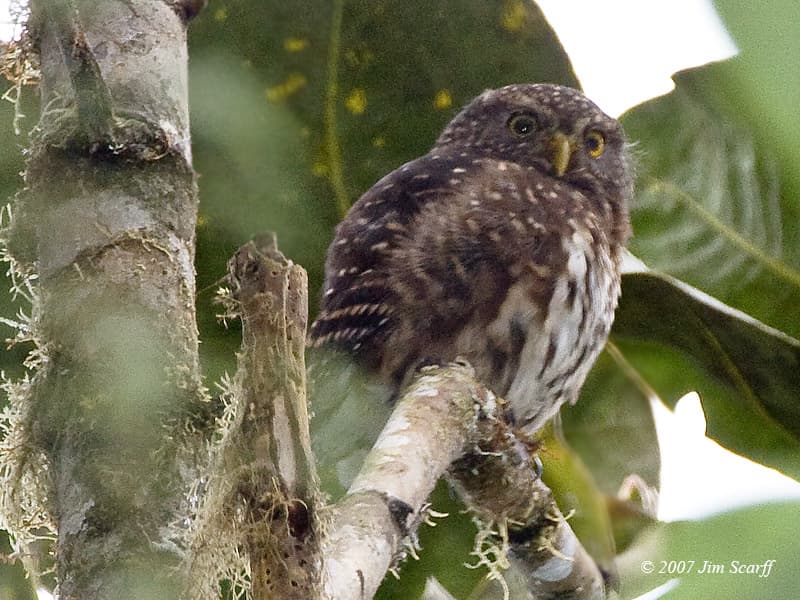
Andean pygmy owl
The Andean pygmy owl is a small owl species native to the Andes mountains of South America, found in countries like Colombia, Ecuador, Peru, and Venezuela. It is distinguished by its two color morphs, white facial markings including prominent "brows" and "moustaches," and a distinctive face-like pattern on its nape. This owl is an opportunistic predator, active both day and night, feeding on a variety of small invertebrates, birds, and mammals.
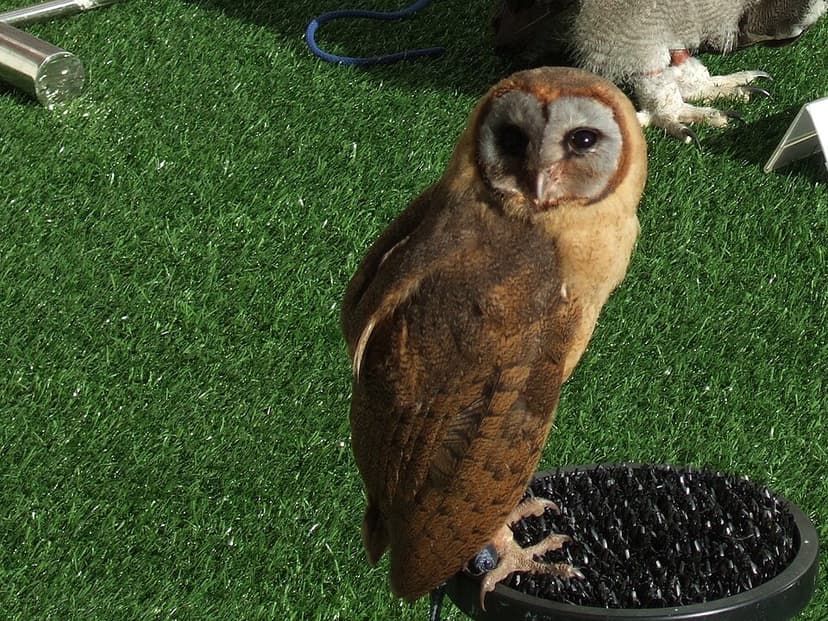
Ashy-faced owl
The ashy-faced owl (Tyto glaucops) is a species of barn owl native to Hispaniola and several islands in the Lesser Antilles. It is distinguished by its silvery-gray facial disc (in the nominate subspecies), a preference for a mix of open hunting spaces and canopy cover, and a varied diet of small vertebrates and invertebrates. This species plays a crucial role as a nocturnal predator in its island ecosystems.

Austral pygmy owl
The austral pygmy owl is a small owl species found in central and southern Chile and parts of southern Argentina. It is distinctive for its gray-brown and red color morphs and its ability to hunt both during the day and at night. This owl is known for its varied vocalizations, including contact whistles, territorial trills, and courtship calls.