
Spotted eagle-owl
The Spotted eagle-owl is a medium-sized owl native to Sub-Saharan Africa and the Arabian Peninsula, notable for being one of the smallest eagle owls. It is adaptable, often living near human habitation and in urban environments, distinguishing it from more secluded raptors. Its diet is broad, and it communicates with distinctive hoots, with males and females having different calls.
Key Facts
- ›It is a medium-sized owl, measuring 45 cm in length.
- ›Its diet is varied, including rodents, small mammals, birds, insects, and reptiles.
- ›Spotted eagle-owls are monogamous and can breed at around one year of age.
- ›They typically nest on the ground or in large cavities, laying two to four eggs.
- ›Their lifespan is up to 10 years in the wild and up to 20 years in captivity.
- ›They are the most common owl species in Southern Africa and are not globally threatened.

African Spotted Eagle-Owl, African Eagle-Owl
Rocky Areas, Open Areas, Ground, Rocky Outcrops, Tree Crowns, Thorn Savanna, Suburban Gardens
Sub-Saharan Africa, Arabian Peninsula
Rodents, Small Mammals, Birds, Insects, Arthropods, Reptiles, Frogs, Carrion
Grey Loerie, Car Collisions, Electric Wires, Persecution, Secondary Poisoning, Parasite Infections
About Spotted eagle-owl
The Spotted eagle-owl (Bubo africanus) is a medium-sized owl species native to Sub-Saharan Africa and the Arabian Peninsula, distinguished as one of the smallest members of the eagle owl group. It is known for its adaptability, frequently inhabiting urban environments and living in close proximity to human settlements, earning it the nickname "urban owl." This species is characterized by its dusky brown upperparts, off-white barred underparts, pale ochre facial disk, yellow eyes, and prominent ear-tufts.
Distribution and Habitat
Spotted eagle-owls are the most common owl species in Southern Africa and maintain healthy populations across much of their range. They can be found in various habitats, including thorn savanna and suburban gardens, and are often observed roosting in open areas such as on the ground, rocky outcrops, and tree crowns. Their ability to thrive near human habitation is a significant factor in their widespread presence.
Diet and Foraging
This owl is a generalist feeder with a broad diet that includes rodents, small mammals, birds, insects, arthropods, reptiles, and frogs. While they consume carrion, their primary preference is for small mammals. They often swallow prey whole, a process that can involve pauses and head-jerking. Undigested materials are regurgitated as pellets within 24 hours. When prey is too large to swallow whole, they tear it into pieces. Males are responsible for hunting and feeding the female and young, especially when the female is incubating or cannot leave the nest.
Behavior and Vocalization
The calls of the Spotted eagle-owl are typically musical hoots. Males usually produce a double hoot ("Hooo hooopoooo"), while females respond with a triple hoot ("Hooo hoo hooo"). Young owls, before they are fully adult, emit hisses and beak snaps when alarmed, and also possess a whickering protest call and a softer croaking sound when content. Like other owls, they are subject to daylight harassment by other birds when detected.
Reproduction and Life Cycle
Spotted eagle-owls are monogamous and can begin breeding around one year of age. The breeding season typically runs from late July to early February. Nests are commonly made on the ground or in large cavities. The female lays two to four eggs, with an incubation period of approximately 32 days. Owlets leave the nest around five weeks of age and spend about ten days on the ground before they can fly, learning essential hunting skills during this time. They typically fledge at seven weeks but remain with their parents for several weeks afterward. Their lifespan is up to 10 years in the wild and up to 20 years in captivity.
Conservation
The Spotted eagle-owl is not considered globally threatened and is abundant in its natural habitats. However, in South Africa, it is illegal to capture or keep these owls without the appropriate permits. Major causes of mortality include car collisions, electrocution by wires, persecution, secondary poisoning, and parasite infections, with juveniles and newly fledged birds being particularly vulnerable.
Source: Wikipedia ↗
Frequently Asked Questions
What is the scientific name of the Spotted eagle-owl?
The scientific name of the Spotted eagle-owl is Bubo africanus. It was previously considered the same species as the greyish eagle-owl but is now classified separately.
Where are Spotted eagle-owls found?
Spotted eagle-owls are widespread throughout Sub-Saharan Africa and the Arabian Peninsula. They are particularly common in Southern Africa and can be found in thorn savanna, suburban gardens, and even close to human settlements.
What do Spotted eagle-owls eat?
Their diet is diverse and includes rodents, small mammals, birds, insects, arthropods, reptiles, and frogs. They show a preference for small mammals like rodents and shrews, and will also consume carrion.
What are the calls of a Spotted eagle-owl like?
The calls are typically musical eagle-owl hoots. Males usually hoot twice with 'Hooo hooopoooo', while females respond with three hoots, 'Hooo hoo hooo'.
How do Spotted eagle-owls reproduce?
They are monogamous and breed from late July to early February. The female lays two to four eggs, which she incubates for about 32 days. Owlets can fly at around seven weeks but stay with their parents for several weeks afterward.
What is the conservation status of the Spotted eagle-owl?
The Spotted eagle-owl is not globally threatened and is considered the most common owl species in many of its habitats. However, in South Africa, it is illegal to capture or keep indigenous owls without a permit.
Related Owl species
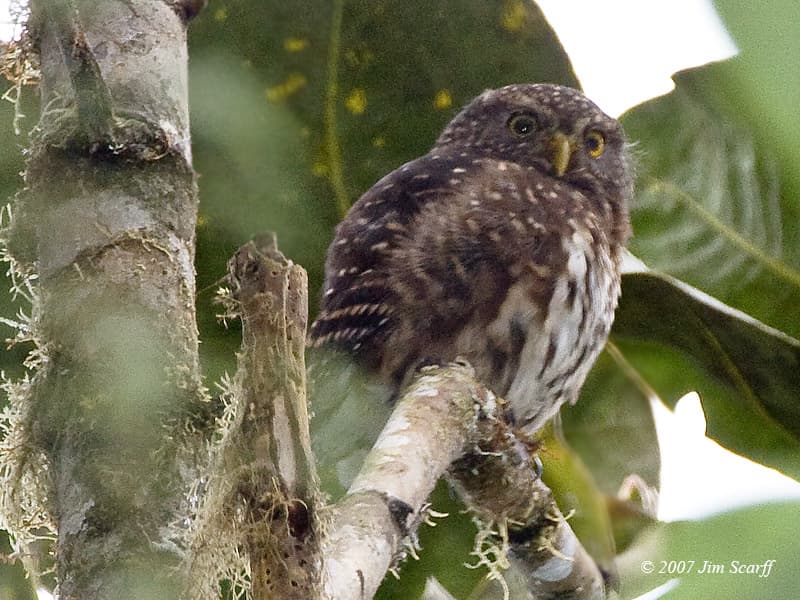
Andean pygmy owl
The Andean pygmy owl is a small owl species native to the Andes mountains of South America, found in countries like Colombia, Ecuador, Peru, and Venezuela. It is distinguished by its two color morphs, white facial markings including prominent "brows" and "moustaches," and a distinctive face-like pattern on its nape. This owl is an opportunistic predator, active both day and night, feeding on a variety of small invertebrates, birds, and mammals.
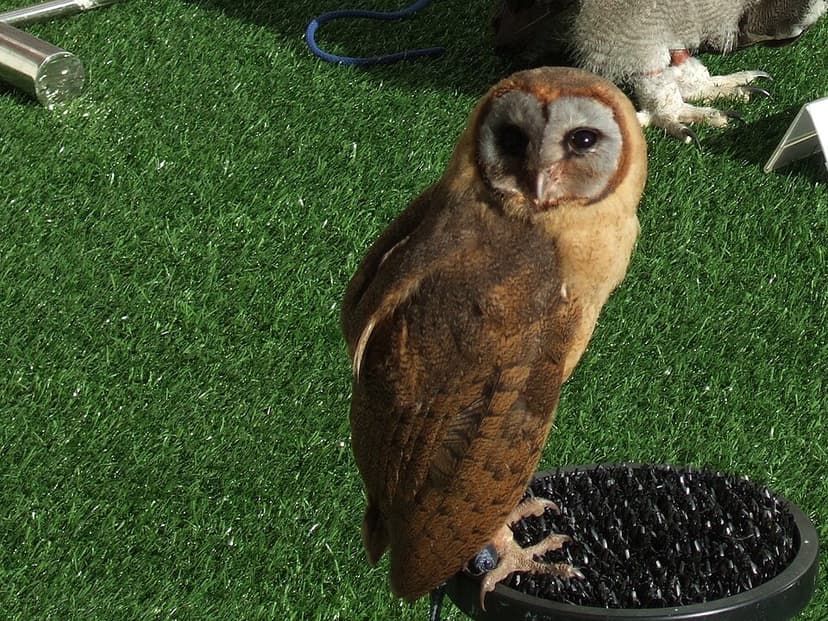
Ashy-faced owl
The ashy-faced owl (Tyto glaucops) is a species of barn owl native to Hispaniola and several islands in the Lesser Antilles. It is distinguished by its silvery-gray facial disc (in the nominate subspecies), a preference for a mix of open hunting spaces and canopy cover, and a varied diet of small vertebrates and invertebrates. This species plays a crucial role as a nocturnal predator in its island ecosystems.

Austral pygmy owl
The austral pygmy owl is a small owl species found in central and southern Chile and parts of southern Argentina. It is distinctive for its gray-brown and red color morphs and its ability to hunt both during the day and at night. This owl is known for its varied vocalizations, including contact whistles, territorial trills, and courtship calls.