
Striped owl
The striped owl is a medium-sized owl native to South and Central America, characterized by its prominent ear tufts and a distinctive black-rimmed facial disk. It inhabits a variety of environments, from woodlands and marshes to open grassy areas and rainforests. This species is notable for its relatively shorter, rounder wings compared to its close relatives.
Key Facts
- ›Native to South and Central America.
- ›Distinctive feature: large ear tufts and black-rimmed facial disk.
- ›Inhabits diverse environments including riparian woodlands, marshes, savannahs, and rainforests.
- ›Possesses shorter, rounder wings than many related owl species.
- ›Classified as 'Least Concern' by the IUCN due to a large range and population.

Striped Owl
Riparian Woodlands, Marshes, Savannahs, Grassy Open Areas, Tropical Rainforests
South America, Central America
About Striped owl
The Striped Owl
The striped owl (Asio clamator) is a medium-sized owl native to a broad swathe of South and Central America. It is easily identified by its prominent ear tufts, which are elongated feathers on its crown, and a distinctive facial disk that is brownish-white and rimmed with black. Its beak is black, and it has striking cinnamon-colored eyes.
Taxonomy and Classification
Historically, the striped owl has been placed in various genera, including Rhinoptynx and Pseudoscops. However, modern molecular studies, particularly those examining mitochondrial DNA, have confirmed its current placement within the genus Asio. The species was formally described by Louis Pierre Vieillot in 1808, with the specific epithet "clamator" being Latin for "shouter."
Description and Habitat
Adult striped owls typically measure between 30 and 38 cm (12–15 inches) in length and weigh between 320 and 546 grams (11.3–19.3 ounces). Its plumage features brown upperparts with black stripes and fine vermiculation, while its underparts are buff-colored with heavy black streaking on the breast. A notable characteristic is its shorter, rounder wings compared to many of its close relatives. The striped owl is an adaptable species, inhabiting a diverse range of environments. These include riparian woodlands, marshes, savannahs, grassy open areas, and tropical rainforests. It can be found from sea level up to an altitude of 1,400 meters (4,600 feet) and above.
Distribution and Conservation
The range of the striped owl is extensive, covering much of South and Central America. While its exact distribution is not always well-documented, likely due to its nocturnal habits, it is known to occur in countries such as Argentina, Belize, Bolivia, Brazil, Colombia, Costa Rica, Ecuador, El Salvador, French Guiana, Guatemala, Guyana, Honduras, Mexico, Nicaragua, Panama, Paraguay, Peru, Suriname, Tobago, Uruguay, and Venezuela. The International Union for Conservation of Nature (IUCN) classifies the striped owl as 'Least Concern.' This status is attributed to its very large range and substantial population, estimated to be between 500,000 and 5.0 million individuals, even though the population is believed to be decreasing. The species faces no particular threats that endanger its long-term survival.
Source: Wikipedia ↗
Frequently Asked Questions
What are the distinctive physical features of the striped owl?
The striped owl is recognized by its prominent, ear-like tufts of feathers on its crown. It also has a brownish-white facial disk that is rimmed with black and cinnamon-colored eyes.
Where is the striped owl found?
This owl is native to much of South and Central America, with its range extending across numerous countries including Argentina, Brazil, Mexico, and Peru. It can be found in a variety of habitats from sea level up to high altitudes.
What kind of habitats does the striped owl prefer?
The striped owl is adaptable and can be found in riparian woodlands, marshes, savannahs, grassy open areas, and tropical rainforests. Its habitat preferences span from sea level to elevations of 1,400 meters and above.
What is the conservation status of the striped owl?
The striped owl is classified as 'Least Concern' by the IUCN. This designation is due to its very large geographic range and estimated population of 500,000 to 5.0 million individuals, despite a believed decreasing population trend.
What is the scientific classification of the striped owl?
The striped owl belongs to the genus Asio. Molecular studies comparing mitochondrial DNA sequences have confirmed its placement within this genus.
Related Owl species
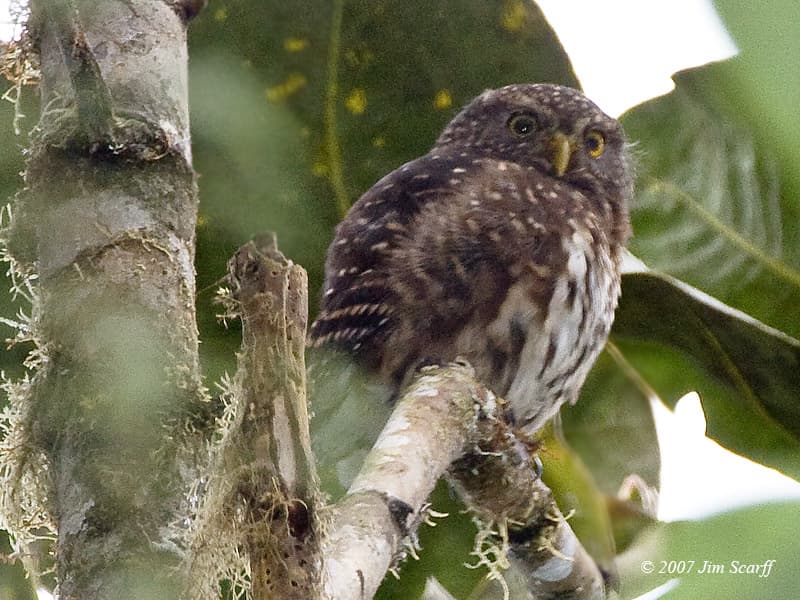
Andean pygmy owl
The Andean pygmy owl is a small owl species native to the Andes mountains of South America, found in countries like Colombia, Ecuador, Peru, and Venezuela. It is distinguished by its two color morphs, white facial markings including prominent "brows" and "moustaches," and a distinctive face-like pattern on its nape. This owl is an opportunistic predator, active both day and night, feeding on a variety of small invertebrates, birds, and mammals.
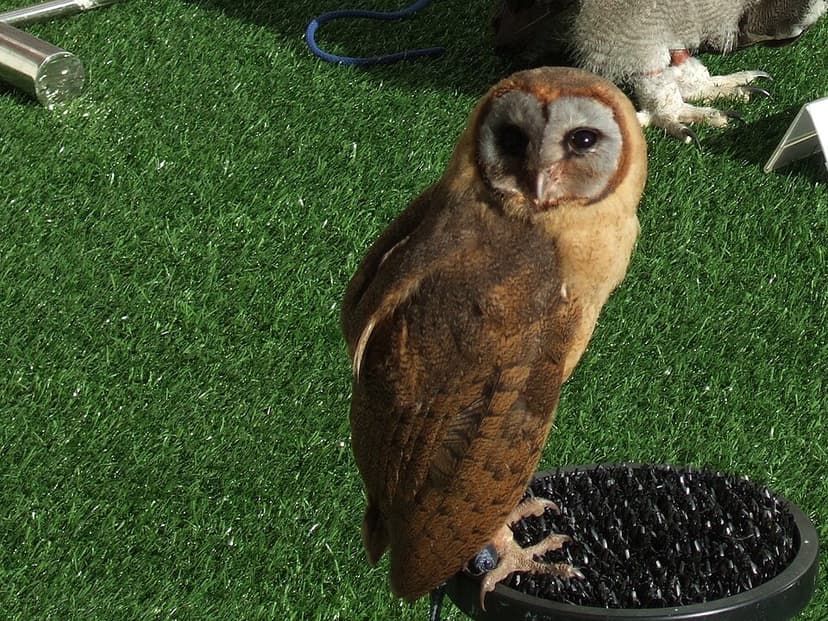
Ashy-faced owl
The ashy-faced owl (Tyto glaucops) is a species of barn owl native to Hispaniola and several islands in the Lesser Antilles. It is distinguished by its silvery-gray facial disc (in the nominate subspecies), a preference for a mix of open hunting spaces and canopy cover, and a varied diet of small vertebrates and invertebrates. This species plays a crucial role as a nocturnal predator in its island ecosystems.

Austral pygmy owl
The austral pygmy owl is a small owl species found in central and southern Chile and parts of southern Argentina. It is distinctive for its gray-brown and red color morphs and its ability to hunt both during the day and at night. This owl is known for its varied vocalizations, including contact whistles, territorial trills, and courtship calls.