
Stygian owl
The Stygian owl (Asio stygius) is a medium-sized, dark-plumaged owl found across Mexico, Central America, the Caribbean, and South America. It is distinguished by its long, dark ear tufts, blackish facial disk, and a pale border around its face. This owl inhabits a variety of open landscapes, from pine forests to urban parks, and is a nocturnal hunter.
Key Facts
- ›Found in Mexico, Central America, the Caribbean, and ten South American countries.
- ›Characterized by long, dark ear tufts and a blackish facial disk with a pale border.
- ›Inhabits diverse open landscapes, including montane forests, thorn scrub, and urban parks.
- ›Primarily feeds on birds, but also consumes bats, small mammals, frogs, and insects.
- ›Nests on the ground or reuses nests of other species in trees.
- ›Assessed by the IUCN as a species of least concern.
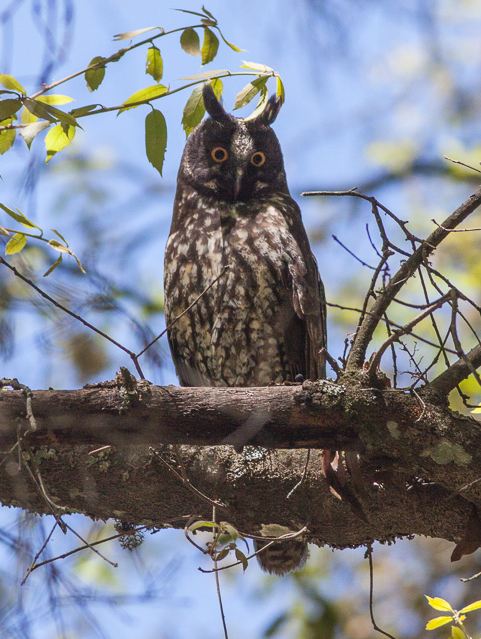
Siguapa
Montane Pine Forests, Pine-Oak Forests, Cloud Forests, Thorn Scrub, Cerrado, Pine Plantations, Urban Parks
Mexico, Central America, Cuba, Hispaniola, South America
Birds, Bats, Mammals, Frogs, Insects
About Stygian owl
The Stygian owl (Asio stygius), also known by the common name siguapa in some regions, is a medium-sized "typical owl" belonging to the subfamily Striginae. Its name, "Stygian," alludes to its dark, often dismal appearance, referencing the River Styx of Greek mythology.
Distribution and Habitat
This owl is widespread, found from Mexico through parts of Central America, in the Caribbean islands of Cuba and Hispaniola, and across ten countries in South America. Its range extends to include vagrant sightings in Texas and Florida. The Stygian owl occupies a broad spectrum of habitats, from sea level up to 3,000 meters (9,800 feet). It prefers fairly open environments rather than dense forests or treeless grasslands. Suitable habitats include montane pine and pine-oak forests, cloud forests, thorn scrub, cerrado, pine plantations, and even urban parks, demonstrating a notable adaptability.
Physical Description
Adult Stygian owls typically measure between 38 to 46 cm (15 to 18 inches) in length and weigh between 400 to 675 grams (14 to 24 ounces). Both sexes share a similar, very dark plumage. A distinctive feature is the presence of long, dark feathers that project upwards from the head, commonly referred to as "ear tufts." The facial disk is blackish, outlined by a paler border, and the forehead is whitish. The upperparts are dark with buff streaks and bars, while the underparts are a dingy buff marked with dark brown or blackish barring and streaks. Their eyes are typically yellow, though they can appear crimson under certain lighting conditions due to their reflective nature. The bill is dark, ranging from blue-black to blackish, and their feet are dark gray or brownish pink.
Behavior and Diet
The Stygian owl is a strictly nocturnal hunter. Its diet is varied, with birds forming the largest component, ranging from small species to those as large as the lesser nothura. It is believed that most avian prey is caught while on its roosts at night. Beyond birds, the Stygian owl also preys on bats, an unusual food source for many owls. Other prey includes some small mammals, such as Hispaniolan solenodons, as well as frogs and insects. Notably, rodents do not appear to be a significant part of their diet, distinguishing them from many other owl species.
Reproduction
Information regarding the breeding habits of the Stygian owl is not extensively documented. Their breeding seasons vary considerably across their wide geographic range. Males are known to perform a wing-clapping display in flight. Nests are constructed either on the ground or in trees, with evidence suggesting they reuse nests built by other bird species. Typically, a clutch consists of two to three eggs.
Vocalization
The calls of the Stygian owl have been described in various ways. Males are known to produce a single, deep, emphatic sound, often rendered as "woof" or "wupf," or a very low and loud "hu" or "hu-hu." Females have distinct calls, including a short, screamed "rre-ehhr" or "mehrr" when communicating with the male, and also a short, catlike "miah."
Conservation Status
The International Union for Conservation of Nature (IUCN) has assessed the Stygian owl as a species of least concern. This classification is based on its very large range and an estimated population of 50,000 to 500,000 mature individuals. However, the population is believed to be in decline, though no specific threats have been identified to date.
Source: Wikipedia ↗
Frequently Asked Questions
What is the scientific name of the Stygian owl?
The scientific name of the Stygian owl is Asio stygius. This binomial nomenclature classifies it within the genus Asio.
What does the Stygian owl look like?
The Stygian owl is a medium-sized owl, typically 38 to 46 cm long, with very dark plumage. It features long, dark feathers that project upward like 'ears', a blackish face with a pale border, and a whitish forehead. Its eyes are yellow, and its bill is dark.
Where does the Stygian owl live?
The Stygian owl is found in Mexico, parts of Central America, Cuba, Hispaniola, and ten countries in South America. It inhabits a wide range of elevations and prefers fairly open landscapes.
What does the Stygian owl eat?
The Stygian owl is a nocturnal predator whose diet consists mainly of birds. It also preys on bats, some small mammals, frogs, and insects. Notably, rodents do not appear to be a part of its diet.
What is the conservation status of the Stygian owl?
The Stygian owl is listed as a species of least concern by the IUCN. It has a very large range and an estimated population of 50,000 to 500,000 mature individuals, although this population is believed to be decreasing.
What are the distinctive sounds of the Stygian owl?
The vocalizations of the Stygian owl vary. Males may emit a single deep 'woof' or 'wupf,' or a low, loud 'hu' or 'hu-hu.' Females can produce a short, screamed 'rre-ehhr' or 'mehrr,' and also a catlike 'miah.'
Related Owl species
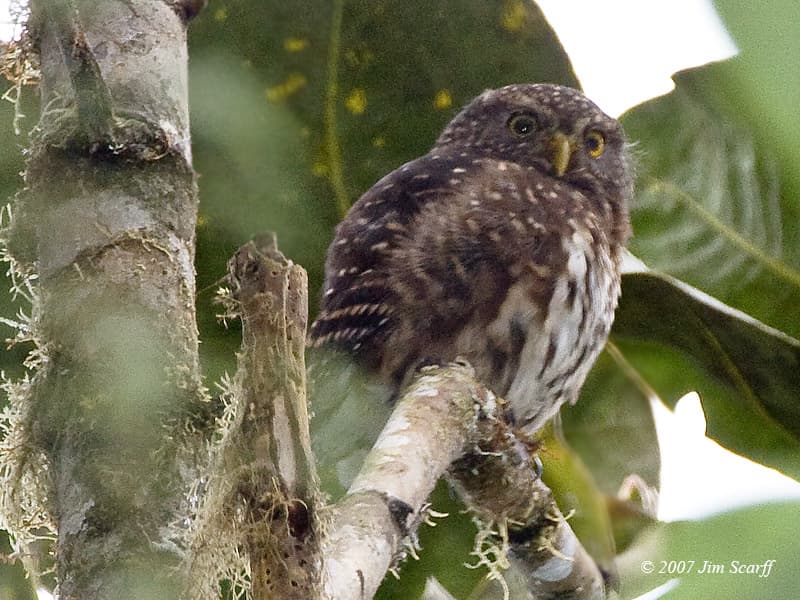
Andean pygmy owl
The Andean pygmy owl is a small owl species native to the Andes mountains of South America, found in countries like Colombia, Ecuador, Peru, and Venezuela. It is distinguished by its two color morphs, white facial markings including prominent "brows" and "moustaches," and a distinctive face-like pattern on its nape. This owl is an opportunistic predator, active both day and night, feeding on a variety of small invertebrates, birds, and mammals.
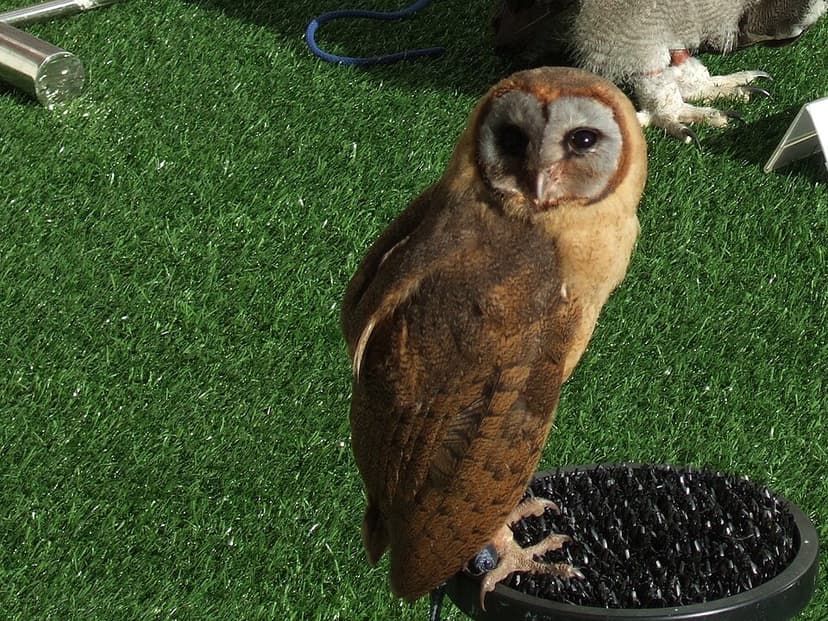
Ashy-faced owl
The ashy-faced owl (Tyto glaucops) is a species of barn owl native to Hispaniola and several islands in the Lesser Antilles. It is distinguished by its silvery-gray facial disc (in the nominate subspecies), a preference for a mix of open hunting spaces and canopy cover, and a varied diet of small vertebrates and invertebrates. This species plays a crucial role as a nocturnal predator in its island ecosystems.

Austral pygmy owl
The austral pygmy owl is a small owl species found in central and southern Chile and parts of southern Argentina. It is distinctive for its gray-brown and red color morphs and its ability to hunt both during the day and at night. This owl is known for its varied vocalizations, including contact whistles, territorial trills, and courtship calls.