
Sulu boobook
The Sulu boobook (Ninox reyi) is a medium-sized owl endemic to the Sulu Archipelago in the Philippines. Distinctive for its clucking call, heavy barring, and white throat-patch, it inhabits tropical moist lowland forests. This species is currently classified as vulnerable due to significant threats from habitat loss.
Key Facts
- ›Endemic to the Sulu Archipelago in the Philippines.
- ›Distinguished by a unique clucking call, unlike the screeching of related hawk-owls.
- ›Features heavy barring on its head and belly, with a white throat-patch and facial disk.
- ›Inhabits tropical moist lowland primary and secondary forests, occasionally seen at forest edges and plantations.
- ›Classified as Vulnerable by the IUCN due to severe habitat loss.
- ›Population is estimated to be between 2,500 and 7,500 mature individuals.
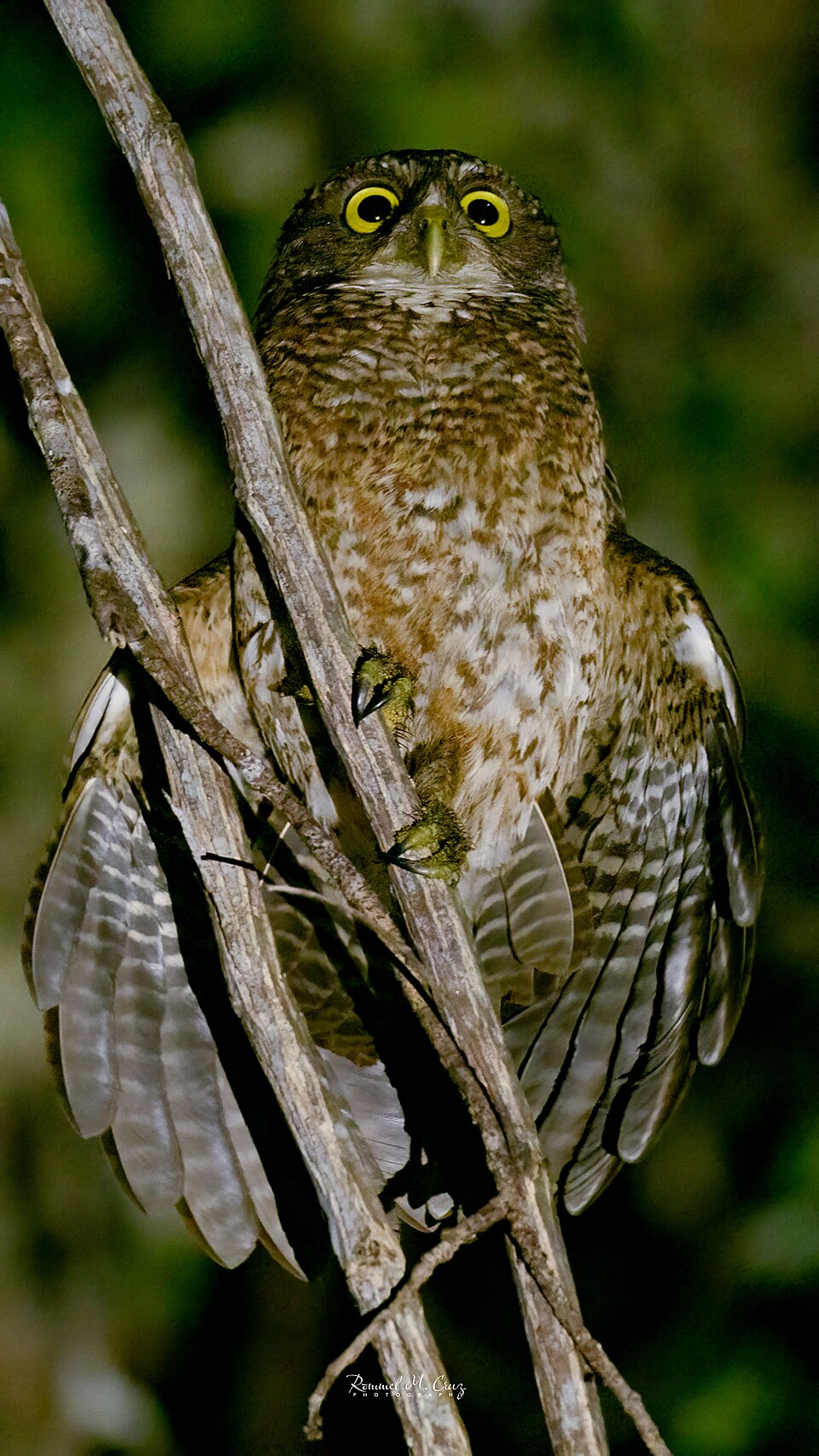
Sulu Hawk-Owl
Tropical Moist Lowland Primary Forest, Tropical Moist Lowland Secondary Forest, Forest Edge, Clearings, Plantations, Mature Mangroves, Large Trees In Vicinity of Villages
Sulu Archipelago, Philippines
About Sulu boobook
The Sulu boobook, scientifically known as Ninox reyi, is a species of owl endemic to the Sulu Archipelago in the Philippines. Previously considered a subspecies of the Philippine hawk-owl, it was reclassified as a distinct species in 2012 based on vocal and other evidence. This owl is relatively small, measuring about 20 cm in height, making it similar in size to the Mindoro boobook within the Philippine hawk-owl species complex.
Description and Distinguishing Features
A key characteristic that sets the Sulu boobook apart is its vocalization; it produces a unique series of clucks, differing from the typical screeching sounds made by other Philippine hawk-owls. Physically, it is distinguished by heavy barring patterns on its head and belly, a noticeable white throat-patch, and a well-defined facial disk. Its size places it between the larger Camiguin boobook and Romblon boobook (around 25 cm) and the smaller Luzon boobook and Mindanao boobook (15-18 cm).
Habitat and Distribution
The Sulu boobook primarily inhabits tropical moist lowland forests, encompassing both primary and secondary growth, up to an elevation of 700 meters above sea level. It is also occasionally observed in areas adjacent to forests, such as clearings and agricultural plantations. On the island of Tawi-Tawi, the species has been noted in mature mangrove ecosystems and among large trees situated near human settlements.
Conservation Status and Threats
The International Union for Conservation of Nature (IUCN) Red List classifies the Sulu boobook as Vulnerable. Population estimates suggest between 2,500 and 7,500 mature individuals exist as of 2025. The most significant threat to the species is habitat loss, driven by extensive clearance of forest habitats. This destruction is a result of legal and illegal logging, mining operations, conversion of land for agriculture (including palm oil plantations), and increasing urbanization. The rapid degradation of its habitat in the Sulu Archipelago places many endemic species, including the Sulu boobook, at risk of extinction.
Source: Wikipedia ↗
Frequently Asked Questions
What makes the Sulu boobook distinctive?
The Sulu boobook is unique among its species complex for its call, which consists of a series of clucks rather than the typical screeching of other Philippine hawk-owls. It is also recognized by its heavy barring on the head and belly, a white throat-patch, and a distinct facial disk.
What is the habitat of the Sulu boobook?
This owl is found in tropical moist lowland primary and secondary forests, typically below 700 meters above sea level. It can also be observed at forest edges, clearings, and plantations. On Tawi-Tawi, it has been observed in mature mangroves and large trees near villages.
What is the conservation status of the Sulu boobook?
The Sulu boobook is listed as Vulnerable on the IUCN Red List. This classification is primarily due to ongoing habitat loss caused by logging, mining, conversion to farmlands and palm oil plantations, and urbanization.
What are the main threats to the Sulu boobook?
The most significant threat to the Sulu boobook is habitat loss. Wholesale clearance of forest habitats, driven by legal and illegal logging, mining, agricultural expansion, and urbanization, severely impacts its survival.
How large is the Sulu boobook?
The Sulu boobook is a medium-sized owl, measuring approximately 20 cm in height. This places it in size between larger species like the Camiguin boobook and smaller ones like the Luzon boobook.
Related Owl species

Cebu boobook
The Cebu boobook is a species of owl found exclusively in the Philippines, characterized by its earless appearance and similarity between sexes. It is notable for being one of the largest owls within the Philippine hawk-owl complex, nesting in natural tree cavities. Its survival is critically threatened by extensive habitat loss.

Christmas boobook
The Christmas boobook (Ninox natalis), also known as the Christmas Island hawk owl, is a small, rufous-brown owl endemic to Christmas Island in the Indian Ocean. It is characterized by its barred breast, dark chestnut facial mask, and a distinctive double-noted hoot. This species faces threats from habitat destruction and introduced species, leading to its vulnerable conservation status.

Cloud-forest pygmy owl
The Cloud-forest pygmy owl, scientifically known as Glaucidium nubicola, is a small owl species found in the cloud forests of western Colombia and northwestern Ecuador. It is distinguished by its dark brown plumage, a rounded head without ear tufts, and distinctive "false eyespots" on its nape that likely deter predators.