
Sunda scops owl
The Sunda scops owl is a small brown owl native to the Sunda Islands, found across Southeast Asia. It is distinguished by its speckled and streaked plumage, light collar, and dark eyes, setting it apart from other scops owl species. This owl primarily inhabits forests and gardens, feeding on insects and small animals, with a particular preference for rats.
Key Facts
- ›Native to the Sunda Islands, Malay Peninsula, Borneo, Sumatra, and Java.
- ›Small size, measuring 20-25 cm in length.
- ›Plumage is speckled brown on upper parts and streaked on lower parts.
- ›Diet consists mainly of insects and small animals, especially rats.
- ›Breeds in tree hollows, laying up to three eggs.
- ›Classified as 'Least Concern' by the IUCN Red List.

Sunda Scops Owl
Forests, Gardens
Asia, Sunda Islands
Insects, Rats, Small Animals, Small Fish, Lizards, Crickets, Beetles’ Larvae
About Sunda scops owl
The Sunda scops owl (Otus lempiji) is a small owl species native to the Sunda Islands and surrounding regions of Southeast Asia. Its distribution encompasses the Malay Peninsula, Singapore, Borneo, Sumatra, and Java. This species is primarily found in forested areas and gardens, sometimes being attracted to the vicinity of buildings.
Physical Characteristics and Identification
Measuring between 20 to 25 centimeters in length and weighing between 100 to 170 grams, the Sunda scops owl is a diminutive raptor. Its plumage is a distinctive brown, featuring speckles on its upper parts and streaks on its lower body. Key identifying features include a light-colored collar and dark eyes, which help distinguish it from similar scops owl species such as the reddish scops owl, mountain scops owl, Oriental scops owl, and Rajah scops owl.
Diet and Foraging
The diet of the Sunda scops owl is varied, consisting mainly of insects and small animals. While it preys on a range of creatures including small fish, lizards, crickets, and beetle larvae, its most preferred food source is rats.
Behavior and Reproduction
Sunda scops owls are known for their territorial nature and aggressive defense when threatened by conspecifics. Their breeding habits involve lining nests in tree hollows with plant fiber. The breeding season typically spans from January to April, with occasional extensions into June or July. Females are noted for their vocal responses to perceived threats, warning intruders away.
Vocalizations
The call of the Sunda scops owl is described as a hooting yelp, interspersed with periods of silence. These vocalizations are crucial for marking territory, and research indicates that each owl possesses unique vocal characteristics, allowing for improved territory proclamation and differentiation from competitors.
Conservation Status
The Sunda scops owl is currently listed as 'Least Concern' on the IUCN Red List of threatened species. This status reflects its commonality throughout its range, provided suitable habitat is available.
Source: Wikipedia ↗
Frequently Asked Questions
What is the scientific name of the Sunda scops owl?
The scientific name of the Sunda scops owl is Otus lempiji. Some authors consider this taxon to be a subspecies of Otus bakkamoena.
Where is the Sunda scops owl found?
The Sunda scops owl is distributed across the Malay Peninsula, Singapore, Borneo, Sumatra, and Java. It primarily inhabits forests and gardens.
What does the Sunda scops owl eat?
The diet of the Sunda scops owl primarily includes insects and small animals such as rats, small fish, lizards, crickets, and beetle larvae. Rats are its most preferred prey.
How does the Sunda scops owl communicate?
The Sunda scops owl's call is a hooting yelp, interspersed with periods of silence. They use these calls to mark their territory, and each owl possesses unique vocal characteristics for effective territory proclamation.
What are the nesting habits of the Sunda scops owl?
The Sunda scops owl lines its nest with plant fibre within tree hollows. They typically lay up to three eggs, with breeding occurring from January to April, though it can extend to June or July.
What is the conservation status of the Sunda scops owl?
The Sunda scops owl is listed as 'Least Concern' on the IUCN Red List of threatened species. It is considered common throughout its range where suitable habitat is available.
Related Owl species
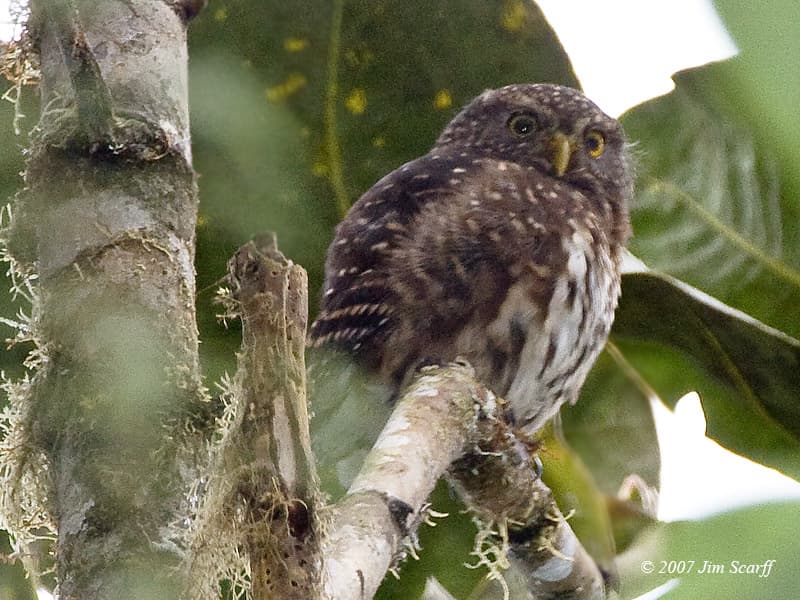
Andean pygmy owl
The Andean pygmy owl is a small owl species native to the Andes mountains of South America, found in countries like Colombia, Ecuador, Peru, and Venezuela. It is distinguished by its two color morphs, white facial markings including prominent "brows" and "moustaches," and a distinctive face-like pattern on its nape. This owl is an opportunistic predator, active both day and night, feeding on a variety of small invertebrates, birds, and mammals.
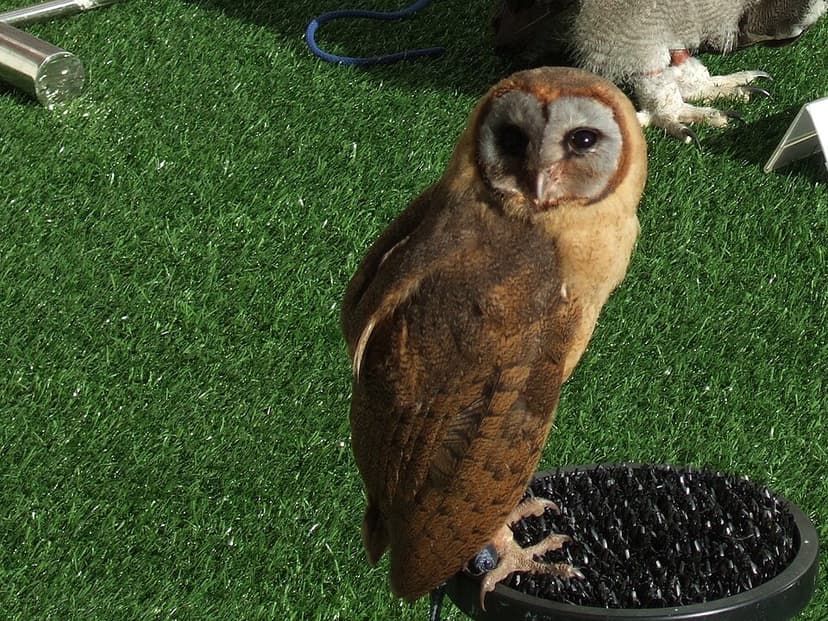
Ashy-faced owl
The ashy-faced owl (Tyto glaucops) is a species of barn owl native to Hispaniola and several islands in the Lesser Antilles. It is distinguished by its silvery-gray facial disc (in the nominate subspecies), a preference for a mix of open hunting spaces and canopy cover, and a varied diet of small vertebrates and invertebrates. This species plays a crucial role as a nocturnal predator in its island ecosystems.

Austral pygmy owl
The austral pygmy owl is a small owl species found in central and southern Chile and parts of southern Argentina. It is distinctive for its gray-brown and red color morphs and its ability to hunt both during the day and at night. This owl is known for its varied vocalizations, including contact whistles, territorial trills, and courtship calls.