
Tawny owl
The tawny owl (Strix aluco) is a stocky, medium-sized owl native to woodlands across Europe and western Siberia. It is distinguished by its ability to fly silently and its exceptional hearing, which allows it to hunt effectively at night. This owl is known for its territorial nature and a distinctive double-hoot call used by mated pairs.
Key Facts
- ›Found in woodlands across Europe and western Siberia.
- ›Possesses highly developed directional hearing for nocturnal hunting.
- ›Diet primarily consists of rodents, but includes birds and other small animals.
- ›Known for its silent flight due to specialized feather structure.
- ›Highly territorial and non-migratory, young birds may starve if they cannot find a vacant territory.
- ›Its call is a territorial duet between male and female.
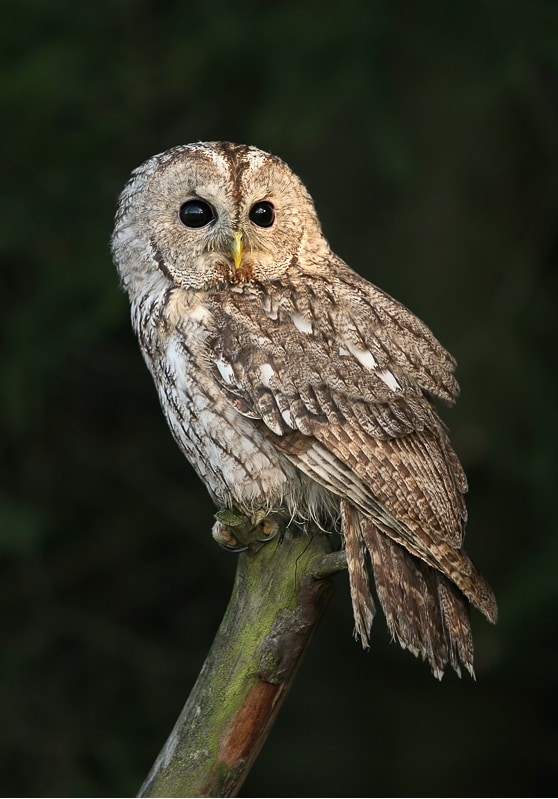
Brown Owl
Deciduous Forests, Mixed Forests, Mature Conifer Plantations, Cemeteries, Gardens, Parks, Urban Areas With Wooded Habitat
Europe, Western Siberia
Rodents, Other Mammals, Birds, Earthworms, Beetles
Ural Owls, Eagle Owls, Eurasian Goshawks, Golden Eagles, Common Buzzards, Pine Martens, Red Foxes, Eurasian Jackdaws
About Tawny owl
The Tawny Owl: A Familiar Woodland Resident
The tawny owl (Strix aluco), also known as the brown owl, is a common and stocky medium-sized owl found in woodlands across Europe and into western Siberia. It is a non-migratory and highly territorial species, recognizable by its large, rounded head, dark brown eyes, and lack of ear tufts.
Description and Adaptations
Adult tawny owls measure between 37–46 cm in length with a wingspan of 81–105 cm. They exhibit two color morphs: rufous brown and greyish brown, with underparts that are whitish and streaked with brown. Females are noticeably larger than males. A key adaptation for its nocturnal lifestyle is its silent flight, achieved through specialized soft feathers that muffle sound. Its hearing is exceptionally acute, with asymmetrically placed ear openings allowing for precise sound localization, crucial for hunting in low light.
Diet and Hunting
Primarily a nocturnal hunter, the tawny owl preys mainly on rodents, but its diet is diverse and includes other small mammals, birds, earthworms, and beetles. In urban settings, birds become a more significant part of their food intake. Prey is typically swallowed whole, with indigestible parts regurgitated as pellets. While its vision is not superior to humans in terms of retinal sensitivity, its large eyes and adaptations for low light, combined with its acute hearing, make it a highly effective predator.
Habitat and Distribution
The tawny owl prefers deciduous and mixed forests but has adapted to human environments such as parks, gardens, and cemeteries, even in urban centers like London. They are generally lowland birds in colder regions but can breed at higher altitudes in mountainous areas. Their range spans across Europe and western Siberia, though they are absent from Ireland. While populations are stable or increasing in many European countries, declines have been noted in some areas.
Behavior and Reproduction
Tawny owls typically form lifelong monogamous pair bonds. They fiercely defend their territories, marked by their distinctive vocalizations. Nests are usually made in tree holes, but they will also utilize old nests of other birds, squirrel dreys, or cavities in buildings, readily accepting nest boxes. The breeding season begins in late winter or early spring, with clutches of two to three eggs. Both parents care for the young, which fledge after about five weeks. Young owls must establish their own territories upon leaving the parental nest, and failure to do so often leads to starvation.
In Folklore and Conservation
Historically, the tawny owl has been associated with bad omens and death in human folklore, partly due to its nocturnal activity and haunting call. This perception is reflected in literature, including works by Shakespeare. Despite its widespread distribution and generally stable populations, the species is listed on the RSPB Amber List of Concern in the UK, and its international trade is regulated under CITES. Avian malaria has also emerged as a growing threat, with incidence rates increasing significantly in recent decades.
Source: Wikipedia ↗
Frequently Asked Questions
What is the scientific name of the tawny owl?
The scientific name of the tawny owl is Strix aluco. This binomial name was given by Carl Linnaeus in 1758, with 'Strix' being the Greek word for owl and 'Allico' derived from the Italian word for tawny owl.
Where does the tawny owl live?
The tawny owl is found across temperate Europe, extending eastwards to western Siberia. It inhabits deciduous and mixed forests, and can also be found in urban areas like parks and gardens if they offer sufficient habitat.
What does a tawny owl eat?
The primary diet of the tawny owl consists of rodents. However, they are opportunistic hunters and will also consume other mammals, birds, earthworms, and beetles, with birds forming a larger part of their diet in urban environments.
What sounds does a tawny owl make?
The most characteristic sound of the tawny owl is a double hoot, which is a call-and-response duet between the male and female. The female typically makes a shrill 'kew-wick' sound, while the male responds with a quavering 'hoo...ho, ho, hoo-hoo-hoo-hoo'.
How does the tawny owl hunt at night?
The tawny owl hunts almost entirely at night, relying on its exceptional hearing and silent flight. It typically perches and then drops or glides silently onto its prey. Its asymmetrical ear placement allows it to precisely pinpoint the location of sounds.
What are the predators of the tawny owl?
Predators of the tawny owl include larger birds of prey such as Ural owls, eagle owls, and Eurasian goshawks. Mammals like pine martens and red foxes can also prey on tawny owls, especially nestlings and young birds.
Related Owl species
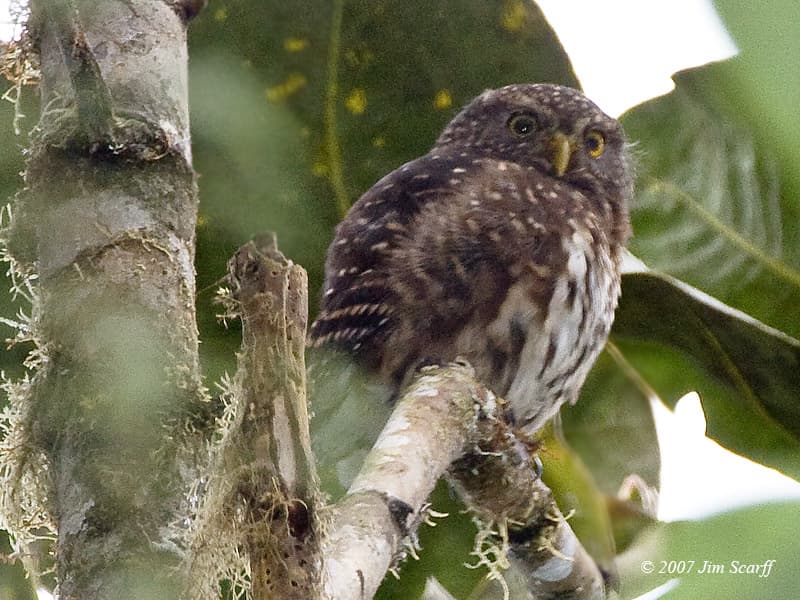
Andean pygmy owl
The Andean pygmy owl is a small owl species native to the Andes mountains of South America, found in countries like Colombia, Ecuador, Peru, and Venezuela. It is distinguished by its two color morphs, white facial markings including prominent "brows" and "moustaches," and a distinctive face-like pattern on its nape. This owl is an opportunistic predator, active both day and night, feeding on a variety of small invertebrates, birds, and mammals.
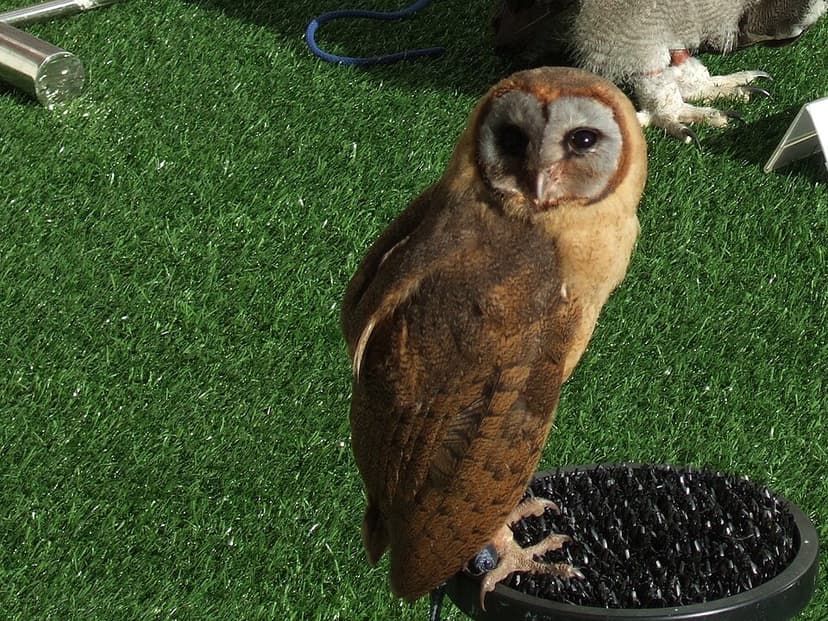
Ashy-faced owl
The ashy-faced owl (Tyto glaucops) is a species of barn owl native to Hispaniola and several islands in the Lesser Antilles. It is distinguished by its silvery-gray facial disc (in the nominate subspecies), a preference for a mix of open hunting spaces and canopy cover, and a varied diet of small vertebrates and invertebrates. This species plays a crucial role as a nocturnal predator in its island ecosystems.

Austral pygmy owl
The austral pygmy owl is a small owl species found in central and southern Chile and parts of southern Argentina. It is distinctive for its gray-brown and red color morphs and its ability to hunt both during the day and at night. This owl is known for its varied vocalizations, including contact whistles, territorial trills, and courtship calls.