
Tropical screech owl
The tropical screech owl (Megascops choliba) is a small, widespread owl species found throughout much of South America and parts of Central America. It is characterized by its polymorphic plumage, typically gray-brown with a distinctive blackish facial edge and yellow irides, and a pale underside with a black herringbone pattern. This nocturnal predator is known for its varied diet of arthropods and small vertebrates and its adaptability to a range of open habitats.
Key Facts
- ›The tropical screech owl is a small owl, measuring 21 to 23 cm in length.
- ›It is polymorphic, with plumage varying from gray-brown to brown or rufous.
- ›Found from Costa Rica and Panama south throughout South America, east of the Andes.
- ›Inhabits partially to mostly open landscapes like secondary forests, plantations, and residential areas.
- ›Its diet consists of large arthropods and small vertebrates.
- ›Nests in tree holes, including old woodpecker holes and nest boxes, typically laying one to three eggs.
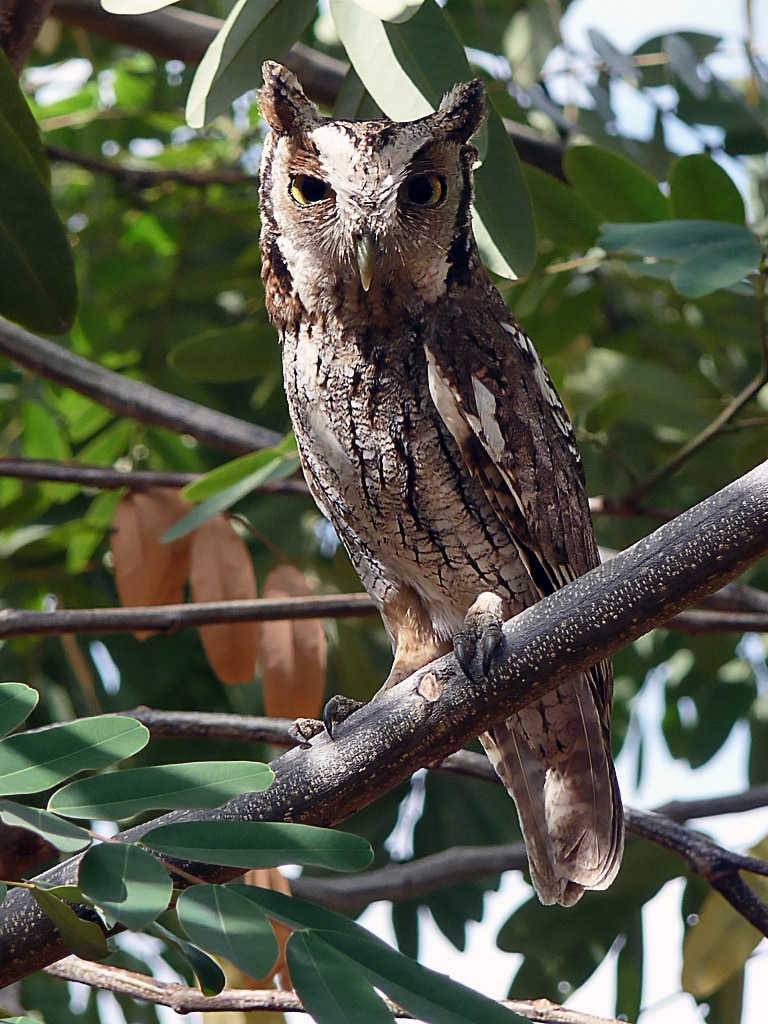
Choliba Screech Owl
Secondary Forest, Open Woodland, Coffee Plantations, Residential Areas, Borders of Terra Firme and VáRzea Forests, Dense Forest, Bamboo Scrub
Costa Rica, Panama, Trinidad and Tobago, South America
Large Arthropods, Small Vertebrates, Insects, Scorpions, Spiders, Harvestmen, Grasshoppers, Katydids, Moths, Caterpillars, Ants, Cockroaches, Cicadas, Termites, Mantids, Crickets, Beetles, Earthworms, Small Frogs, Other Amphibians, Small Reptiles, Snakes, Other Birds, Opossums, Bats, Rodents
About Tropical screech owl
Overview
The tropical screech owl (Megascops choliba) is a small owl species recognized as the most common and widespread screech-owl in the Neotropics. Its range extends from Costa Rica and Panama throughout much of South America, including Trinidad, primarily east of the Andes.
Physical Characteristics
This owl is polymorphic, meaning it exhibits variation in plumage color. Typically, it presents a gray-brown coloration, though brown or rufous variations occur. Distinctive features include a blackish edge to its facial disc and yellow irides. The underside is pale and marked with a black 'herringbone' pattern. Subspecies show differences in color intensity and the extent of black markings.
Habitat and Distribution
The tropical screech owl thrives in a variety of partially to mostly open landscapes. These include secondary forests, open woodlands, coffee plantations, residential areas, and the edges of various forest types. With the exception of the subspecies M. c. duidae, which is found in dense forest and bamboo scrub, the species generally avoids the interior of dense forests.
Behavior and Diet
As a nocturnal hunter, the tropical screech owl forages by sallying from low perches to capture prey on the ground, from branches, or in flight. Its diet is broad, encompassing large arthropods like insects, spiders, and earthworms, as well as small vertebrates such as frogs, reptiles, small birds, bats, and rodents.
Reproduction
While not extensively studied, the breeding season appears to begin in August south of the Equator. The species nests in tree cavities, utilizing natural holes or old woodpecker excavations, and also readily uses nest boxes. Clutch sizes typically range from one to three eggs, but can be as large as six. Adults are known to defend their nests aggressively.
Conservation Status
The tropical screech owl is classified as 'Least Concern' by the IUCN. Its common status across a wide range and its adaptability to human-altered habitats, which can even provide beneficial open areas, contribute to its secure standing.
Source: Wikipedia ↗
Frequently Asked Questions
Where is the tropical screech owl found?
The tropical screech owl is widely distributed from Costa Rica and Panama southward throughout South America, including Trinidad, and is generally found east of the Andes mountains. Its range does not extend to the far south of the continent.
What does a tropical screech owl look like?
These owls are small and polymorphic, meaning they have variations in color. They are typically gray-brown, though some are brown or rufous, always featuring a distinct blackish edge to the face and yellow irides. Their undersides are pale with a black 'herringbone' pattern.
What do tropical screech owls eat?
Their diet is quite varied and includes large arthropods such as insects, spiders, and earthworms, as well as small vertebrates. This prey can include small frogs, reptiles, other birds, bats, and rodents.
What are the nesting habits of the tropical screech owl?
Tropical screech owls nest in cavities, utilizing natural tree holes or old woodpecker holes. They are also known to use nest boxes. The number of eggs laid usually ranges from one to three, though clutches of up to six have been recorded.
What is the conservation status of the tropical screech owl?
The International Union for Conservation of Nature (IUCN) has assessed the tropical screech owl as being of 'Least Concern.' This status is attributed to its common presence across a large range and its ability to adapt to human-altered environments.
Related Owl species
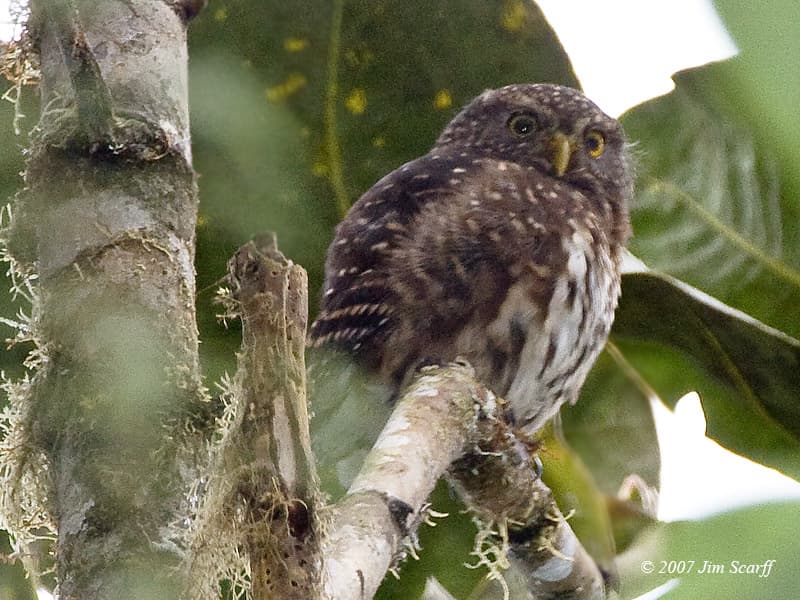
Andean pygmy owl
The Andean pygmy owl is a small owl species native to the Andes mountains of South America, found in countries like Colombia, Ecuador, Peru, and Venezuela. It is distinguished by its two color morphs, white facial markings including prominent "brows" and "moustaches," and a distinctive face-like pattern on its nape. This owl is an opportunistic predator, active both day and night, feeding on a variety of small invertebrates, birds, and mammals.
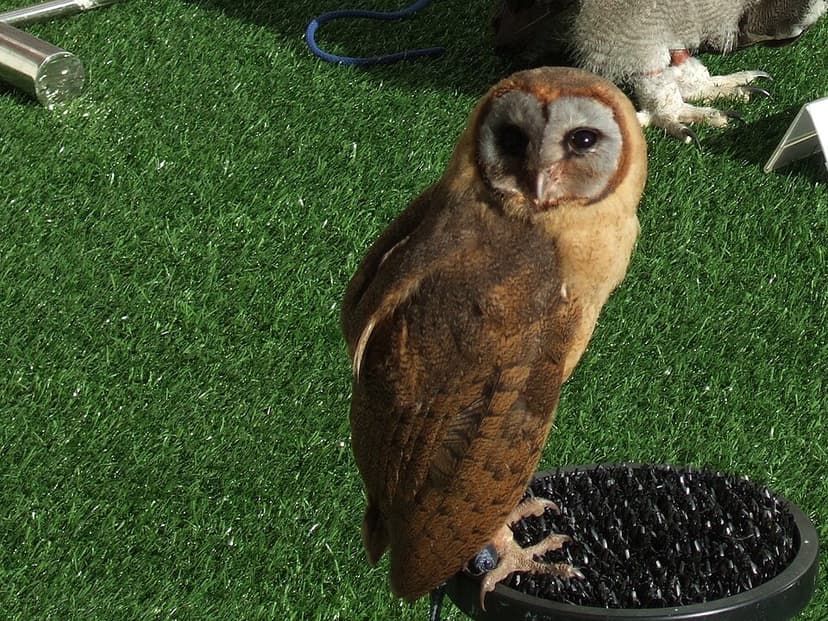
Ashy-faced owl
The ashy-faced owl (Tyto glaucops) is a species of barn owl native to Hispaniola and several islands in the Lesser Antilles. It is distinguished by its silvery-gray facial disc (in the nominate subspecies), a preference for a mix of open hunting spaces and canopy cover, and a varied diet of small vertebrates and invertebrates. This species plays a crucial role as a nocturnal predator in its island ecosystems.

Austral pygmy owl
The austral pygmy owl is a small owl species found in central and southern Chile and parts of southern Argentina. It is distinctive for its gray-brown and red color morphs and its ability to hunt both during the day and at night. This owl is known for its varied vocalizations, including contact whistles, territorial trills, and courtship calls.