
Unspotted saw-whet owl
The unspotted saw-whet owl is a small owl native to the mountainous regions of Central America. It is characterized by its plain brown upperparts and buff underparts, and it inhabits humid temperate montane forests. This species is primarily nocturnal and its diet is believed to consist of small mammals, birds, and bats.
Key Facts
- ›Native to mountainous areas of Central America.
- ›Inhabits humid temperate montane forests, including oak and cloud forests.
- ›Small size, typically 18-21.5 cm in length.
- ›Plumage is plain sepia brown above and cinnamon buff below.
- ›Primarily nocturnal and typically solitary outside of the breeding season.
- ›IUCN conservation status is Least Concern, though its habitat faces threats from deforestation.
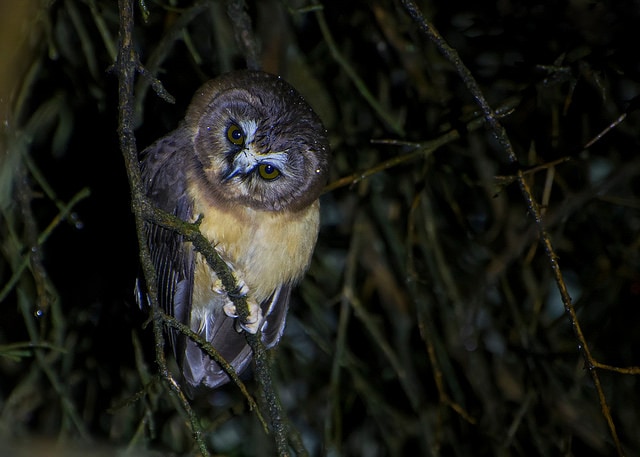
Unspotted Pygmy Owl
Humid Temperate Montane Forest, Humid Oak Forest, Cloudforest, Pine-Oak Forest, Forest Canopy
Central America, Mexico, Guatemala, El Salvador, Costa Rica, Panama
Small Mammals, Birds, Bats
About Unspotted saw-whet owl
The unspotted saw-whet owl (Aegolius ridgwayi) is a small owl belonging to the subfamily Surniinae, native to the mountainous regions of Central America. Its taxonomy is subject to some debate, with some authorities recognizing three subspecies while others consider it monotypic. The species is closely related to the northern saw-whet owl, with some suggesting they could be a single species.
Physical Description and Identification
This owl measures between 18 and 21.5 cm (7.1 to 8.5 inches) in length and weighs approximately 80 to 90 grams (2.8 to 3.2 ounces). Its plumage is distinctive, featuring plain sepia brown on the upperparts, throat, and upper breast, contrasting with a plain cinnamon buff on the lower breast and belly. The wings are generally a grayer brown, and the tail is a darker brown. A notable feature is its brown facial disk, bordered by a narrow white rim, with whitish lores, chin, and 'eyebrows'. It possesses bright yellow eyes.
Distribution and Habitat
The unspotted saw-whet owl is found in humid temperate montane forests across Central America. The nominate subspecies inhabits areas from central Costa Rica into western Panama. Other subspecies are recorded in Mexico's Chiapas state, and in Guatemala and northwestern El Salvador. Its preferred habitat includes humid oak forests, cloud forests, and pine-oak forests, where it typically resides in the forest canopy but may also be found in more open areas with scattered trees near forest edges. Its altitudinal range varies by region, generally between 1,700 and 3,500 meters (5,600 to 11,500 feet).
Behavior and Ecology
As a nocturnal species, the unspotted saw-whet owl is primarily active at night. It is usually solitary outside of the breeding season and is believed to maintain territorial boundaries. Its flight is described as 'fluttery' and agile, characterized by quick wingbeats. The species is resident throughout its range, meaning it does not undertake long-distance migrations.
Diet
The precise diet of the unspotted saw-whet owl has not been extensively documented. However, it is presumed to subsist primarily on small mammals such as shrews and rodents. There is also an assumption that it preys upon birds and bats.
Breeding
Details regarding the breeding phenology of this owl are not well-known. The breeding season appears to occur at some point between March and July. Nests are typically found in tree cavities, which can be natural hollows or those previously excavated by woodpeckers. It is estimated that the female lays between five and six eggs.
Vocalization
The vocalizations of the unspotted saw-whet owl are distinctive. The male's territorial call is a whistled 'hoo hoo hoo…', repeated about ten times over three to five seconds. Females produce a high, slightly hissing 'ssirr'. Both sexes are capable of emitting a surprisingly loud shriek and a shrill, short chipper. These calls can be easily confused with the vocalizations of certain tree frogs from the genus Anotheca.
Conservation Status
The unspotted saw-whet owl was once assessed as Near Threatened by the IUCN but has since been reclassified as Least Concern as of 2004. Despite this designation, its population is estimated to be between 20,000 and 50,000 mature individuals and is believed to be declining. The primary threat is habitat loss due to widespread deforestation for timber, agriculture, and pasturing, particularly at lower elevations within its range. Mexican conservation authorities recognize the species as being in peril of extinction within that country.
Source: Wikipedia ↗
Frequently Asked Questions
What is the scientific name of the unspotted saw-whet owl?
The scientific name of the unspotted saw-whet owl is Aegolius ridgwayi. Some taxonomic classifications recognize up to three subspecies, though this is not universally agreed upon.
Where is the unspotted saw-whet owl found?
This owl is native to mountainous areas of Central America. The nominate subspecies is found from central Costa Rica into western Panama, with other subspecies occurring in parts of Mexico, Guatemala, and El Salvador.
What is the habitat of the unspotted saw-whet owl?
The unspotted saw-whet owl inhabits humid temperate montane forests. These include vegetation communities such as humid oak forest, cloudforest, and pine-oak forest, generally staying within the forest canopy.
What does the unspotted saw-whet owl eat?
While its diet has not been extensively detailed, it is thought to primarily prey on small mammals like shrews and rodents. It is also believed to consume birds and bats.
What is the conservation status of the unspotted saw-whet owl?
The unspotted saw-whet owl is currently listed as Least Concern by the IUCN. However, its forest habitat is threatened by deforestation, particularly at lower elevations, and its population is believed to be decreasing.
What are the distinctive vocalizations of the unspotted saw-whet owl?
Males have a territorial call described as 'a whistled hoo hoo hoo…'. Females emit 'a hight, slightly hissing ssirr', and both sexes can produce 'a surprisingly loud shriek and a shrill short chipper'. Their calls can be confused with those of certain tree frogs.
Related Owl species
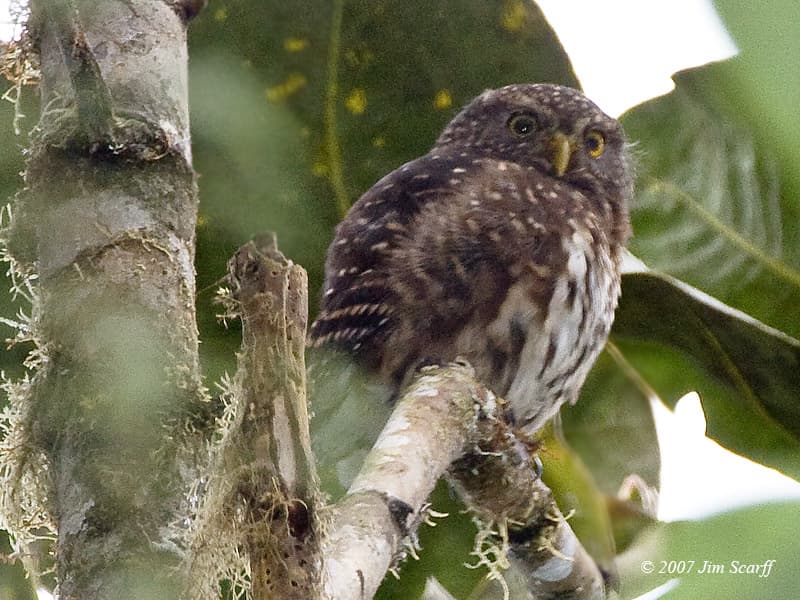
Andean pygmy owl
The Andean pygmy owl is a small owl species native to the Andes mountains of South America, found in countries like Colombia, Ecuador, Peru, and Venezuela. It is distinguished by its two color morphs, white facial markings including prominent "brows" and "moustaches," and a distinctive face-like pattern on its nape. This owl is an opportunistic predator, active both day and night, feeding on a variety of small invertebrates, birds, and mammals.
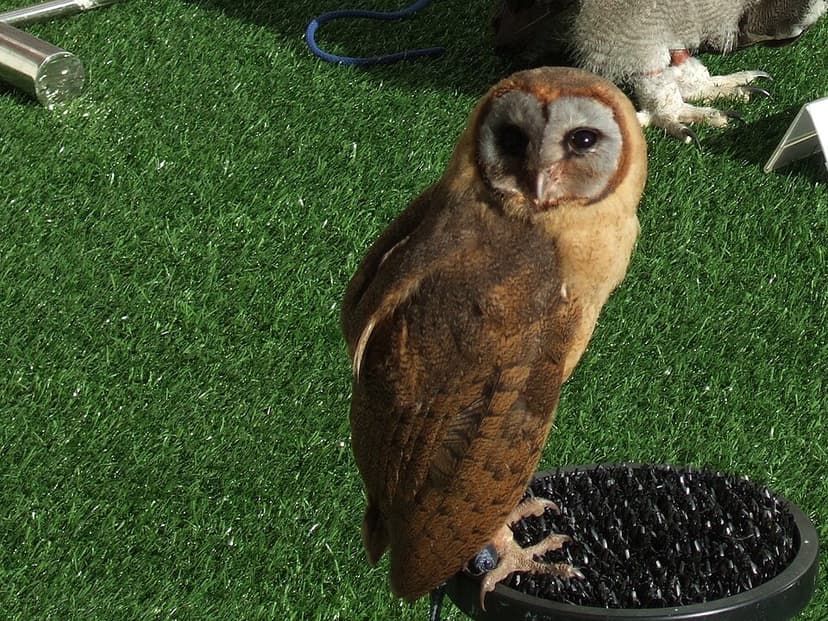
Ashy-faced owl
The ashy-faced owl (Tyto glaucops) is a species of barn owl native to Hispaniola and several islands in the Lesser Antilles. It is distinguished by its silvery-gray facial disc (in the nominate subspecies), a preference for a mix of open hunting spaces and canopy cover, and a varied diet of small vertebrates and invertebrates. This species plays a crucial role as a nocturnal predator in its island ecosystems.

Austral pygmy owl
The austral pygmy owl is a small owl species found in central and southern Chile and parts of southern Argentina. It is distinctive for its gray-brown and red color morphs and its ability to hunt both during the day and at night. This owl is known for its varied vocalizations, including contact whistles, territorial trills, and courtship calls.