
Ural owl
The Ural owl (Strix uralensis) is a large, nocturnal true owl belonging to the genus Strix, named after the Ural Mountains where its type specimen was collected. It boasts an extensive Palearctic distribution, inhabiting taiga and other forest types, and is distinguished by its pale greyish-brown plumage, long tail, and dark brown eyes. This species is primarily a dietary generalist, heavily relying on small mammals, especially rodents like voles.
Key Facts
- ›The Ural owl is a large nocturnal owl found across the vast Palearctic region.
- ›Its plumage is typically a plain pale greyish-brown with distinctive dark brown streaking on its underparts.
- ›It has an exceptionally long tail for an owl, which is a notable distinguishing feature.
- ›The species is a dietary generalist, with a strong reliance on small mammals, particularly voles.
- ›Ural owls are known to vigorously defend their territories and utilize various natural nest sites or nest boxes.
- ›It is classified as a species of Least Concern by the IUCN due to its stable population.

Long-Tailed Owl
Taiga Forests, Mixed Forests, Temperate Deciduous Forests
Europe, Asia, Japan
Small Mammals, Small Rodents, Voles
About Ural owl
The Ural owl (Strix uralensis) is a large, nocturnal owl belonging to the true owl family, Strigidae, and the genus Strix. Its common and scientific names are derived from the Ural Mountains in Russia, where the type specimen was collected. However, this species possesses an exceptionally broad distribution across the Palearctic, extending from Scandinavia and eastern Europe eastward through Russia to Sakhalin and Japan.
Description and Habitat
This forest owl is typically found in the vast taiga forests of Eurosiberia, but it also inhabits mixed and temperate deciduous forests. Physically, the Ural owl is characterized by a broad, rounded head, a correspondingly round facial disc, and a notably long tail. Its plumage is generally a plain pale greyish-brown to whitish, with darker grey-brown upperparts featuring whitish markings. The underparts are pale cream-ochre to grey-brown, adorned with bold dark brown streaking. Notable features include a buffish-white underwing with heavy dark bars and a long, white-tipped tail. The eyes are a distinctive dark brown. Adult Ural owls range from 50 to 64 cm in length, with a wingspan of 110 to 134 cm. Females are typically slightly larger than males.
Diet and Behavior
Like many owls in the Strix genus, the Ural owl is a dietary generalist, though it commonly relies on small mammals, especially small rodents like voles. They are territorial birds that vigorously defend their nesting areas. Reproductive success is often closely tied to the availability of prey populations. While generally nocturnal, they have been noted to exhibit some diurnal behavior during warmer months, leading to potential confusion with other birds of prey.
Vocalizations and Conservation
The song of the male Ural owl is a deep, rhythmic series of notes, while the female's is similar but hoarser. They also employ contact calls and begging calls by juveniles. The species is generally considered quiet for a large owl. The Ural owl is classified by the IUCN as a species of Least Concern, indicating a stable population overall, though reintroduction efforts have aided its presence in some parts of central Europe.
Taxonomy and Relatives
The Ural owl is part of the Strix genus, which includes other well-known owls like the tawny owl (Strix aluco). Fossil evidence suggests a complex evolutionary history within the genus. Some authors consider the Père David's owl (Strix davidi) to be either an isolated subspecies or a distinct species within the Strix complex, with debate continuing based on morphological, vocal, and genetic studies. The barred owl (Strix varia) in North America is also considered closely related, with some early classifications even grouping them within a species complex.
Source: Wikipedia ↗
Frequently Asked Questions
What does the Ural owl look like?
The Ural owl is a large owl with a pale greyish-brown to whitish appearance, featuring dark brown streaking on its underparts. It has a broad, rounded head, a long tail with a wedge-shaped tip, and dark brown eyes. Its plumage can vary significantly among subspecies and individuals.
Where are Ural owls found?
Ural owls have a very wide geographic range across the Palearctic. They are found from Scandinavia and eastern Europe, across Russia, to as far east as Sakhalin and throughout Japan. They are typically associated with taiga forests but also inhabit mixed and temperate deciduous forests.
What do Ural owls eat?
As dietary generalists, Ural owls primarily feed on small mammals, with a particular fondness for small rodents like voles. Their diet can vary based on local availability.
What is the conservation status of the Ural owl?
The Ural owl is considered a stable bird species overall. Its conservation status according to the IUCN is Least Concern, indicating a healthy and widespread population, although some local declines have occurred.
What sounds do Ural owls make?
The male Ural owl's song is a rhythmic series of deep notes, often transcribed as 'wohu... huw-huhuwo' or 'huow-huow-huow'. Females have a similar but hoarser and higher-pitched song. They also use a deep, hoarse contact call and young owls beg with hoarse 'chrrreh' sounds.
How large is a Ural owl?
Ural owls are quite large, with adults typically ranging from 50 to 64 cm (20 to 25 inches) in length. Their wingspan can reach between 110 to 134 cm (3 ft 7 in to 4 ft 5 in).
Related Owl species
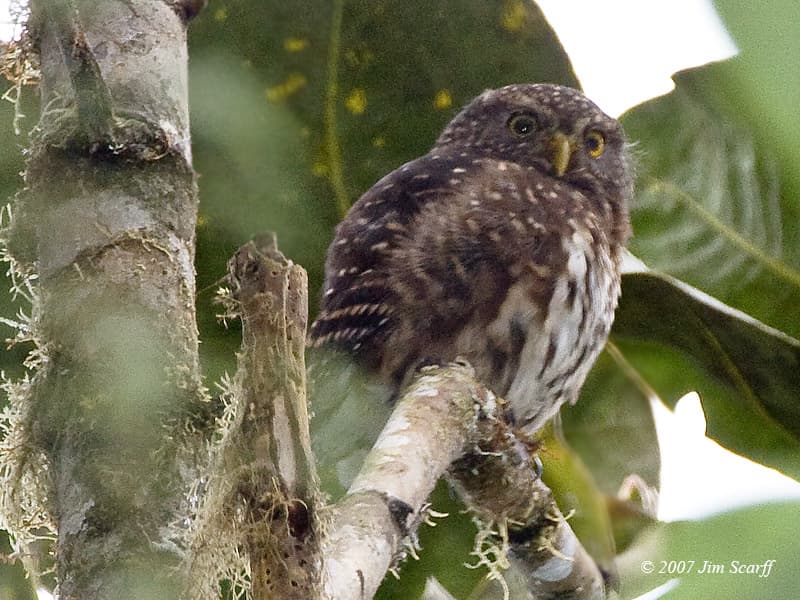
Andean pygmy owl
The Andean pygmy owl is a small owl species native to the Andes mountains of South America, found in countries like Colombia, Ecuador, Peru, and Venezuela. It is distinguished by its two color morphs, white facial markings including prominent "brows" and "moustaches," and a distinctive face-like pattern on its nape. This owl is an opportunistic predator, active both day and night, feeding on a variety of small invertebrates, birds, and mammals.
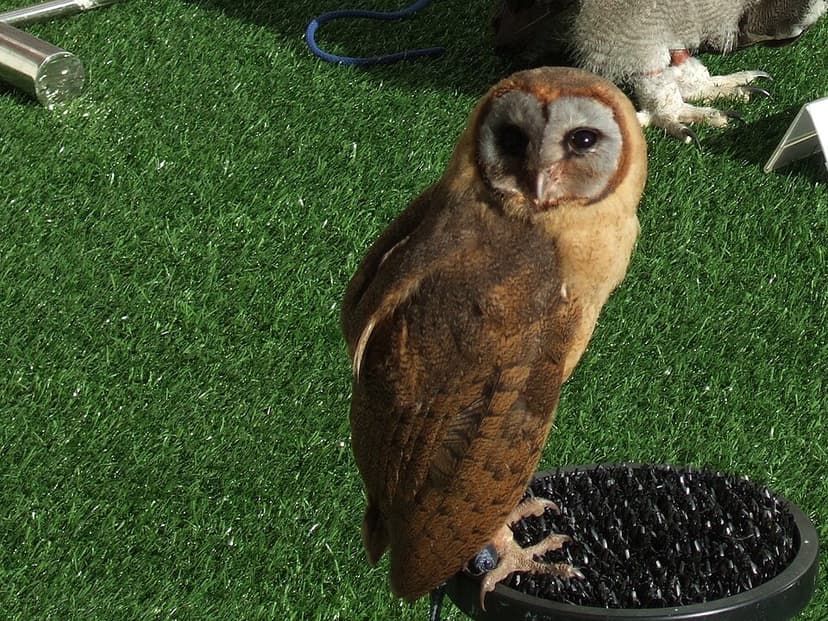
Ashy-faced owl
The ashy-faced owl (Tyto glaucops) is a species of barn owl native to Hispaniola and several islands in the Lesser Antilles. It is distinguished by its silvery-gray facial disc (in the nominate subspecies), a preference for a mix of open hunting spaces and canopy cover, and a varied diet of small vertebrates and invertebrates. This species plays a crucial role as a nocturnal predator in its island ecosystems.

Austral pygmy owl
The austral pygmy owl is a small owl species found in central and southern Chile and parts of southern Argentina. It is distinctive for its gray-brown and red color morphs and its ability to hunt both during the day and at night. This owl is known for its varied vocalizations, including contact whistles, territorial trills, and courtship calls.