
Western screech owl
The western screech owl is a small owl native to North and Central America, closely related to the eastern screech owl. It is distinguished by its streaky brown or dark gray plumage, yellow eyes, and ear tufts, which aid in camouflage. This species is known for its distinctive calls, which are crucial for identification as its appearance is similar to other screech owls.
Key Facts
- ›Native to Canada, United States, Mexico, Guatemala, El Salvador, Honduras, Costa Rica, and Nicaragua.
- ›Adults average 22 cm in length with a wingspan of 55 cm.
- ›Plumage is streaky brown or dark gray, with no red morph.
- ›Diet primarily consists of small mammals, birds, and large insects, but is opportunistic.
- ›Nests in natural cavities within trees, banks, or cliffs.
- ›Females are larger than males, and northern populations are larger than southern ones.

Kennicott's Screech Owl, Otus Kennicotti, Scops Kennicottii
Temperate Forests, Subtropical and Tropical Montane Forests, Shrubland, Desert, Rural Fields, Suburban Parks and Gardens
Canada, United States, Mexico, Guatemala, El Salvador, Honduras, Costa Rica, Nicaragua
Small Mammals, Birds, Large Insects, Small Trout, Annelid Worms, Scorpions, Crayfish, Reptiles, Amphibians, Mallard Ducks, Cottontail Rabbits
Snakes, Jays, Crows
About Western screech owl
The western screech owl (Megascops kennicottii) is a small owl species native to North and Central America, closely related to its eastern counterpart. It is characterized by its streaky brown or dark gray plumage, yellow eyes, and prominent ear tufts, which provide excellent camouflage against its arboreal habitat. The scientific name, Megascops kennicottii, honors the American naturalist Robert Kennicott.
Description and Identification
Adult western screech owls typically measure around 22 cm in length with a wingspan of approximately 55 cm, and weigh about 143 grams. Females are generally larger than males, and individuals from northern populations tend to be larger than those from southern regions. Their appearance is quite similar to other screech owl species, making their distinctive calls essential for accurate identification. There are several recognized color morphs, including Pacific brown and gray, Great Plains, Mojave, and Mexican, all featuring streaky underparts.
Range and Habitat
This species has a broad geographic range, extending from Canada and the United States south through Mexico and into Central American countries such as Guatemala, El Salvador, Honduras, Costa Rica, and Nicaragua. Its preferred habitats are diverse, encompassing temperate forests, subtropical and tropical montane forests, shrublands, deserts, rural fields, and even suburban areas like parks and gardens.
Behavior and Reproduction
Western screech owls are primarily nocturnal hunters, adept at locating prey through their keen hearing and night vision, though they are also active at dawn and dusk. Their diet is varied and opportunistic, consisting mainly of small mammals, birds, and large insects, but also extending to amphibians, reptiles, and even small fish. They do not construct traditional nests but instead utilize natural cavities in trees, banks, or cliffs. During the breeding season, males attract females with food offerings and vocalizations, and pairs engage in mutual preening and duet singing. Females lay clutches of 2 to 7 eggs, and both parents diligently protect their young.
Conservation
While populations in the Pacific Northwest have shown a slight decline, the western screech owl is generally considered a species of low conservation concern due to its adaptability to human-altered landscapes and its nocturnal habits. However, factors such as human noise, habitat destruction, and climate events like fires and heat waves can pose threats to their survival. Efforts to conserve them include the provision of artificial nest boxes, to which the owls have shown receptiveness.
Source: Wikipedia ↗
Frequently Asked Questions
What is the scientific name of the western screech owl?
The scientific name of the western screech owl is Megascops kennicottii. This name commemorates the American naturalist Robert Kennicott.
Where can the western screech owl be found?
The western screech owl is native to North and Central America, with its range extending from Canada and the United States down through Mexico, Guatemala, El Salvador, Honduras, Costa Rica, and Nicaragua.
What does the western screech owl look like?
Adult western screech owls have a round head with ear tufts, yellow eyes, and a yellowish bill. Their plumage is streaky brown or dark gray, providing camouflage. Females are generally larger than males.
What does a western screech owl eat?
The western screech owl's diet mainly includes small mammals like mice and bats, as well as birds and large insects. They are opportunistic feeders and have been known to consume small trout, scorpions, and amphibians.
How does the western screech owl reproduce?
During courtship, males attract females by bringing food and making clicking noises. Pairs preen each other and sing duets. They produce a clutch of 2–7 eggs, and both parents protect the owlets until they are ready to leave the nest.
What type of habitat does the western screech owl prefer?
Western screech owls inhabit a variety of environments including temperate forests, subtropical and tropical montane forests, shrubland, desert, rural fields, and even suburban parks and gardens.
How can I identify a western screech owl by its call?
The primary call of the western screech owl is an accelerating series of short whistles or a short then long trill. They also make barking, chuckling, and high-pitched screeching sounds. Male and female calls can differ in frequency, particularly in their 'bounce' and 'trill' songs.
Related Owl species

Australian boobook
The Australian boobook (Ninox boobook) is the smallest owl species native to mainland Australia, also found in southern New Guinea, Timor, and the Sunda Islands. It is distinguished by its characteristic "boo-book" call and its predominantly dark-brown plumage marked with pale spots. This nocturnal hunter primarily preys on insects and small vertebrates, nesting in tree hollows and is considered of least concern by the IUCN.
Costa Rican pygmy owl
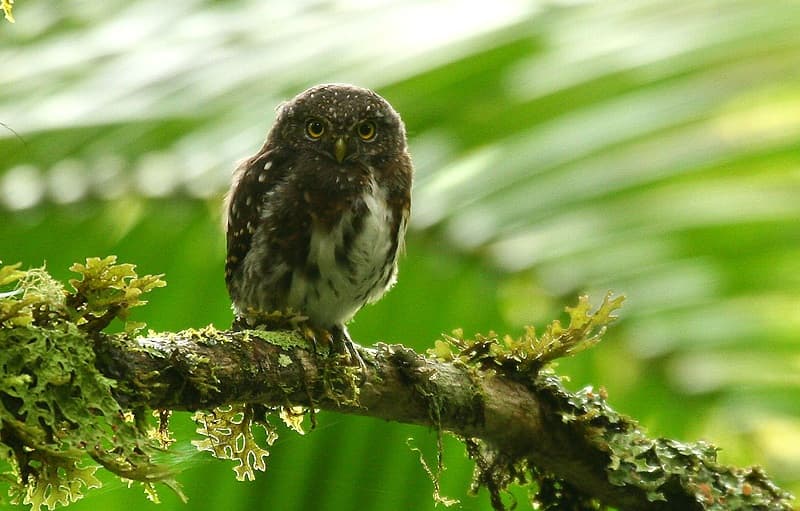
The Costa Rican pygmy owl is a small owl species found in the montane forests of Costa Rica and Panama. It is known for its distinctive "eye spots" on the back of its head and its varied vocalizations. This species is a year-round resident and forages for prey both day and night.

Morepork
The morepork, also known by its Māori name ruru, is a small brown owl native to New Zealand and Norfolk Island, with a former presence on Lord Howe Island. It is distinguished by its dark-brown plumage with pale spots, golden-yellow eyes, and a distinctive "more-pork" call. This generally nocturnal owl hunts insects and small vertebrates by perching and pouncing, demonstrating excellent night vision and hearing.