
Aztec parakeet
Least Concern (Aztec subspecies); Near Threatened (Jamaican subspecies)
The Aztec parakeet, also known as the olive-throated parakeet, is a species of bird found from Mexico to Costa Rica and in Jamaica. It is distinctive for its mainly dark green plumage with yellowish ear coverts and rump, and an olive-brown throat and breast. This species is known for its vocalizations, described as sharp, grating calls, and its adaptability to various woodland and forest habitats.
Key Facts
- ›The Aztec parakeet is part of the Psittacidae family, encompassing African and New World parrots.
- ›Its natural range extends from Mexico through Central America to Costa Rica, with a separate population in Jamaica.
- ›Adults exhibit primarily dark green plumage, with yellowish ear coverts and rump, and an olive-brown throat and breast.
- ›They inhabit deciduous woodlands, humid forests, scrublands, and even plantations and gardens.
- ›Their diet consists mainly of fig fruits, supplemented by other fruits, leaves, and flowers.
- ›The species nests in cavities, typically within termitaria, and lays clutches of three to five eggs.

Olive-Throated Parakeet, Olive-Throated Conure
Mexico, Central America, Jamaica
Deciduous Woodlands, Humid Forest, Riparian Areas, Scrublands, Plantations, Clearings With Trees, Gardens, Pine Stands
Yellowish Ear Coverts, Yellowish Rump, Bare White Skin Around the Eye, Olive-Brown Throat and Breast
Fig Fruits, Other Fruits, Leaves, Flowers
Can Be A Crop Pest
Sharp, Grating Calls, Raucous Calls
Nests In Cavities, Nests In Termitaria, Nests In Tree Holes
About Aztec parakeet
What is the Aztec Parakeet?
The Aztec parakeet, scientifically known as Eupsittula nana, is a species of parrot that belongs to the Psittacidae family. It is also commonly referred to as the olive-throated parakeet or, in aviculture, the olive-throated conure. This species is recognized for its distinctive plumage, featuring a primarily dark green head and upperparts, accented by yellowish ear coverts and rump, and an olive-brown throat and breast that transitions to olive on the belly.
Distribution and Habitat
This parakeet species has a fragmented geographic distribution. Its natural range encompasses Mexico, extending through Central America to Costa Rica. Additionally, a distinct population is found in Jamaica, and it has been introduced to the Dominican Republic. The Aztec parakeet thrives in a variety of habitats, predominantly deciduous woodlands. It also inhabits the interior and edges of humid forests, riparian areas, scrublands, and more open landscapes such as plantations, clearings with trees, and gardens. They are also noted to occur in pine stands.
Behavior and Diet
Aztec parakeets are social birds, often observed in flocks. On Jamaica, these flocks can number up to about 20 individuals, while on the mainland, flocks can comprise 50 or more members. Their diet is largely composed of fig fruits (Ficus), but they also supplement this with other fruits, leaves, and flowers. In Jamaica, they are considered a crop pest, particularly damaging to maize and cultivated fruits.
Breeding and Vocalization
The breeding season for the Aztec parakeet varies geographically, typically occurring between January and June. They construct nests within cavities, commonly in termitaria, which they often excavate themselves. In Jamaica, nesting in tree holes has also been documented. A clutch typically consists of three to five eggs. The vocalizations of the Aztec parakeet are characterized by sharp, grating calls, often described as 'krik-krik-krik-krik' or more raucous 'krrieh krrie krreah'.
Source: Wikipedia ↗
Frequently Asked Questions
What is the scientific name of the Aztec parakeet?
The scientific name of the Aztec parakeet is Eupsittula nana. It was formerly included in the genus Aratinga but has been reclassified into Eupsittula.
Where is the Aztec parakeet found?
The Aztec parakeet is found naturally from Mexico to Costa Rica. A distinct population of the species also occurs in Jamaica, and it has been introduced to the Dominican Republic.
What does the Aztec parakeet eat?
The primary food source for the Aztec parakeet is fig fruits (Ficus). They also consume other fruits, leaves, and flowers.
What are the nesting habits of the Aztec parakeet?
Aztec parakeets typically nest in cavities, often excavating them within termitaria (termite mounds). In Jamaica, they have also been recorded nesting in tree holes.
How does the Aztec parakeet communicate?
The vocalizations of the Aztec parakeet are described as sharp, grating calls like 'krik-krik-krik-krik' or raucous 'krrieh krrie krreah'.
What is the conservation status of the Aztec parakeet?
The conservation status varies by subspecies. The Jamaican population is considered Near Threatened due to habitat loss and fragmentation, while the 'Aztec' olive-throated parakeet is assessed as Least Concern.
Related Parrot species
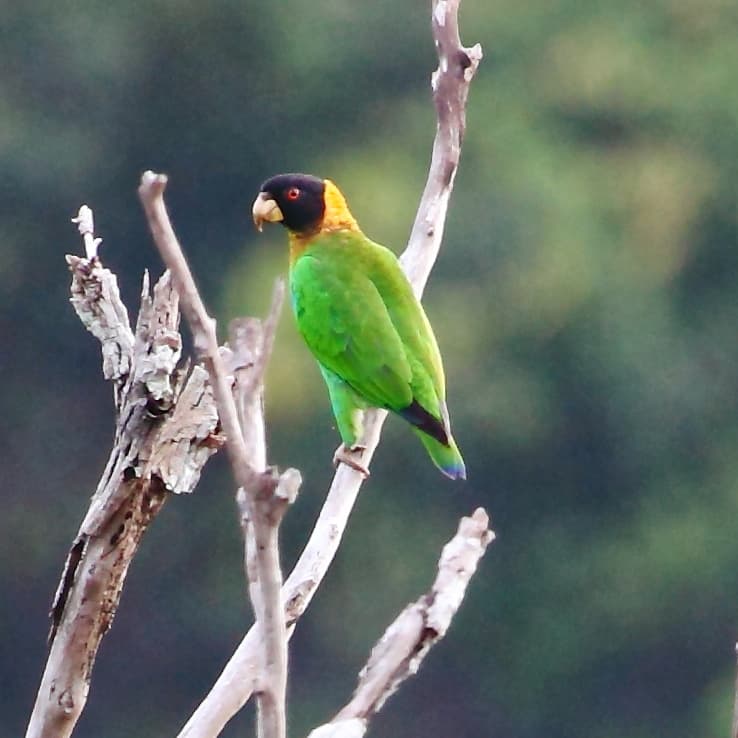
Caica parrot
The Caica parrot is a species of parrot found in the northeastern Amazon Basin of South America, inhabiting mature terra firme forests. It is distinguished by its brownish-black head, golden collar, and green body, with specific blue and black markings on its wings and tail. While its exact movements and foraging behavior are not well-documented, it is known to feed on seeds and fruits and has a distinctive nasal flight call.
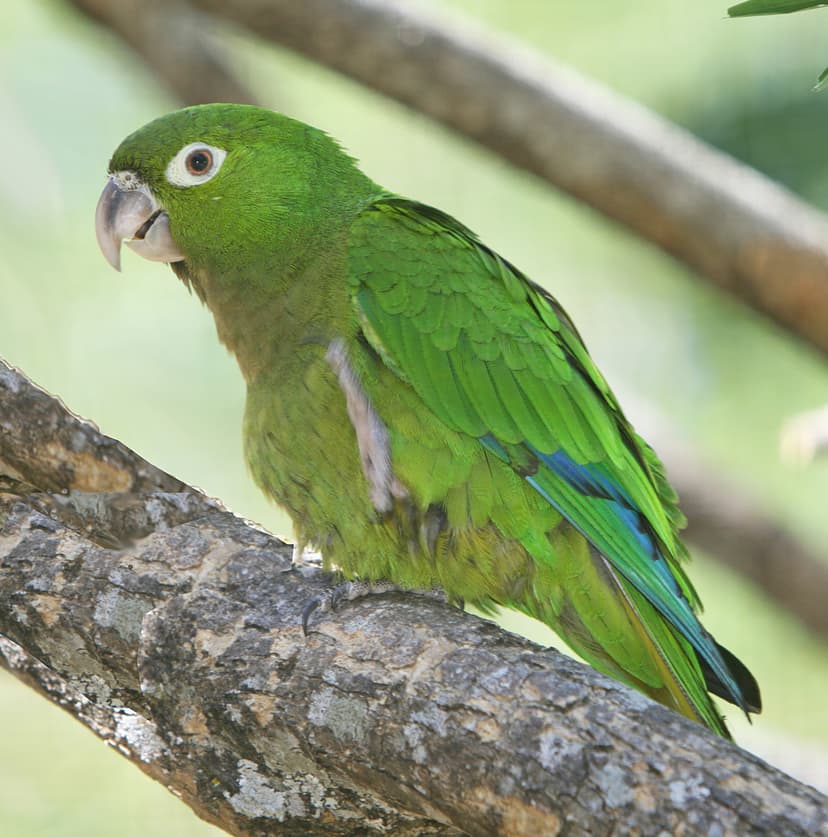
Jamaican parakeet
The Jamaican parakeet, also known as the nominate subspecies of the olive-throated parakeet (Eupsittula nana), is a bird native to Jamaica and introduced to the Dominican Republic. It is distinguished by its primarily green plumage with yellowish ear coverts, olive-brown throat and breast, and bare white skin around its eyes. This species is known for its social behavior, often forming flocks and utilizing termitaria for nesting.
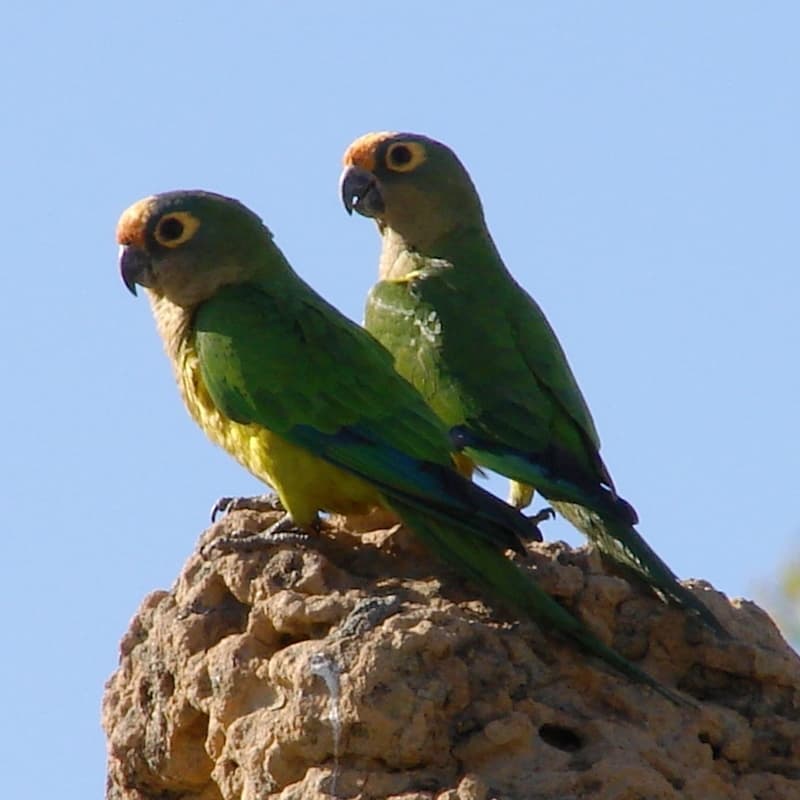
Peach-fronted parakeet
The Peach-fronted parakeet is a species of parrot found in South America, inhabiting a variety of semi-open to wooded landscapes. It is distinguished by its peachy orange forehead and hindcrown of dull blue, and is known for its varied diet and nesting habits.