
Peach-fronted parakeet
The Peach-fronted parakeet is a species of parrot found in South America, inhabiting a variety of semi-open to wooded landscapes. It is distinguished by its peachy orange forehead and hindcrown of dull blue, and is known for its varied diet and nesting habits.
Key Facts
- ›Found in Argentina, Bolivia, Brazil, Paraguay, Peru, and Suriname.
- ›Adults have a peachy orange forehead and dull blue hindcrown.
- ›Inhabits diverse environments including palm groves, cerrado, gallery forests, and urban areas.
- ›Primarily feeds on seeds, termites, and insect larvae.
- ›Nests are typically excavated in termitaria (termite mounds).
- ›Assessed by the IUCN as Least Concern due to a large range and stable population.
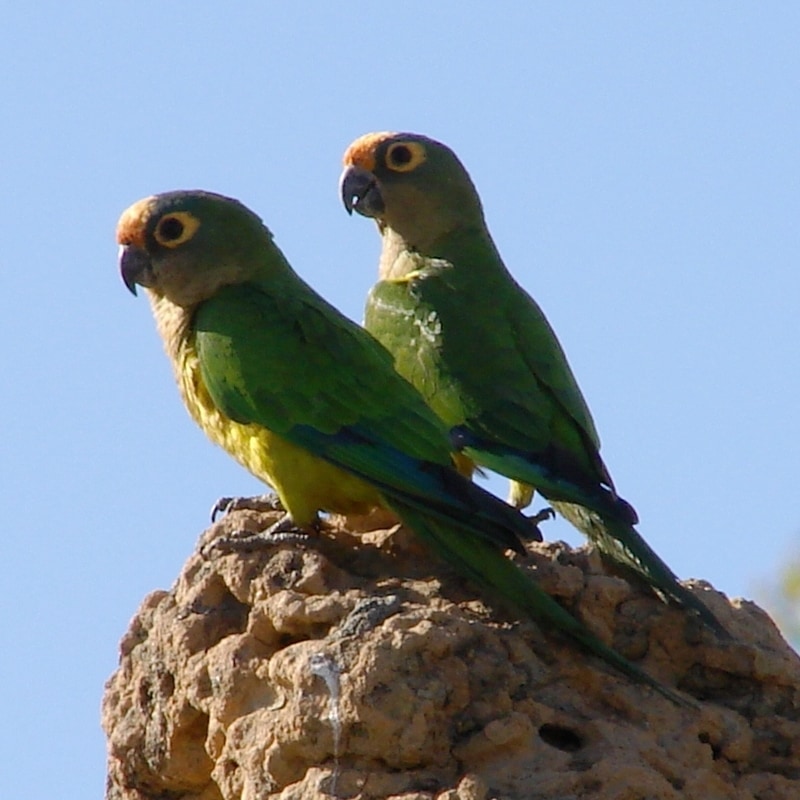
Peach-Fronted Conure
South America
Semi-Open To Wooded Landscapes, Mauritia Palm Groves, Cerrado, Gallery Forest, Campo Rupestre, Urban Areas
Peachy Orange, Dull Blue, Dull Green, Pale Olive-Brown, Greenish Yellow, Greenish Blue
Peachy Orange Forehead and Forecrown, Dull Blue Hindcrown, Bare Yellow Skin Around the Eye
Seeds, Termites, Insect Larvae
- Rolling call
- Irregular pitch variation from low to very high
Excavates Nest In Termitaria
About Peach-fronted parakeet
The Peach-fronted parakeet, scientifically known as Eupsittula aurea, is a vibrant species of parrot native to South America. Its common name, and its Latin specific epithet 'aurea' meaning 'golden,' allude to its distinctive plumage. It is also recognized in aviculture as the peach-fronted conure.
Distribution and Habitat
This parakeet is found across a broad swathe of South America, with its range extending through Suriname, Brazil, Bolivia, Peru, Paraguay, and into northeastern Argentina. Its adaptability is reflected in the diverse habitats it occupies, from semi-open woodlands and gallery forests to cerrado (savanna-like grasslands), campo rupestre, and even urban environments. They are particularly noted for inhabiting areas with Mauritia palms.
Physical Description
Adult Peach-fronted parakeets typically measure between 23 to 28 cm in length and weigh between 74 to 94 grams. The sexes are visually identical. The most striking feature is the peachy orange coloration on the forehead and forecrown, contrasting with a dull blue hindcrown. Their eyes are encircled by bare yellow skin. The nape, upperparts, and tail are a dull green, while the cheeks and throat are pale olive-brown. This coloration transitions to a greenish yellow on the belly, vent, and undertail coverts. The wings are predominantly green on the upper surface and yellowish-green underneath, with greenish-blue flight feathers.
Diet and Behavior
The Peach-fronted parakeet is an opportunistic forager, with its diet primarily consisting of seeds from various plants. It also consumes termites and insect larvae, often foraging on the ground and in agricultural fields. While they appear to make local movements based on food availability, they do not exhibit regular migratory patterns.
Reproduction
Breeding times vary geographically; in Peru, they breed in June and July, while in central Brazil, this occurs between September and December. A notable nesting habit involves excavating their nests within termitaria, which can be located both on the ground and within trees. A typical clutch comprises two to four eggs. In captivity, incubation lasts approximately 23 days, with fledging occurring around 48 days after hatching.
Vocalization
Their call is described as a rolling 'vreet vreet-vreet-vreet-vreet,' characterized by irregular shifts from low to very high pitches.
Conservation Status
Assessed by the IUCN as Least Concern, the Peach-fronted parakeet benefits from a very large range and a population believed to be stable. Despite facing threats from the pet trade, particularly the capture of nestlings leading to high mortality rates, its overall conservation status remains favorable. The species is considered common in Suriname and abundant in Paraguay, and in Brazil, it is the most prevalent Eupsittula parakeet, potentially even benefiting from agricultural land clearing.
Source: Wikipedia ↗
Frequently Asked Questions
What are the physical characteristics of a Peach-fronted parakeet?
Adult Peach-fronted parakeets measure between 23 to 28 cm (9.1 to 11 in) in length and weigh 74 to 94 g (2.6 to 3.3 oz). They are characterized by a peachy orange forehead and forecrown, with a dull blue hindcrown. Bare yellow skin surrounds their eyes, and their plumage is predominantly dull green on the upperparts and tail, transitioning to greenish yellow on the vent and undertail coverts.
Where does the Peach-fronted parakeet live?
The Peach-fronted parakeet is distributed from southern Suriname southward through most of eastern Brazil, extending to eastern Bolivia, southeastern Peru, central and eastern Paraguay, and a small part of northeastern Argentina. They adapt to various environments, including palm groves, cerrado, gallery forests, savanna-like grasslands, and even urban settings.
What does the Peach-fronted parakeet eat?
The primary diet of the Peach-fronted parakeet consists of seeds from a wide variety of plants. They also supplement their diet by feeding on termites and insect larvae. They are known to forage on the ground and in agricultural fields, both before and after harvest.
How does the Peach-fronted parakeet breed?
Breeding seasons vary by region, with nests found in June and July in Peru, and between September and December in central Brazil. They typically excavate their nests within termitaria, which can be found on the ground or in trees. A clutch usually contains two to four eggs.
What is the conservation status of the Peach-fronted parakeet?
The Peach-fronted parakeet is listed as Least Concern by the IUCN. This is attributed to its very large geographic range and a believed stable population size. While the pet trade poses a threat, particularly through the taking of nestlings, its overall numbers are considered secure.
What is the typical call of the Peach-fronted parakeet?
The call of the Peach-fronted parakeet is described as a rolling 'vreet vreet-vreet-vreet-vreet'. This vocalization can irregularly shift in pitch, moving from low to very high.
Related Parrot species
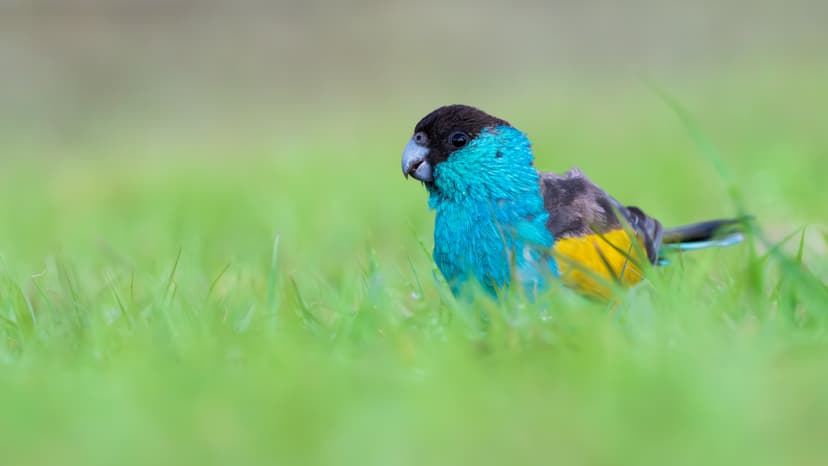
Hooded parrot
The hooded parrot is a species native to the Northern Territory in Australia, inhabiting savannah and open woodland. It is distinctive for being one of the few parrots that breed in termite mounds, and males are recognized by their black head and yellow wing patches. While once more widespread, it remains common in protected areas.

Aztec parakeet
The Aztec parakeet, also known as the olive-throated parakeet, is a species of bird found from Mexico to Costa Rica and in Jamaica. It is distinctive for its mainly dark green plumage with yellowish ear coverts and rump, and an olive-brown throat and breast. This species is known for its vocalizations, described as sharp, grating calls, and its adaptability to various woodland and forest habitats.
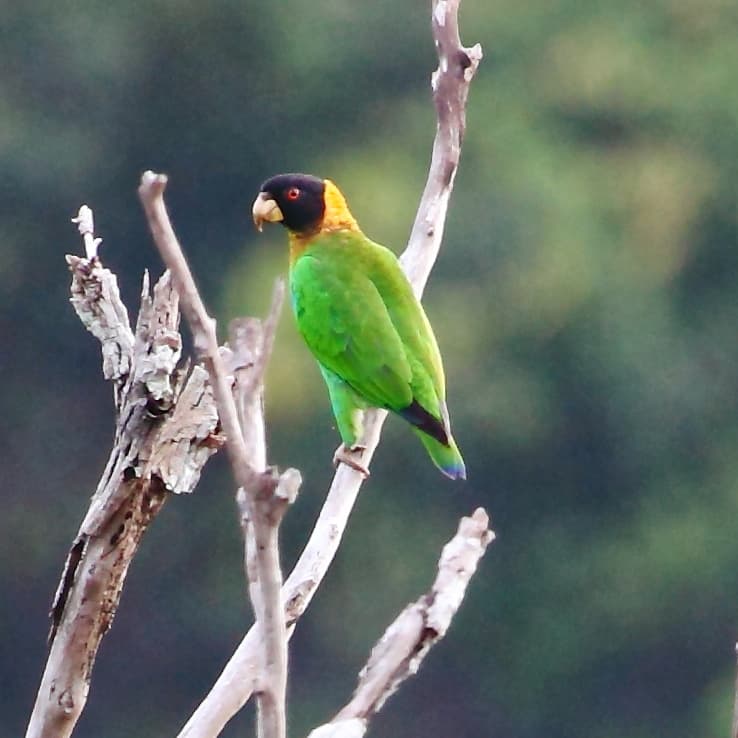
Caica parrot
The Caica parrot is a species of parrot found in the northeastern Amazon Basin of South America, inhabiting mature terra firme forests. It is distinguished by its brownish-black head, golden collar, and green body, with specific blue and black markings on its wings and tail. While its exact movements and foraging behavior are not well-documented, it is known to feed on seeds and fruits and has a distinctive nasal flight call.