
Jamaican parakeet
Near Threatened (for nominate subspecies)
The Jamaican parakeet, also known as the nominate subspecies of the olive-throated parakeet (Eupsittula nana), is a bird native to Jamaica and introduced to the Dominican Republic. It is distinguished by its primarily green plumage with yellowish ear coverts, olive-brown throat and breast, and bare white skin around its eyes. This species is known for its social behavior, often forming flocks and utilizing termitaria for nesting.
Key Facts
- ›The Jamaican parakeet is the nominate subspecies of the olive-throated parakeet, scientifically known as Eupsittula nana.
- ›Adults are mainly dark green with yellowish ear coverts, an olive-brown throat and breast, and bare white skin around their eyes.
- ›They typically nest in cavities within termitaria, which they usually excavate themselves, though tree holes have also been used in Jamaica.
- ›The species is known to form flocks, sometimes numbering up to 20 individuals in Jamaica and over 50 on the mainland.
- ›In Jamaica, it is considered a crop pest, particularly damaging maize and cultivated fruits.
- ›The Jamaican population is classified as near Threatened by the IUCN due to habitat loss and fragmentation.
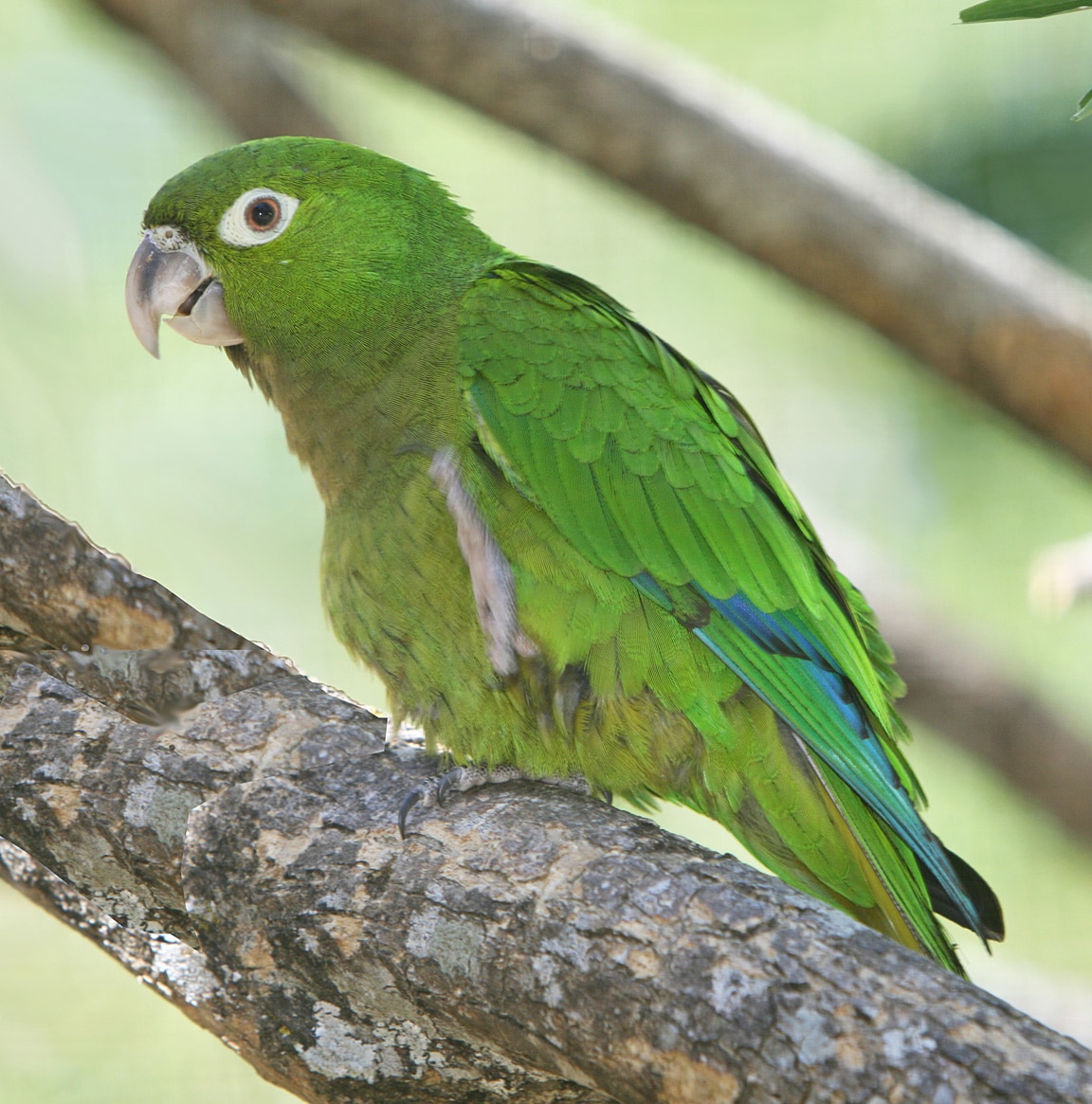
Olive-Throated Parakeet, Olive-Throated Conure
Jamaica, Mexico, Central America, Caribbean
Deciduous Woodlands, Humid Forest, Riparian Areas, Scrublands, Plantations, Gardens, Pine Stands
Yellowish Ear Coverts, Olive-Brown Throat and Breast, Bare White Skin Around the Eyes
Figs, Other Fruits, Leaves, Flowers, Maize, Corn
Sharp, Grating "Krik-Krik-Krik-Krik", Raucous "Krrieh Krrie Krreah"
Cavities In Termitaria, Tree Holes
About Jamaican parakeet
The Jamaican Parakeet
The Jamaican parakeet, recognized taxonomically as the nominate subspecies (E. n. nana) of the olive-throated parakeet (Eupsittula nana), is a species of parrot native to Jamaica and has been introduced to the Dominican Republic. This bird belongs to the Arinae subfamily within the Psittacidae family, encompassing the African and New World parrots.
Physical Description
Adult Jamaican parakeets are characterized by their predominantly dark green plumage on the head and upperparts, complemented by yellowish ear coverts and a yellowish rump. A distinctive feature is the bare white skin encircling their eyes. Their throat and breast display an olive-brown hue, which gradually transitions to olive on the belly and vent. The wings are largely green, with dull blue visible on the upper side of the flight feathers and gray underneath. The tail is green on its upper surface and yellowish beneath. The bill is typically a brownish horn color with a lighter tip, their irises are yellow to orange, and their legs are blackish gray. Immature birds bear a resemblance to adults.
Distribution and Habitat
The natural range of the Jamaican parakeet is Jamaica, though it has established a presence in the Dominican Republic due to introduction. Their preferred habitat includes deciduous woodlands, the interior and edges of humid forests, riparian zones, and scrublands. They are also found in more open landscapes such as plantations, clearings with trees, and gardens, and notably inhabit pine stands.
Behavior and Diet
These parakeets are social creatures, often observed in flocks. In Jamaica, flocks typically consist of up to about 20 individuals. Their diet is largely comprised of fig fruits (Ficus), supplemented by other fruits, leaves, and flowers. On Jamaica, the species is considered a crop pest due to its feeding habits, particularly on maize, but also on corn and cultivated fruits.
Reproduction
The breeding season for the Jamaican parakeet in Jamaica occurs between March and June. They construct their nests in cavities within termitaria, which they usually excavate themselves. In some instances, nesting in tree holes has been recorded on Jamaica. The clutch size generally ranges from three to five eggs, though details regarding incubation and fledging periods are not extensively documented.
Conservation Status
The Jamaican population of the olive-throated parakeet is classified as Near Threatened by the International Union for Conservation of Nature (IUCN). This designation is a result of a confined geographic range and an estimated population of 10,000 to 20,000 mature individuals, which is believed to be declining. Major threats include habitat loss and fragmentation, exacerbated by coastal development for residences and tourism. Small-scale poaching for food and the pet trade also contribute to population declines. Despite being persecuted as a crop pest, the species is considered common in Jamaica.
Source: Wikipedia ↗
Frequently Asked Questions
What is the scientific name of the Jamaican parakeet?
The Jamaican parakeet is the nominate subspecies of the olive-throated parakeet, scientifically named Eupsittula nana (E. n. nana).
What does a Jamaican parakeet look like?
Adult Jamaican parakeets have a mainly dark green head and upperparts, with yellowish ear coverts and rump. Their throat and breast are olive-brown, transitioning to olive on the belly and vent, and they have bare white skin around their eyes.
Where does the Jamaican parakeet live?
The Jamaican parakeet is naturally found in Jamaica and has also been introduced to the Dominican Republic. Its habitat includes deciduous woodlands, humid forest interiors and edges, riparian areas, and scrublands.
What is the diet of the Jamaican parakeet?
The primary food source for the Jamaican parakeet includes fig fruits (Ficus). They also consume other fruits, leaves, and flowers. In Jamaica, they are known to feed on maize and cultivated fruits.
How do Jamaican parakeets nest?
Jamaican parakeets typically nest in cavities within termitaria, which they often excavate themselves. In Jamaica, they have also been observed nesting in tree holes.
What is the conservation status of the Jamaican parakeet?
The Jamaican population of the olive-throated parakeet is classified as Near Threatened by the IUCN. This status is due to their confined range and a believed decreasing population, with habitat loss and fragmentation being significant threats.
Related Parrot species

Aztec parakeet
The Aztec parakeet, also known as the olive-throated parakeet, is a species of bird found from Mexico to Costa Rica and in Jamaica. It is distinctive for its mainly dark green plumage with yellowish ear coverts and rump, and an olive-brown throat and breast. This species is known for its vocalizations, described as sharp, grating calls, and its adaptability to various woodland and forest habitats.

Golden-tailed parrotlet
The golden-tailed parrotlet is a small, predominantly green parrot endemic to eastern Brazil, distinguished by its vibrant yellow facial markings and a white eye ring. It inhabits humid evergreen forests and forest fragments, often foraging in small family groups. This species is currently listed as Vulnerable due to extensive deforestation, though it may be more resilient to habitat fragmentation than previously believed.
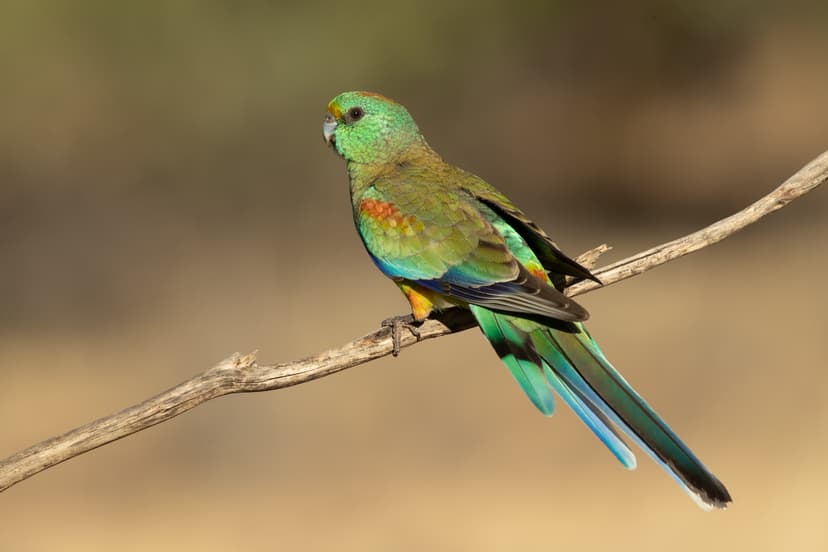
Mulga parrot
The mulga parrot is a medium-sized parrot endemic to the arid interior of southern Australia, known for its striking multicolored plumage, especially in males. It inhabits dry grasslands and mulga scrublands and is often seen in pairs. This species is sexually dimorphic, with males displaying vibrant greens, yellows, blues, and reds, while females are a duller olive-brown.