
Montane racket-tail
The montane racket-tail is a species of parrot found exclusively in the Philippines' northern Luzon mountains. It is distinguished by its habitat in high-altitude tropical moist montane forests and its near threatened conservation status. This species exhibits sexual dimorphism, with males displaying a bluish crown and red spot, while females have green heads with a pale blue tinge.
Key Facts
- ›Endemic to the mountainous regions of northern Luzon, Philippines.
- ›Inhabits tropical moist montane forests at elevations between 700 and 2,900 meters.
- ›Feeds on a diet of berries, seeds, and nuts.
- ›Exhibits sexual dimorphism, with distinct color differences between males and females.
- ›Considered 'near threatened' by the IUCN, with an estimated population of 1,500 to 7,000 mature individuals.
- ›Nesting occurs in tree cavities.
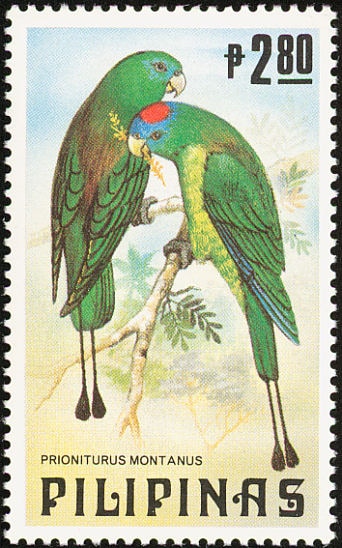
Luzon Racket-Tail
Philippines
Tropical Moist Montane Forests, Cultivated Areas
Racket-Shaped Tail Feathers, Sexual Dimorphism
Berries, Seeds, Nuts
Not Specified
Not Specified
Cavity Nesters
About Montane racket-tail
The montane racket-tail, scientifically known as Prioniturus montanus, is a species of parrot endemic to the Philippines. Previously considered the same species as the Mindanao racket-tail, it is now recognized as distinct. This parrot is found exclusively in the mountainous regions of northern Luzon, inhabiting tropical moist montane forests at elevations ranging from 700 to 2,900 meters above sea level. It is also known to venture into cultivated areas.
Description and Taxonomy
A notable characteristic of the montane racket-tail is its sexual dimorphism. Males possess a distinctive bluish crown and a bright red spot on their head, while females exhibit a green head with a subtle, very light blue tinge. Like other members of the racket-tail genus, they are distinguished by their unique tail feathers.
Ecology and Behavior
The diet of the montane racket-tail consists of natural food sources available in its environment, including berries, seeds, and nuts. Breeding activity for this species takes place from August to September. They are cavity nesters, utilizing natural holes or cavities, typically in trees, for their nests.
Habitat and Conservation
The montane racket-tail's primary habitat is the tropical moist montane forest. The species faces threats primarily from habitat loss, although its impact is less severe within its altitudinal range compared to lowland forests. The IUCN has assessed the montane racket-tail as 'near threatened,' with an estimated population of 1,500 to 7,000 mature individuals.
Under Philippine Law RA 9147, the hunting, capture, or possession of this species is illegal, underscoring conservation efforts for its protection.
Source: Wikipedia ↗
Frequently Asked Questions
What are the distinctive features of the montane racket-tail?
The montane racket-tail exhibits sexual dimorphism. Males are characterized by a bluish crown and a bright red spot, while females have a green head with a very light blue tinge. Both sexes share the characteristic racket-shaped tail feathers of their genus.
Where does the montane racket-tail live?
This parrot species is endemic to the mountainous regions of northern Luzon in the Philippines. Its natural habitat consists of tropical moist montane forests, typically found at elevations ranging from 700 to 2,900 meters above sea level. It has also been observed visiting cultivated areas.
What does the montane racket-tail eat?
The diet of the montane racket-tail primarily consists of natural food sources found within its habitat. They are known to feed on berries, seeds, and nuts.
When does the montane racket-tail breed?
The breeding season for the montane racket-tail occurs during the months of August and September. Like other racket-tails, they are cavity nesters, meaning they lay their eggs and raise their young in pre-existing holes or cavities, typically in trees.
What is the conservation status of the montane racket-tail?
The montane racket-tail is currently assessed as 'near threatened' by the International Union for Conservation of Nature (IUCN). Its population is estimated to be between 1,500 and 7,000 mature individuals. While forest loss is a recognized threat, it is not considered as severe for this species within its altitudinal range compared to lowland forest dwellers.
Is the montane racket-tail protected by law?
Yes, the montane racket-tail is protected under Philippine Law RA 9147. This legislation makes it illegal to hunt, capture, or possess this species, highlighting efforts to conserve its population.
Related Parrot species

Nicobar parakeet
The Nicobar parakeet (Psittacula caniceps), also known as Blyth's parakeet, is a large parrot endemic to the Nicobar Islands in the Indian Ocean. It is distinguished by its predominantly green plumage, yellowish-grey head, and striking black facial markings, with notable differences in beak color between males and females. Listed as Near Threatened, its population is declining due to human settlement and its popularity in the caged bird trade.
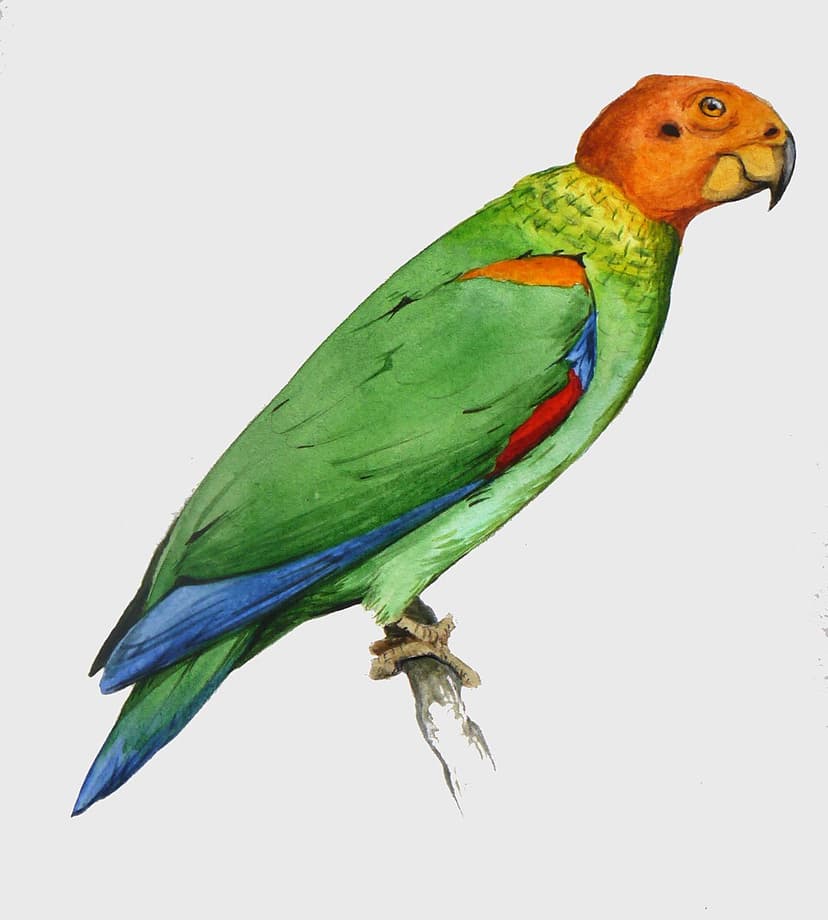
Bald parrot
The bald parrot, scientifically known as Pyrilia aurantiocephala, is a medium-small parrot species endemic to the east-central Amazon of Brazil. It is distinguished by its striking bald, brownish-orange head and red underwing coverts, which are conspicuous in flight. This species inhabits tropical moist lowland forests and is considered near threatened due to extensive deforestation in its native range.
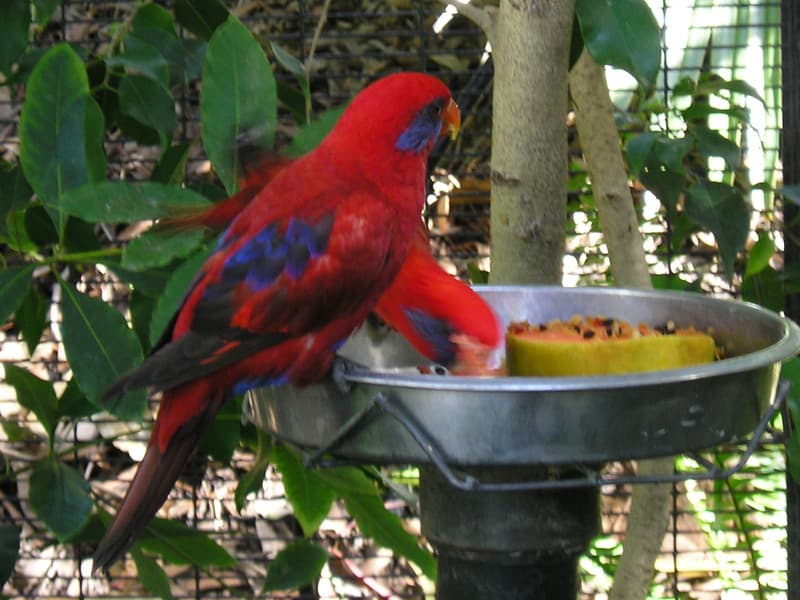
Blue-eared lory
The blue-eared lory is a small parrot native exclusively to the island of Seram in Indonesia. It is distinctive for its vibrant plumage, featuring a red body contrasted with blue cheeks and ear-coverts, and a purple-blue abdomen. This species is considered Near Threatened due to a declining population within its limited range.