
Cliff parakeet
The cliff parakeet is a species of parrot endemic to Bolivia, known for its distinctive green and blue plumage with a yellow belly. Unlike its close relative, the monk parakeet, it builds solitary stick nests on cliffs rather than communal ones in trees, a unique characteristic among parrots. Its diet consists primarily of fruits and seeds, though it also consumes crops, leading to conflict with agriculture.
Key Facts
- ›Endemic to Bolivia, found in specific departments like Chuquisaca, Cochabamba, La Paz, Potosí, and Santa Cruz.
- ›Distinctive plumage includes a gray face, throat, and breast, a yellow belly, and green flanks and undertail coverts, with blue primaries.
- ›Builds solitary nests made of sticks on cliffs, a departure from the communal tree-nesting behavior of other parakeets.
- ›Diet comprises fruits, seeds, and agricultural crops like maize.
- ›Classified as near Threatened by the IUCN due to a limited range, decreasing population, and persecution as a crop pest.
- ›Differs from the monk parakeet by having a paler breast and more vibrant coloration.

Cliff Parakeet
Bolivia
Dry Intermontane Valleys, Xerophytic Vegetation Near Cliffs
- Gray Face, Throat, and Breast
- Yellow Belly
- Green Flanks, Vent, Undertail Coverts, and Thighs
- Blue Primaries and Outer Secondaries
- Bare Gray Skin Around the Eyes
Fruits, Seeds, Maize
- Builds bulky nests out of sticks on cliffs
- Nests are solitary, not communal
- One of only two parrot species that do not nest in cavities or burrows
About Cliff parakeet
The cliff parakeet (Myiopsitta luchsi) is a species of parrot found exclusively in Bolivia. It is recognized for its distinctive plumage, featuring a gray face, throat, and breast, a vibrant yellow belly, and predominantly green body with striking blue on its primary wing feathers. This parakeet is notable for its unique nesting behavior; unlike many other parrot species, it constructs solitary nests made of sticks directly on cliff faces, rather than communal nests in trees or cavities.
Distribution and Habitat
This species is endemic to Bolivia, inhabiting dry intermontane valleys characterized by xerophytic vegetation, typically in proximity to cliffs. It is found in the departments of Chuquisaca, Cochabamba, La Paz, Potosí, and Santa Cruz, and its elevation range spans from 1,300 to 3,000 meters (4,300 to 9,800 feet). The cliff parakeet is not believed to migrate.
Diet and Behavior
The cliff parakeet's diet primarily consists of fruits and seeds, with specific mention of those from the plants Neoraimondia herzogiana and Acacia furcatispina. However, they are also known to consume maize from cultivated fields, which can lead to conflict with agricultural interests.
Breeding
The breeding season for the cliff parakeet occurs from December to March. During this period, they build substantial nests from sticks on cliff ledges. A key behavioral distinction is that these nests are not communal, though they may be situated close to one another. The clutch size is estimated to be around six eggs, and there is some evidence suggesting that two broods may be raised within a single year.
Conservation Status
Once assessed as of Least Concern, the cliff parakeet's conservation status was updated to Near Threatened in 2021. This change reflects its very limited geographic range and a population estimated to be decreasing, numbering between 2,500 and 10,000 mature individuals. Its tendency to be persecuted as a crop pest further contributes to its vulnerable status.
Source: Wikipedia ↗
Frequently Asked Questions
What is the scientific name of the cliff parakeet?
The scientific name of the cliff parakeet is Myiopsitta luchsi. It was formerly considered a subspecies of the monk parakeet (Myiopsitta monachus) but was elevated to species status due to morphological and behavioral differences.
Where does the cliff parakeet live?
The cliff parakeet is endemic to Bolivia and inhabits dry intermontane valleys with xerophytic vegetation, typically found near cliffs. It ranges in elevation between 1,300 and 3,000 meters.
What makes the cliff parakeet's nests unique?
Unlike most parrots, the cliff parakeet builds solitary nests out of sticks on cliffs. This behavior is a significant distinction from the communal tree-nesting habits of its relative, the monk parakeet.
What does the cliff parakeet eat?
The diet of the cliff parakeet primarily consists of fruits and seeds, with notable consumption of those from Neoraimondia herzogiana and Acacia furcatispina. They also supplement their diet with maize from cultivated fields.
What is the conservation status of the cliff parakeet?
The cliff parakeet is currently listed as Near Threatened by the IUCN. This classification is due to its very limited geographic range, a declining population estimated between 2,500 and 10,000 mature individuals, and persecution as an agricultural pest.
How does the cliff parakeet differ from the monk parakeet?
The cliff parakeet is distinguished from the monk parakeet by its paler breast coloration and lack of scaling, and it tends to be more vibrant. Behaviorally, cliff parakeets build solitary stick nests on cliffs, whereas monk parakeets nest communally in trees.
Related Parrot species
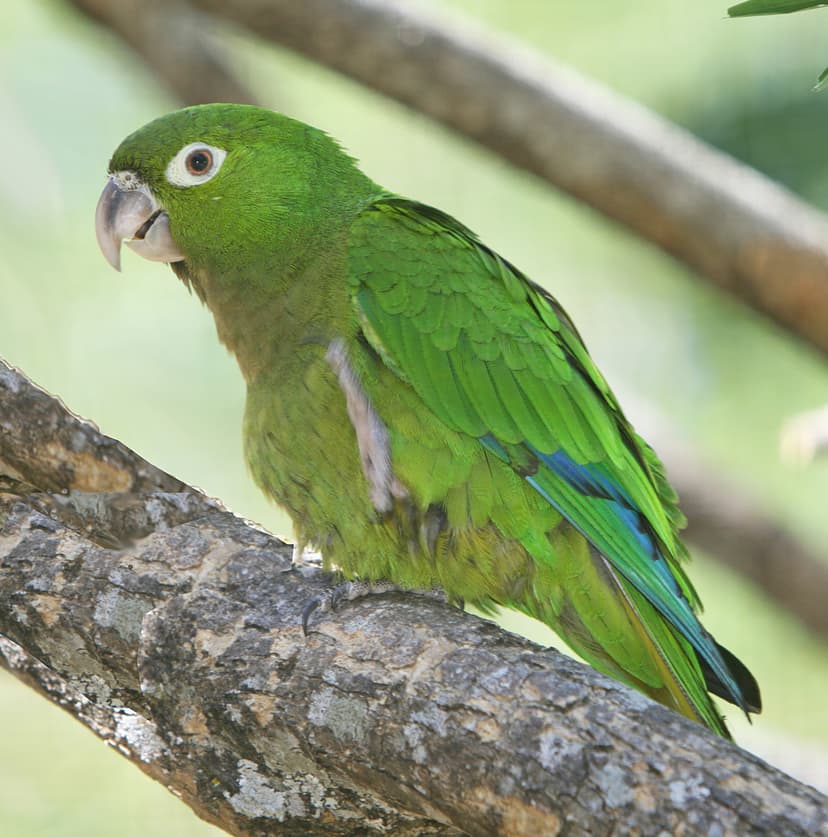
Jamaican parakeet
The Jamaican parakeet, also known as the nominate subspecies of the olive-throated parakeet (Eupsittula nana), is a bird native to Jamaica and introduced to the Dominican Republic. It is distinguished by its primarily green plumage with yellowish ear coverts, olive-brown throat and breast, and bare white skin around its eyes. This species is known for its social behavior, often forming flocks and utilizing termitaria for nesting.
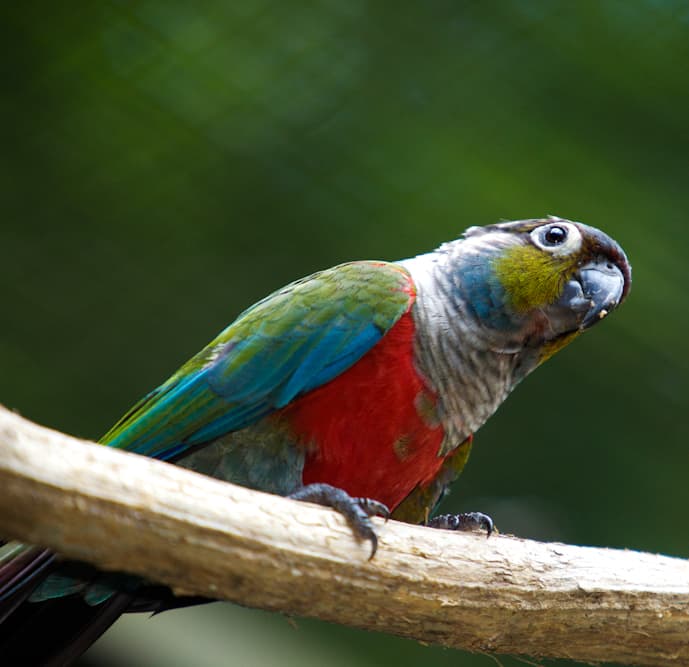
Crimson-bellied parakeet
The crimson-bellied parakeet, also known as the crimson-bellied conure in aviculture, is a species of parrot native to Bolivia and Brazil. This bird is distinctive for its striking red belly contrasting with its predominantly green plumage, and it inhabits the canopy of humid forests. Despite its large range, its population is believed to be decreasing due to deforestation.

Mindanao lorikeet
The Mindanao lorikeet is a parrot species endemic to the island of Mindanao in the Philippines. It is distinguished by its vibrant green plumage, red face, and a distinctive dark purple band across its head. This species inhabits tropical moist montane forests and faces significant threats from habitat loss and the illegal pet trade.