
Imperial amazon
The Imperial Amazon, also known as the sisserou parrot, is a critically endangered parrot endemic to the Caribbean island of Dominica. It is distinguished by its striking plumage, with males and females sharing identical dark purple chests and dark green upper parts, and its designation as Dominica's national bird, featured on its flag. Sadly, its population has dwindled significantly, facing threats from hurricanes, habitat loss, and illegal trade.
Key Facts
- ›Measures approximately 48 cm (19 in) in length.
- ›Males typically weigh around 900 g (32 oz), while females average 650 g (23 oz).
- ›Plumage is identical in both sexes: dark purple chest and dark green upper parts with black-edged feather tips.
- ›Its diet consists of fruits, seeds, nuts, berries, blossoms, and palm shoots.
- ›It is the national bird of Dominica and is depicted on its national flag.
- ›The species is critically endangered, with an estimated 50 mature individuals remaining in the wild as of 2019.

Dominican Amazon, Sisserou, Sisserou Parrot
Dominica
Mountain Rainforest, Elfin Forest
National bird of Dominica, Appears on the national flag of Dominica, Zygodactyl feet, Thick, hooked bill, Muscular tongue
Fruits, Seeds, Nuts, Berries, Blossoms, Palm Shoots
Shy, Difficult To Approach
- High-Frequency Calls
- Loud, Squeaky Mix of Shriek, Squawk, and Trill
- Nests in deep cavities inside rainforest trees
- Returns to the same tree year after year
About Imperial amazon
The Imperial Amazon
The Imperial Amazon, scientifically known as Amazona imperialis, is a magnificent parrot species that holds the distinction of being the national bird of Dominica, a Caribbean island. It is also commonly referred to as the sisserou parrot or Dominican amazon. This species is critically endangered, with its population having drastically declined to an estimated 50 mature individuals in the wild as of 2019. Its image is prominently featured on the national flag of Dominica, symbolizing its importance to the island's heritage.
Description and Characteristics
Imperial Amazons are large parrots, measuring approximately 48 cm (19 inches) in length. Males are notably heavier than females, with males averaging around 900 g (32 oz) and females about 650 g (23 oz). Belonging to the family Psittacidae, they possess zygodactyl feet, adapted for climbing, and a strong, hooked bill coupled with a muscular tongue, which aids in manipulating food. The plumage of both sexes is identical and striking: the chest is a deep shade of purple, while the upper parts and wings are a dark green, accented by black-edged feather tips. The eyes are a vivid mix of orange and red, encircled by a dark brown eye-ring. Juvenile birds exhibit a similar appearance but with a greater prevalence of green plumage and uniformly brown eyes.
Behavior and Diet
These parrots are characterized by their shy nature and are difficult to approach. They typically travel in small groups of three or fewer individuals and are known to sometimes flock with red-necked amazons. They are adept climbers and powerful flyers, often preferring to perch at the very tops of trees, where their plumage provides excellent camouflage, making them hard to detect. Their vocalizations are in the higher frequency range, described as loud, squeaky calls that blend shrieks, squawks, and trills. The diet of the Imperial Amazon is varied, consisting of fruits, seeds, nuts, berries, blossoms, and palm shoots. They show a particular fondness for the fruits of several specific tree species found in Dominica.
Breeding Habits
Imperial Amazons form lifelong pair bonds and are exceptionally faithful to their mates, often seeking a new partner only after the death of their current one. Breeding occurs annually between February and April. The female lays a clutch of two white eggs in a deep cavity within a rainforest tree, a nesting site they tend to return to year after year. The incubation period lasts for 26 to 28 days, during which the female remains on the eggs. Both parents are involved in feeding and caring for the chicks from hatching until they are ready to leave the nest, a process known as fledging, which typically takes place between June and early September. It is common for only one chick to survive to fledging, and pairs usually raise a single chick every other year, though exceptions have been noted.
Distribution and Habitat
The Imperial Amazon is endemic to the island nation of Dominica in the Lesser Antilles. It inhabits the island's mountainous rainforests, typically found at elevations above 600 meters (approximately 2,100 feet). They are frequently observed in areas such as Morne Diablotins and have been reintroduced into Morne Trois Pitons National Park. While primarily found in higher elevations, they have been sighted at lower altitudes, likely for foraging or food storage purposes.
Conservation Status and Threats
The species is critically endangered, facing numerous threats that have led to its precarious population status. Major challenges include the devastating impact of hurricanes, such as Hurricane David in 1979 and Hurricane Maria in 2017, which have severely damaged their habitat. Habitat loss due to selective logging, deforestation, and the expansion of plantations, particularly for bananas, further exacerbates the problem. Human encroachment and disturbance in forest areas also contribute to habitat degradation. Illegal trapping and trading for the black market remain a significant threat, despite educational programs aimed at reducing local demand and deterring illegal activities. Competition for nesting cavities with other species, including red-necked amazons and owls, creates a challenging environment, as does predation by Dominican boas, broad-winged hawks, opossums, and rats. Efforts are underway by conservation organizations and the Dominican government to protect remaining habitats and raise awareness to aid in the survival of this iconic species.
Source: Wikipedia ↗
Frequently Asked Questions
What is the scientific name for the Imperial Amazon?
The scientific name for the Imperial Amazon is Amazona imperialis. It is also commonly known as the Dominican amazon or sisserou parrot.
Where does the Imperial Amazon live?
The Imperial Amazon is found exclusively on the Caribbean island of Dominica. It inhabits mountain rainforest areas, typically at elevations between 600 and 1300 meters above sea level.
What does the Imperial Amazon look like?
Both male and female Imperial Amazons have a dark purple chest and dark green upper parts, with feathers edged in black. Their eyes are a striking mix of orange and red, surrounded by a dark brown eye-ring. Juveniles are similar but have more green plumage and brown eyes.
What is the conservation status of the Imperial Amazon?
The Imperial Amazon is classified as critically endangered. As of 2019, it was estimated that only about 50 mature individuals remained in the wild, making it one of the most threatened parrot species.
What are the main threats to the Imperial Amazon?
Major threats include severe hurricanes like David and Maria, habitat loss due to logging and human development, and illegal trapping for trade. Competition for nesting sites with other species and predation also pose challenges.
What do Imperial Amazons eat?
Their diet is varied and includes fruits, seeds, nuts, berries, blossoms, and palm shoots. Specific favorite foods include fruits from various Dacryodes and Licania species, as well as palm shoots and flowers.
How do Imperial Amazons breed?
Breeding occurs between February and April, with females laying two white eggs in tree cavities. The female incubates the eggs for 26-28 days, and both parents care for the chicks until they fledge between June and September. They are known to mate for life.
Related Parrot species

Mindanao lorikeet
The Mindanao lorikeet is a parrot species endemic to the island of Mindanao in the Philippines. It is distinguished by its vibrant green plumage, red face, and a distinctive dark purple band across its head. This species inhabits tropical moist montane forests and faces significant threats from habitat loss and the illegal pet trade.

Blue-winged racket-tail
The blue-winged racket-tail is a critically endangered parrot species endemic to Tawi-Tawi island in the Philippines. Its plumage is predominantly dark green with blue primary feathers and distinctive racquet-shaped tail feathers. The species faces severe threats from habitat loss and poaching for the illegal pet trade, leading to a drastically reduced population.
Maroon-fronted parrot
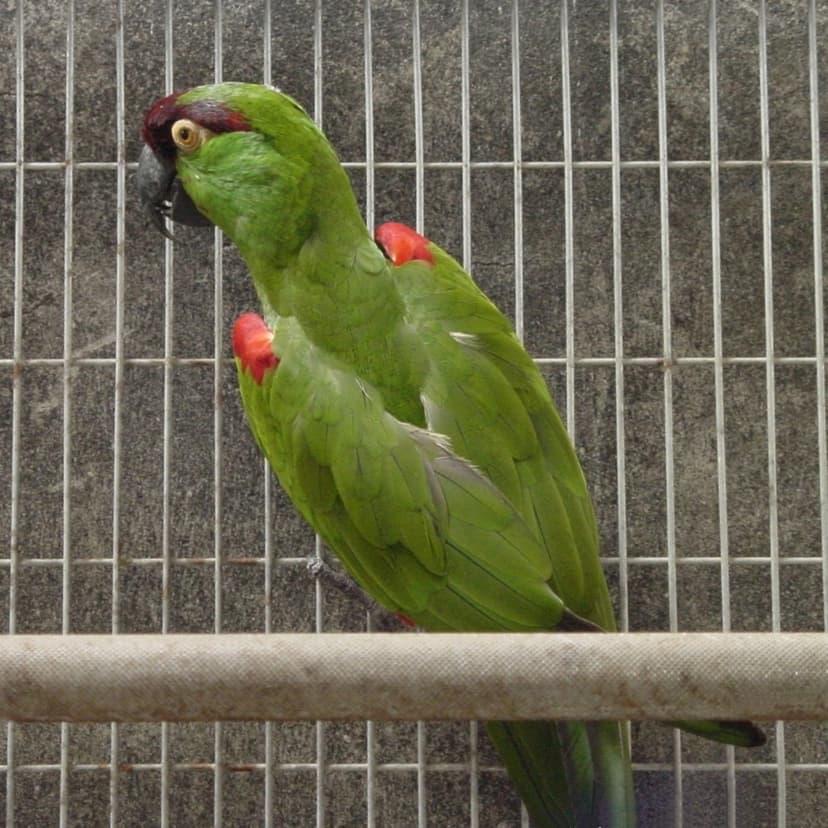
The maroon-fronted parrot is a large, macaw-like parrot native to northeastern Mexico. It is distinguished by its dark green plumage, maroon forehead, and red shoulder patches. These parrots are known for their distinctive "cr-a ak" vocalizations and their tendency to nest in large cliffside colonies.