
Blue-winged racket-tail
The blue-winged racket-tail is a critically endangered parrot species endemic to Tawi-Tawi island in the Philippines. Its plumage is predominantly dark green with blue primary feathers and distinctive racquet-shaped tail feathers. The species faces severe threats from habitat loss and poaching for the illegal pet trade, leading to a drastically reduced population.
Key Facts
- ›Endemic to Tawi-Tawi island in the Philippines.
- ›Characterized by dark green plumage, blue primary feathers, and racquet-shaped tail feathers.
- ›Males have a pale blue forehead with a small red patch; females lack this red spot.
- ›Its natural habitats include tropical moist lowland and mangrove forests.
- ›Considered Critically Endangered by the IUCN, with an estimated population of 50-249 mature individuals.
- ›Threatened by habitat destruction and poaching for the exotic pet trade.

Sulu Racquet-Tail
Philippines
Tropical Moist Lowland Forests, Subtropical Or Tropical Mangrove Forests
Racquet-shaped middle tail feathers, Pale blue forehead with small red patch
Fruit, Flowers, Seeds
Tame
- Cavity nester
- Nests in tree cavities, specifically recorded in a large broken-off palm tree.
About Blue-winged racket-tail
The blue-winged racket-tail, scientifically known as Prioniturus verticalis and sometimes referred to as the Sulu racquet-tail, is a species of parrot native exclusively to Tawi-Tawi island in the Philippines. This species is characterized by its predominantly dark green plumage on its back, with an olive-green hue on its breast and belly. A notable feature is its primary feathers, which are blue on the outer webs, and its middle tail feathers are distinctly racquet-shaped and black tinged with blue. Male birds display a pale blue forehead with a small red patch, a feature absent in females, who otherwise appear identical.
Ecology and Behavior
Research into the blue-winged racket-tail's ecology and behavior has been significantly hampered by the challenging security situation in the Sulu archipelago. However, based on related racquet-tail species, it is presumed to feed on a diet consisting of fruits, particularly bananas, as well as flowers and seeds from crops like corn and rice. The species is believed to be a cavity nester, with a single nest observed in a large, broken-off palm tree situated within a palm grove adjacent to a forest. Its breeding season is thought to occur between September and January.
Habitat and Conservation
The natural habitats of the blue-winged racket-tail are tropical moist lowland forests and subtropical or tropical mangrove forests. Tragically, this species is now assessed as Critically Endangered by the IUCN Red List, with population estimates ranging from a mere 50 to 249 mature individuals. The most significant threats it faces are habitat loss and relentless trapping for the cage-bird trade. Once common across the Sulu Archipelago, rapid habitat destruction over the past two centuries has confined the blue-winged racket-tail to isolated pockets on Tawi-Tawi. Its naturally tame behavior, unfortunately, makes it an easy target for poachers involved in the illegal exotic pet trade. Deforestation for logging, agriculture, mining, and uncontrolled human settlement has decimated its original habitat, pushing this unique parrot to the brink of extinction.
Source: Wikipedia ↗
Frequently Asked Questions
What does a blue-winged racket-tail look like?
The blue-winged racket-tail primarily has dark green plumage on its back, with an olive-green breast and belly. Its primary feathers are blue on the outer webs, and the middle tail feathers are green and racquet-shaped. Males possess a pale blue forehead with a small red patch, which females lack.
Where are blue-winged racket-tails found?
This parrot species is endemic to Tawi-Tawi island in the Philippines. It was once found throughout the Sulu Archipelago but is now restricted to isolated areas on Tawi-Tawi due to habitat loss.
What are the main threats to the blue-winged racket-tail?
The primary threats to the blue-winged racket-tail are habitat loss, resulting from deforestation for logging, agriculture, mining, and human settlement, and poaching for the illegal exotic pet trade. Its tame behavior makes it an easy target for trappers.
What is the conservation status of the blue-winged racket-tail?
The blue-winged racket-tail is assessed as Critically Endangered by the IUCN Red List. Population estimates suggest there are only 50 to 249 mature individuals remaining.
What do blue-winged racket-tails eat?
While detailed studies are limited due to security situations, it is presumed to have a diet similar to other racquet-tails. This would include fruits, particularly bananas, flowers, and seeds from corn and rice.
When do blue-winged racket-tails breed?
The breeding season for the blue-winged racket-tail is believed to occur from September to January. Like other parrots, they are cavity nesters, with one recorded nest found in a large broken-off palm tree.
Related Parrot species

Blue-winged parrot
The blue-winged parrot is a small parrot native to Tasmania and southeastern mainland Australia. It is known for its predominantly olive-green plumage with distinctive blue markings on the wings and a blue frontal band on the head, which differs between males and females. This species primarily feeds on grass seeds on the ground and is partly migratory, traveling between Tasmania for breeding and the mainland for winter.
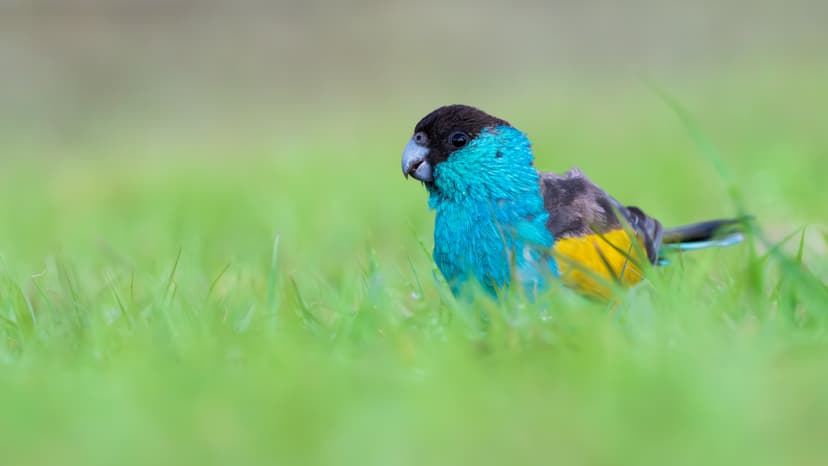
Hooded parrot
The hooded parrot is a species native to the Northern Territory in Australia, inhabiting savannah and open woodland. It is distinctive for being one of the few parrots that breed in termite mounds, and males are recognized by their black head and yellow wing patches. While once more widespread, it remains common in protected areas.

Barred parakeet
The barred parakeet, also known as the lineolated parakeet or "linnie," is a small bird native to the highland forests of tropical Latin America. It is characterized by its predominantly green plumage with distinctive black or dark green stripes and bars, and a pale peach-colored bill. Becoming a popular pet due to its calm disposition and ability to mimic speech, this species exhibits unique resting postures and a fondness for bathing.