
Black-cheeked lovebird
The black-cheeked lovebird is a small parrot species native to southwest Zambia, characterized by its predominantly green plumage, brown head, red beak, and distinctive white eyerings. It inhabits deciduous woodlands where permanent water sources are available and faces vulnerability due to habitat loss and desiccation of water bodies. These birds are known for their loud, piercing shrieks and can gather in large flocks, particularly during the dry season.
Key Facts
- ›Small parrot species, measuring approximately 14 cm in length.
- ›Predominantly green with a brown head, red beak, and white eyerings.
- ›Endemic to a limited range in southwest Zambia, with potential presence in neighboring countries.
- ›Requires access to permanent water sources and inhabits deciduous woodlands.
- ›Listed as a vulnerable species due to habitat loss and declining population.
- ›Feeds primarily on grass seeds, other vegetable matter, insect larvae, and grains like corn, sorghum, and millet.

Africa
Deciduous Woodland, Areas With Permanent Surface Water
White Eyerings, Red Beak, Brownish-Black Cheeks
Annual Grass Seeds, Other Vegetable Matter, Insect Larvae, Corn, Sorghum, Millet
Loud, Piercing Shrieks
About Black-cheeked lovebird
The black-cheeked lovebird (Agapornis nigrigenis) is a small parrot species belonging to the lovebird genus. It is distinguished by its predominantly green plumage, a reddish-brown forehead and forecrown, brownish-black cheeks and throat, and a bright red beak in adults. Notable features include an orange bib below the throat that transitions to yellowish-green and conspicuous white eyerings.
Distribution and Habitat
This species is endemic to a relatively confined geographical area in southwest Zambia. It inhabits deciduous woodlands, with a critical requirement for access to permanent surface water sources, as it needs to drink daily. During the dry season, these birds have been observed to gather in substantial flocks, sometimes numbering 800 individuals or more. Beyond Zambia, they may also be present in adjacent regions of Zimbabwe, Botswana, and Namibia.
Diet
The black-cheeked lovebird primarily forages at ground level for its sustenance. Its diet consists mainly of annual grass seeds, supplemented by other forms of vegetable matter and insect larvae. They also consume cultivated grains such as corn, sorghum, and millet.
Conservation Status
The black-cheeked lovebird is currently listed as a vulnerable species. Its population is experiencing a decline due to ongoing habitat loss, which encompasses the gradual drying up of water bodies, agricultural expansion, hunting and trapping pressures, fishing activities, logging, and the impact of diseases. Despite these challenges, the species is found within nature reserves, and an action plan is in place to aid its conservation.
Aviculture
While relatively easy to breed in captivity, the black-cheeked lovebird has historically seen limited interest in aviculture. They are currently uncommon in captivity and not widely kept as pets.
Source: Wikipedia ↗
Frequently Asked Questions
Where do black-cheeked lovebirds naturally live?
Black-cheeked lovebirds are endemic to a relatively small range in southwest Zambia. They may also be found in parts of Zimbabwe, Botswana, and Namibia. Their habitat is typically deciduous woodland that has permanent water supplies.
What does a black-cheeked lovebird look like?
This lovebird is mainly green with a reddish-brown forehead and forecrown, brownish-black cheeks and throat, and an orange bib below the throat that fades to yellowish-green. They have prominent white eye-rings and bright red beaks as adults; juveniles have more orange bills.
What is the conservation status of the black-cheeked lovebird?
The black-cheeked lovebird is listed as a vulnerable species. Its population is in decline primarily due to continuous habitat loss, which includes the desiccation of water bodies, farming practices, hunting, trapping, logging, and diseases.
What do black-cheeked lovebirds eat?
Their diet consists mainly of annual grass seeds found at ground level. They also consume other vegetable matter, insect larvae, and grains such as corn, sorghum, and millet.
Are black-cheeked lovebirds social birds?
Yes, black-cheeked lovebirds can congregate in large flocks, especially during the dry season. Flocks of 800 or more individuals have been observed.
Are black-cheeked lovebirds common as pets?
They are relatively easy to breed in aviculture, but they are currently uncommon in aviculture and uncommon as pets. There was less interest in breeding them in the early to mid-twentieth century.
Related Parrot species

Golden-collared macaw
The golden-collared macaw, also known as the yellow-collared macaw, is a small, primarily green parrot native to Central and South America. It is distinguished by a vibrant yellow collar on the back of its neck, a feature that becomes more pronounced with age. Often referred to as a "mini-macaw" in aviculture, this species is known for its social nature and intelligence.
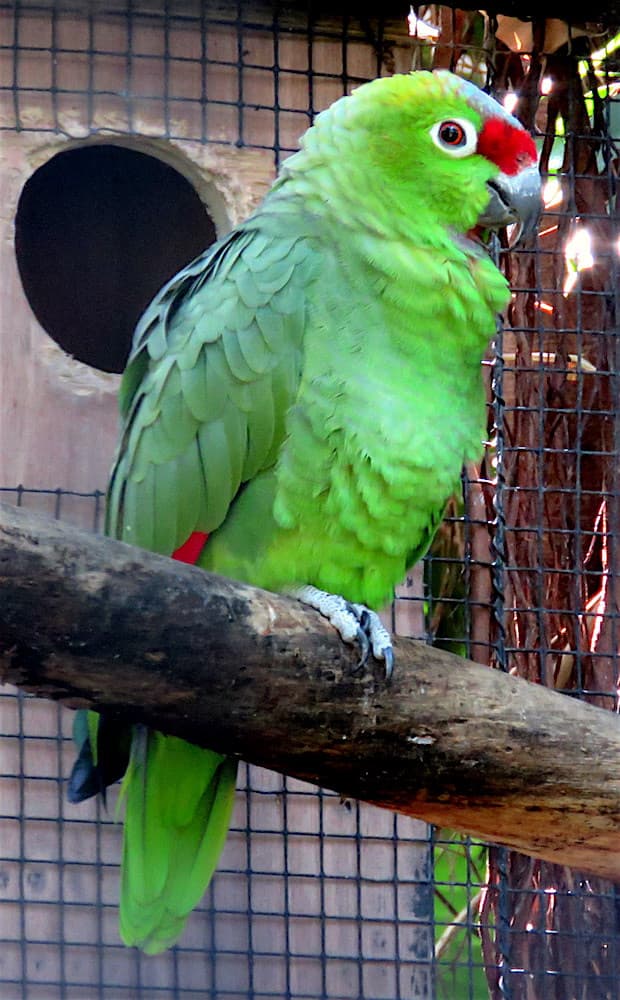
Diademed amazon
The Diademed Amazon (Amazona diadema) is a species of parrot native to the Amazon basin in north-western Brazil. It was formerly considered a subspecies of the Red-lored Amazon but is now recognized as distinct, though molecular analysis may further clarify its species status. This largely green parrot is distinguished by subtle red and black markings, particularly on its forehead and wing feathers, and inhabits lowland forests.
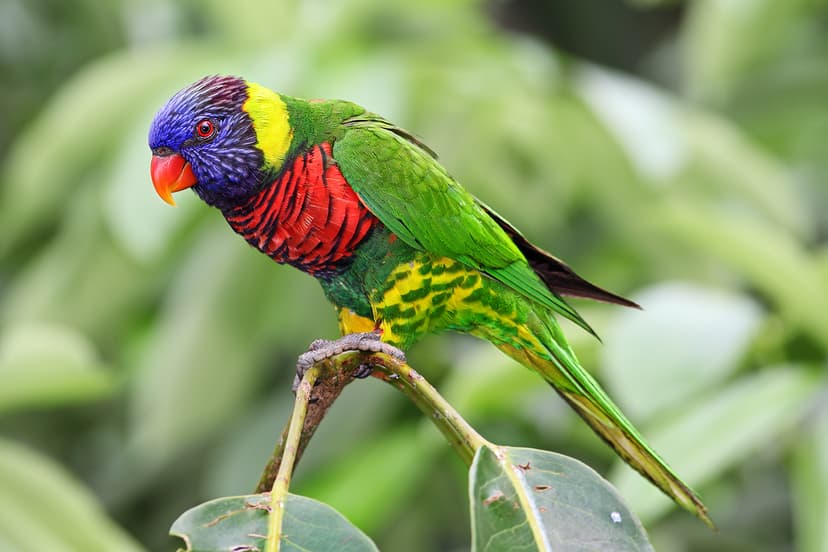
Coconut lorikeet
The coconut lorikeet is a vibrant parrot species primarily found in Melanesia and nearby regions, including New Guinea and the Solomon Islands. It is distinguished by its striking plumage, featuring a blue head, yellow collar, green upperparts, and a red breast, often with blue-black barring. This species plays a vital ecological role by feeding on nectar and pollen, utilizing a specialized brush-tipped tongue.