
Golden-collared macaw
The golden-collared macaw, also known as the yellow-collared macaw, is a small, primarily green parrot native to Central and South America. It is distinguished by a vibrant yellow collar on the back of its neck, a feature that becomes more pronounced with age. Often referred to as a "mini-macaw" in aviculture, this species is known for its social nature and intelligence.
Key Facts
- ›Total length is approximately 38 cm, with nearly half of that being tail feathers.
- ›General plumage is green, highlighted by a distinct yellow collar on the neck.
- ›Found in forest, woodland, savanna, and grassland habitats across South America.
- ›Feeds on fruits, flower buds, and seeds.
- ›Typically nests in tree cavities, laying two to three white eggs.
- ›Considered to be of least concern by Birdlife International.

Yellow-Collared Macaw, Cassin's Macaw, Yellow-Naped Macaw
South America, Central America
Forest, Woodland, Savanna, Grassland With Scattered Trees
- Bright yellow collar on the back of the neck
- Extensive bare white facial skin
- Long, pointed tail with red base, green center, and blue tip
Fruits, Flower Buds, Seeds
Affectionate, Mischievous, Intelligent, Resourceful, Demands Attention, Can Be Unpredictable With Children, Can Get Aggressive Without Attention
Can Have A Fairly Extensive Vocabulary
Nests in a hole in a tree
About Golden-collared macaw
The golden-collared macaw, scientifically known as Primolius auricollis, is a vibrantly colored parrot native to Central and South America. It is often referred to as the yellow-collared macaw due to the prominent, bright yellow marking on the back of its neck, which intensifies with age. This species is part of the larger group of Neotropical parrots known as macaws and is recognized in aviculture as one of the smaller varieties, frequently termed "mini-macaws."
Distribution and Habitat
Golden-collared macaws inhabit a range of environments, including forests, woodlands, savannas, and grasslands dotted with trees. They are found primarily in lowlands but can also be observed at altitudes up to 1,700 meters. Their distribution spans across South America, with significant populations in the Pantanal region of Brazil, extending into northern Argentina, Paraguay, and eastern Bolivia. A separate, disjunct population exists in northeastern Brazil.
Physical Description and Behavior
These macaws measure approximately 38 centimeters in length, with their tail feathers constituting nearly half of their total size. Their plumage is predominantly green, distinguished by the namesake yellow collar. The front and crown of the head are brownish-black, while the wings feature blue remiges and primary coverts. The tail is long and pointed, with a red base, a green center, and a blue tip. They possess bare white facial skin and a black bill, often tipped with pale grey. Golden-collared macaws are typically observed in pairs or small flocks outside of the breeding season. They are known for their intelligence and resourcefulness.
Diet and Breeding
The diet of the golden-collared macaw consists of fruits, flower buds, and seeds. For nesting, they utilize holes found in trees. A clutch usually contains two to three white eggs. The female incubates the eggs for about 26 days, and the chicks typically fledge from the nest around 70 days after hatching.
Conservation and Aviculture
Globally, the golden-collared macaw is considered to be of Least Concern by BirdLife International, indicating it is relatively common. Its inclusion in CITES Appendix II signifies that international commercial trade is permitted under specific permit requirements. In captivity, these macaws are known for their social and affectionate nature, requiring significant daily interaction and mental stimulation. When well-cared for, they can have a lifespan of up to fifty years.
Source: Wikipedia ↗
Frequently Asked Questions
What is the scientific name for the golden-collared macaw?
The scientific name for the golden-collared macaw is Primolius auricollis. The specific epithet 'auricollis' is derived from Latin, meaning 'gold-collared'.
What are the distinctive physical characteristics of the golden-collared macaw?
The most striking feature is its yellow collar on the back of the neck. Its plumage is predominantly green, with blue on the remiges and primary coverts, and a red base to its long, pointed tail, which has a green center and blue tip. It also has bare white facial skin and a black bill.
Where does the golden-collared macaw live?
This species is found in Central and South America, with its main population in the Pantanal region of Brazil, northern Argentina, Paraguay, and eastern Bolivia. A separate population exists in northeastern Mato Grosso, southeastern Pará, and western Tocantins in Brazil.
What is the diet of the golden-collared macaw?
In the wild, the golden-collared macaw feeds on a diet consisting of fruits, flower buds, and seeds.
What is the conservation status of the golden-collared macaw?
The golden-collared macaw is generally considered fairly common and is listed as Least Concern by BirdLife International. It is also included in CITES Appendix II, regulating international trade.
How long do golden-collared macaws live?
When properly cared for as domestic pets, golden-collared macaws can live up to fifty years. Information on their lifespan in the wild is less detailed.
What is the temperament of a golden-collared macaw as a pet?
As pets, they are described as extremely social, affectionate, and mischievous, demanding significant attention from their owners. They are intelligent and can develop a large vocabulary, but can also become aggressive without sufficient interaction and require substantial mental stimulation.
Related Parrot species

Black-cheeked lovebird
The black-cheeked lovebird is a small parrot species native to southwest Zambia, characterized by its predominantly green plumage, brown head, red beak, and distinctive white eyerings. It inhabits deciduous woodlands where permanent water sources are available and faces vulnerability due to habitat loss and desiccation of water bodies. These birds are known for their loud, piercing shrieks and can gather in large flocks, particularly during the dry season.
Orange-cheeked parrot
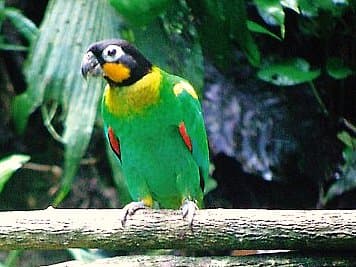
The orange-cheeked parrot, also known as Barraband's parrot, is a species of parrot native to the Amazonian Andes and humid lowland forests of the Amazon Basin in South America. Its distinctive features include an olive throat and breast, yellow thighs, and varying shades of orange on its wings and cheeks, with a notable white eye-ring. This species faces threats from habitat loss due to deforestation in its native range.
Blue-and-yellow macaw
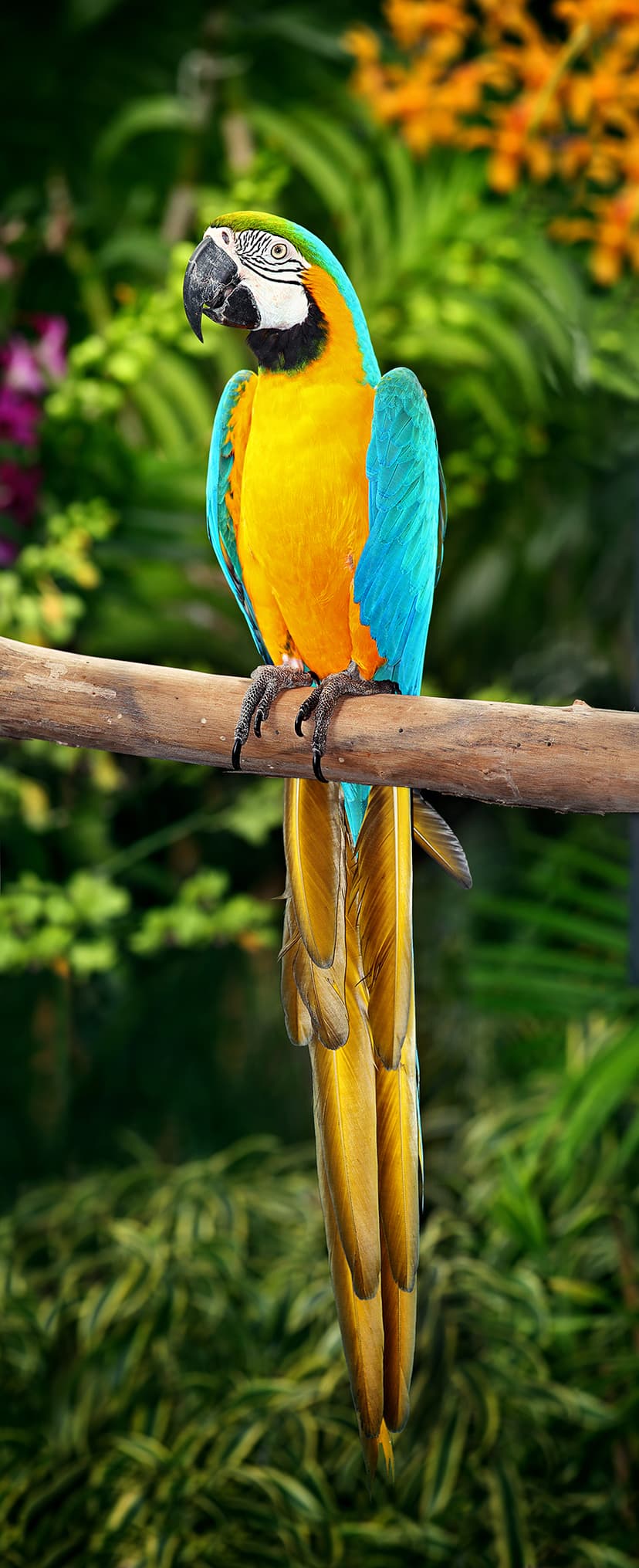
The blue-and-yellow macaw, also known as the blue-and-gold macaw, is a large Neotropical parrot native to the forests, woodlands, and savannahs of tropical Central and South America, including Trinidad. It is distinguished by its vibrant blue upperparts, yellow to orange underparts, and a green crown, making it one of the most popular and commonly kept macaw species in aviculture due to its striking appearance and ability to bond with humans.