
Coconut lorikeet
The coconut lorikeet is a vibrant parrot species primarily found in Melanesia and nearby regions, including New Guinea and the Solomon Islands. It is distinguished by its striking plumage, featuring a blue head, yellow collar, green upperparts, and a red breast, often with blue-black barring. This species plays a vital ecological role by feeding on nectar and pollen, utilizing a specialized brush-tipped tongue.
Key Facts
- ›Measures approximately 25–30 cm in length and weighs 109–137 g.
- ›Possesses a distinctive blue head, yellow collar, green upperparts, and a red breast.
- ›Feeds primarily on nectar and pollen using a specialized brush-tipped tongue.
- ›Inhabits a variety of lowland and hill habitats, including rainforests, savannas, and human-modified areas.
- ›Is a monogamous bird, forming lifelong partnerships.
- ›Breeds mainly from July to December, laying two eggs per clutch.
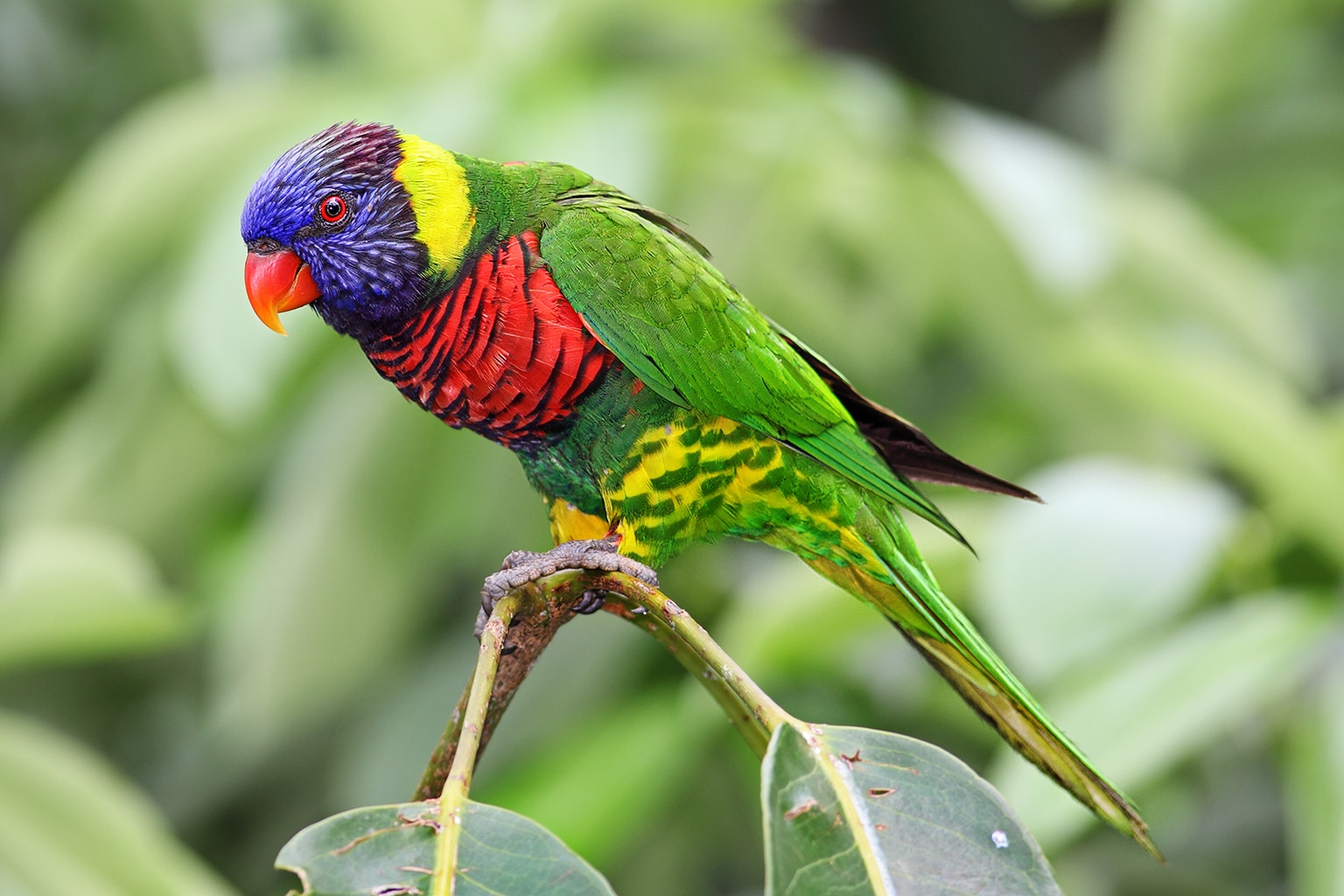
Green-Naped Lorikeet
Melanesia, Indonesia, New Guinea, Bismarck Archipelago, Solomon Islands, Vanuatu, New Caledonia
Lowland Habitats, Wooded Hill Habitats, Mangroves, Rainforest, Nypa Forest, Swamps, Savanna, Woodland, Coconut Plantations, Gardens, Agricultural Land, Disturbed Forest
- Brush-tipped tongue for feeding on nectar and pollen
- Clear blue head fading to brown at the neck
- Yellow collar
- Red breast, sometimes with blue-black barring
Nectar, Pollen, Flower Parts, Seeds, Fruits, Berries, Insects, Larvae
Noisy During Flight, Monogamous
Screeching Calls, E.G., 'Peaow-Peaow-Peaow'
Holes In Decaying Wood, Hollows of Eucalyptus Trees
About Coconut lorikeet
The coconut lorikeet, scientifically known as Trichoglossus haematodus, is a vividly colored parrot belonging to the Psittaculidae family. Historically, this species was broadly defined, encompassing many subspecies that are now recognized as distinct. However, Trichoglossus haematodus as currently circumscribed is primarily found in Melanesia, extending from eastern Indonesia across New Guinea, the Bismarck Archipelago, the Solomon Islands, and Vanuatu to New Caledonia.
Description and Identification
These lorikeets typically measure between 25 to 30 cm in length and weigh between 109 and 137 grams, though variations exist among subspecies. Their plumage is striking: a clear blue head transitions to brown at the neck, complemented by a yellow collar and green upperparts. The breast is a prominent red, often marked with blue-black barring, while the belly is generally yellowish-green. The tail is green on top and barred with green and yellow underneath. While males and females appear similar, males have bright red irises, and females have orange-red irises, though this difference is subtle and not always reliable for sexing.
Diet and Behavior
A key adaptation of the coconut lorikeet is its specialized tongue, which features a small brush-like tip. This allows them to efficiently feed on nectar and pollen from flowers, which form the primary components of their diet. They also supplement their intake with other flower parts, seeds, fruits, berries, insects, and larvae. Coconut lorikeets are known for their diurnal activity, often forming very large social groups and gathering in 'dormitory trees' in the evening. They are monogamous, forming lifelong pair bonds.
Reproduction and Habitat
Breeding can occur throughout much of the year, with a peak season often observed from July to December, depending on the region. Nests are typically established in tree hollows, such as those found in decaying wood or eucalyptus trees, usually at significant heights above the ground. Females lay two matte white, round eggs, which are incubated for approximately 23 to 25 days. Chicks are cared for by the parents for about 7 to 8 weeks before they fledge, becoming fully independent a few weeks later. The species occupies a wide range of habitats, from sea level up to altitudes of 2,440 meters, including mangroves, rainforests, savannas, and even human-modified areas like plantations and gardens.
Source: Wikipedia ↗
Frequently Asked Questions
What is the scientific name for the coconut lorikeet?
The scientific name for the coconut lorikeet is *Trichoglossus haematodus*. This name originates from Ancient Greek, with 'haematodus' meaning 'blood-red', referring to its coloration.
Where are coconut lorikeets found in the wild?
Coconut lorikeets are native to Melanesia and several adjacent areas. Their range extends from eastern Indonesia across New Guinea, the Bismarck Archipelago, the Solomon Islands, and Vanuatu, down to New Caledonia.
What does a coconut lorikeet eat?
Their diet primarily consists of nectar and pollen, which they access with a specialized brush-tipped tongue. They also consume other flower parts, seeds, fruits, berries, insects, and larvae.
How can I tell the difference between male and female coconut lorikeets?
Distinguishing between sexes can be challenging as they look very similar. While males have bright red irises and females have orange-red irises, this difference is slight and unreliable for sexing individuals outside of mated pairs.
What are the nesting habits of the coconut lorikeet?
Coconut lorikeets typically nest in holes found in decaying wood, such as hollows in eucalyptus trees. These nests are often situated at considerable heights, around 25 meters above the ground.
Related Parrot species
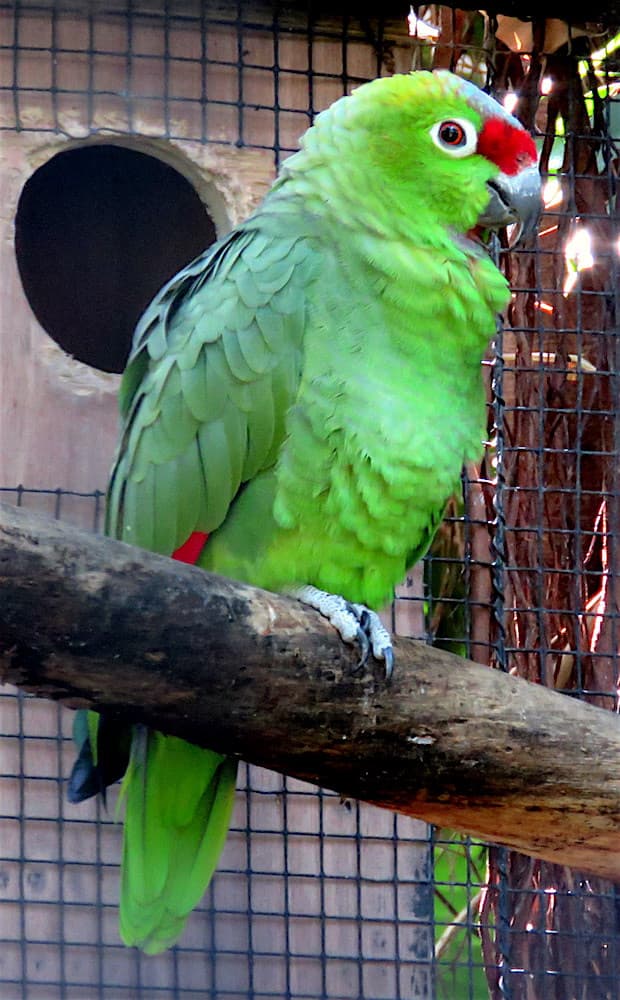
Diademed amazon
The Diademed Amazon (Amazona diadema) is a species of parrot native to the Amazon basin in north-western Brazil. It was formerly considered a subspecies of the Red-lored Amazon but is now recognized as distinct, though molecular analysis may further clarify its species status. This largely green parrot is distinguished by subtle red and black markings, particularly on its forehead and wing feathers, and inhabits lowland forests.

Black-cheeked lovebird
The black-cheeked lovebird is a small parrot species native to southwest Zambia, characterized by its predominantly green plumage, brown head, red beak, and distinctive white eyerings. It inhabits deciduous woodlands where permanent water sources are available and faces vulnerability due to habitat loss and desiccation of water bodies. These birds are known for their loud, piercing shrieks and can gather in large flocks, particularly during the dry season.
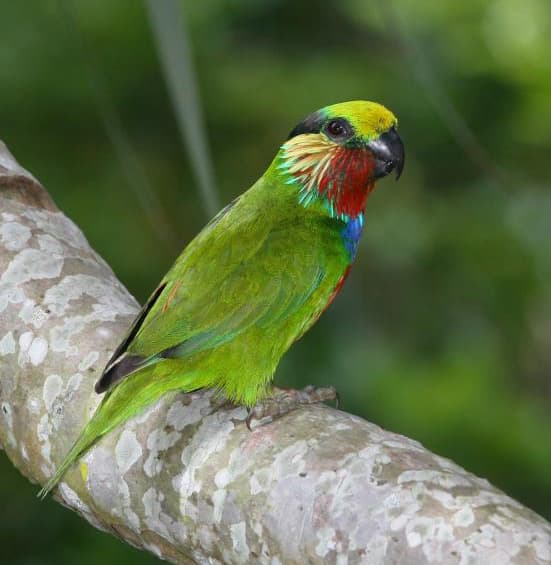
Edwards's fig parrot
Edwards's fig parrot, also known as the scarlet-cheeked fig parrot, is a species of parrot native to the humid lowland forests of northeastern New Guinea. This medium-sized parrot is distinguished by its predominantly green plumage, with males featuring striking red cheeks and breast, and a distinctive blue-black band across the upper breast.