
Black-headed parrot
The black-headed parrot is a species of parrot native to the tropical forests of South America, primarily found in countries like Brazil, Colombia, and Venezuela. It is distinguished by its striking black cap, rufous-orange hindneck band, and vibrant yellow and green plumage. These parrots are known for their playful and energetic nature when kept as pets, often mimicking environmental sounds.
Key Facts
- ›The black-headed parrot is a medium-sized parrot, measuring 21 to 25 cm in length and weighing 130 to 170 g.
- ›Its plumage is characterized by a black cap, rufous-orange hindneck, green back and wings, and creamy white underparts with apricot yellow flanks.
- ›This species inhabits the canopy of humid lowland tropical forests, including both terra firme and Várzea types.
- ›They are nomadic in some areas, following food availability, and are typically seen in small flocks of up to eight individuals.
- ›Their diet consists of seeds, fruit, flowers, and leaves, with a particular interest in palm leaves for their mineral content.
- ›In aviculture, they are known for being playful and energetic pets that often MIMIC environmental sounds rather than human speech.

Black-Crowned Parrot, Black-Capped Parrot, Black-Headed Caique, Pallid Caique
Brazil, Colombia, Ecuador, French Guiana, Guyana, Peru, Suriname, Venezuela
Humid Lowland Tropical Forest Canopy, Clearings, Edges of Forests, Terra Firme Forests, VáRzea Forests, Secondary Forest
- Black cap from forehead to nape
- Rufous-orange band across hindneck
- Yellow on lower face, sides of neck, and upper breast
- Apricot yellow on flanks, thighs, and vent area
Seeds, Fruit, Flowers, Leaves, Palm Leaves
Playful, Energetic
- High-pitched and penetrating squealing flight call
- Wheezy or squealing screech
- Variety of calls when perched
- Can mimic environmental sounds such as alarm clocks, smoke detectors, microwave-oven beeps, laughs, car alarms, and whistles
- Can combine sounds to make new ones
- Poorly mimic human speech
Tree Cavities
About Black-headed parrot
The black-headed parrot, scientifically known as Pionites melanocephalus, is a vibrant species of parrot found in the humid lowland tropical forests of South America. Its distinctive appearance includes a striking black cap extending from the forehead to the nape, a rufous-orange band across its hindneck, and a combination of green, yellow, and creamy white plumage. They inhabit the canopy and edges of forests across countries such as Brazil, Colombia, Ecuador, French Guiana, Guyana, Peru, Suriname, and Venezuela.
Distribution and Habitat
This species thrives in the lush environments of tropical rainforests, including terra firme and várzea types, as well as secondary forests. While they can be found up to 1,000 meters in elevation, they are most abundant below 500 meters. The black-headed parrot is known to be nomadic in certain regions, such as French Guiana, where its movements are dictated by the availability of food resources. Elsewhere, detailed information on their movements is less documented.
Behavior and Diet
Black-headed parrots are typically observed in small, social flocks, usually comprising up to about eight individuals. Their diet is varied, consisting of seeds, fruits, flowers, and leaves. Notably, they have been observed consuming palm leaves, a behavior believed to be related to acquiring essential minerals. Unlike some other parrot species, they do not appear to visit clay licks.
Breeding and Vocalizations
The breeding season for the black-headed parrot varies significantly across its extensive range, with nesting occurring in April and May in Venezuela, October and November in Suriname, and December through February in French Guiana. They nest in tree cavities, and a clutch typically consists of two to four eggs. In captivity, the incubation period is around 25 days, with fledging occurring approximately 10 weeks after hatching. Their vocalizations are distinctive, featuring high-pitched, penetrating squeals in flight and a range of calls when perched, some of which are described as un-birdlike. While they can poorly mimic human speech, they are more adept at imitating environmental sounds like alarms and beeps, often combining these sounds to create new ones.
In Aviculture and Conservation
Black-headed parrots are popular in aviculture due to their playful and energetic personalities. They require spacious enclosures with ample perches and toys, tending to hop more than fly. Owners should be aware of their tendency to bite and use their beaks frequently. Sex determination in these birds typically requires surgical or DNA sexing. The species is assessed as Least Concern by the IUCN, owing to its large range, believed stable population, and the presence of vast areas of suitable habitat, with no immediate threats identified.
Source: Wikipedia ↗
Frequently Asked Questions
What is the scientific name of the black-headed parrot?
The scientific name of the black-headed parrot is Pionites melanocephalus. It was formerly placed in the genus Psittacus before being moved to Pionites. There is sometimes confusion with the spelling Pionites melanocephala.
Where are black-headed parrots found?
Black-headed parrots are found in several South American countries, including Brazil, Colombia, Ecuador, French Guiana, Guyana, Peru, Suriname, and Venezuela. They inhabit humid lowland tropical forests.
What do black-headed parrots eat?
In the wild, black-headed parrots feed on a variety of food sources, including seeds, fruit, flowers, and leaves. They have been observed eating palm leaves, likely for their mineral content.
What are the common names for the black-headed parrot?
Besides black-headed parrot, they are also known as black-crowned parrot, black-capped parrot, and black-headed caique. The subspecies P. m. pallidus is referred to as the pallid caique.
What is the conservation status of the black-headed parrot?
The black-headed parrot is listed as Least Concern by the IUCN. It has a very large range, a believed stable population, and no immediate threats have been identified.
Are black-headed parrots good pets?
Black-headed parrots are popular in aviculture due to their playful and energetic nature. They require a large cage with ample toys and perches, and owners should be prepared for their tendency to use their beak frequently.
Related Parrot species
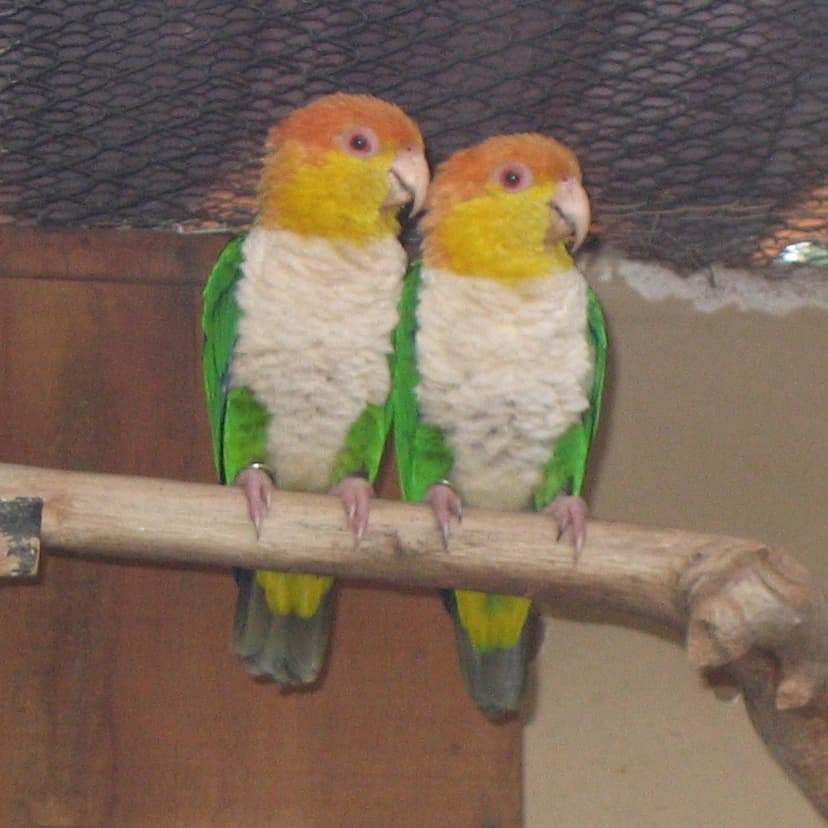
Green-thighed parrot
The white-bellied parrot, also known as the white-bellied caique, is a species of parrot found in the humid tropical forests of South America, including Bolivia, Brazil, Colombia, and Peru. It is characterized by its short, stout body, bright green rump, white belly often stained chestnut, and distinctive green thigh feathers, which give it one of its common names. While its diet includes fruits and flowers, much about its breeding behavior and movements remains unknown.
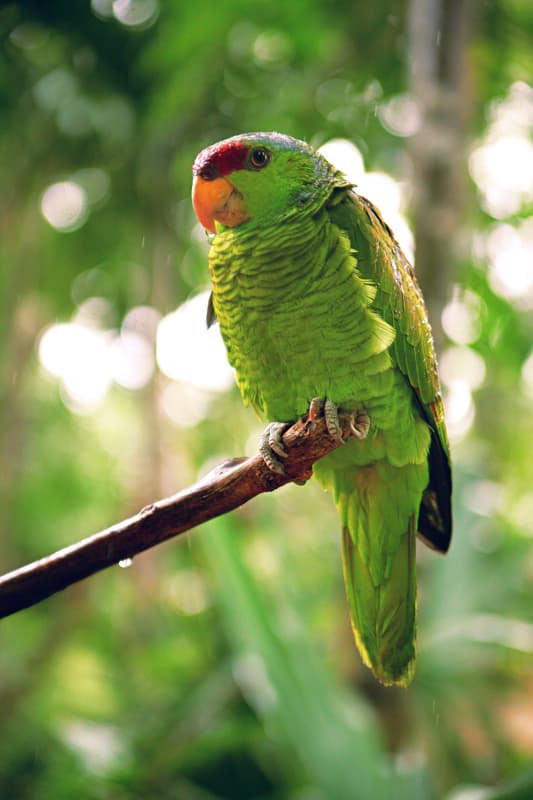
Lilac-crowned amazon
The lilac-crowned amazon, also known as Finsch's parrot, is a parrot species endemic to the Pacific slopes of Mexico. It is distinguished by its predominantly green plumage, a maroon forehead, and a striking violet-blue crown and neck. Unfortunately, this vibrant parrot has faced significant population decline, leading to its classification as Endangered by the IUCN.
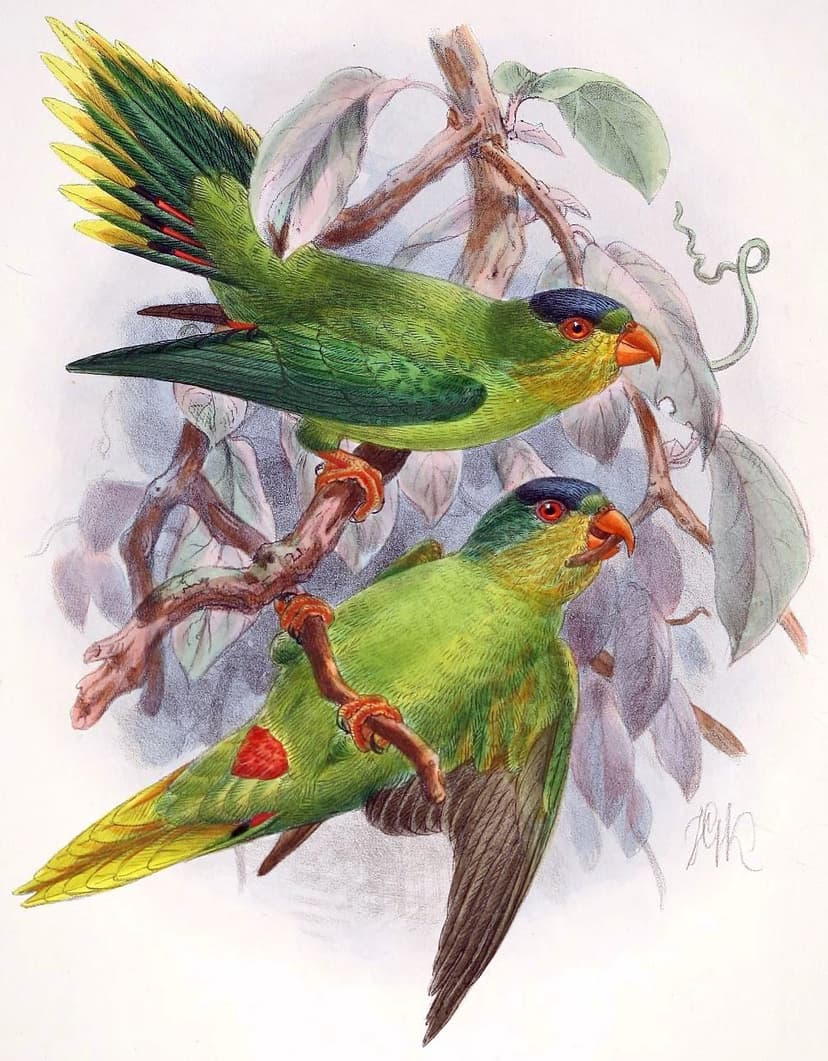
New Caledonian lorikeet
The New Caledonian lorikeet is a lorikeet species endemic to the Melanesian island of New Caledonia, possibly extinct. Historically assigned to the genus Charmosyna, it was moved to Vini based on molecular phylogenetic studies. This small, elusive bird is characterized by its green plumage with violet-blue and dark blue markings, and a distinctive red anal region.