
Black-lored parrot
The black-lored parrot, also known as the Buru green parrot, is a parrot species endemic to the Indonesian island of Buru. It is distinguished by its 40 cm length, green plumage, black lores, and turquoise crown, with males featuring red beaks and females being gray-brown. Its singing is notable for being high-pitched and more protracted compared to similar species.
Key Facts
- ›Endemic to the Indonesian island of Buru.
- ›Measures approximately 40 cm (16 inches) in length.
- ›Characterized by green plumage, black lores, and a turquoise crown.
- ›Males have red beaks, while females are gray-brown.
- ›Known for its high-pitched and protracted singing.
- ›Primarily inhabits high-altitude forests.

Buru Green Parrot, Blue-Headed Parrot
Indonesia
High-Altitude Forests, Lowlands
Black Lores, Turquoise Crown, Red Beak, Gray-Brown Beak
Fruits
High-Pitched, Protracted Singing, Calls Heard After Sunset
About Black-lored parrot
The black-lored parrot, scientifically known as Tanygnathus gramineus and also referred to as the Buru green parrot, is a species of parrot found exclusively on the Indonesian island of Buru. This parrot is characterized by its substantial size, measuring approximately 40 cm (16 inches) in length, and its predominantly green plumage. Distinctive features include black lores, which are the featherless areas between the eyes and the beak, and a striking turquoise crown. Sexual dimorphism is evident in the beak coloration, with males sporting red beaks and females exhibiting gray-brown beaks.
Distribution and Habitat
The black-lored parrot's range is confined to the island of Buru in Indonesia. It is typically found in the central, more elevated regions of the island, favoring high-altitude forests. While primarily associated with these mountainous areas, the species has also been observed in lowland regions and near coastal bays. Its habitat consists of forests that are relatively untouched by logging, particularly those above 900 meters in elevation.
Behavior and Vocalization
This parrot is considered rare and exhibits predominantly nocturnal or crepuscular activity patterns, though it has been observed active during daylight hours as well. Its vocalizations are notable for being high-pitched and more protracted compared to similar parrot species. Local inhabitants of Buru have referred to the bird as "kakatua ol'biru," which translates to "blue-headed parrot," often hearing its calls several hours after sunset.
Conservation
Due to its limited geographic range and specific habitat requirements, the black-lored parrot has been classified as Vulnerable by the International Union for Conservation of Nature since 1994. Efforts to preserve its habitat include the establishment of protected areas on Buru, such as Gunung Kapalat Mada and Waeapo National Parks. While hunting and capture by locals are reported as limited, the small size of its habitat remains a significant concern for the species' long-term survival.
Source: Wikipedia ↗
Frequently Asked Questions
What is the scientific name of the black-lored parrot?
The scientific name of the black-lored parrot is Tanygnathus gramineus. This binomial name was coined by Johann Friedrich Gmelin in 1779, building on earlier descriptions by the Comte de Buffon.
Where does the black-lored parrot live?
The black-lored parrot is endemic to the Indonesian island of Buru. It is predominantly found in the central, more elevated parts of the island, favoring high-altitude forests.
What are the distinctive physical features of the black-lored parrot?
Adults are about 40 cm long and are predominantly green. Key distinguishing features include black lores (the area between the eye and the beak) and a turquoise crown. Males are further identified by their red beaks, while females have gray-brown beaks.
What is known about the activity patterns of the black-lored parrot?
The black-lored parrot is described as rare and either fully or partly nocturnal, with its voice frequently heard after sunset. However, there are also observations of them being caught during the day, suggesting their activity is not exclusively nocturnal.
What is the conservation status of the black-lored parrot?
The black-lored parrot has been listed as vulnerable since 1994 by the International Union for Conservation of Nature. This status is attributed to its small habitat size.
What makes the vocalization of the black-lored parrot unique?
The singing of the black-lored parrot is noted for being high-pitched and more protracted when compared to similar species, such as the great-billed parrot. Its calls are often heard after sunset.
Related Parrot species
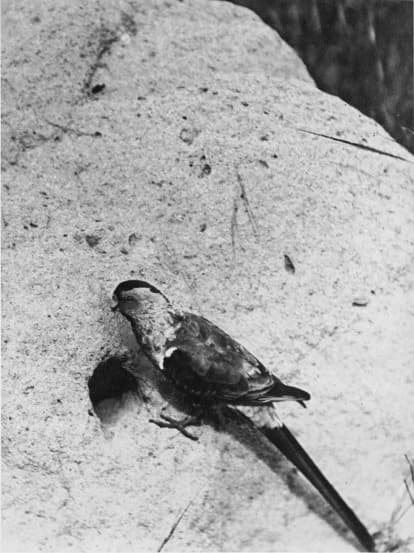
Paradise parrot
The paradise parrot was an exceptionally colorful, medium-sized parrot native to the grassy woodlands along the Queensland and New South Wales border in eastern Australia. Known for its striking plumage of turquoise, aqua, scarlet, black, and brown, and an unusually long tail, it inhabited areas that were once moderately common for the species. Tragically, it became extinct in 1927, with its decline attributed to various factors including habitat loss and overgrazing.
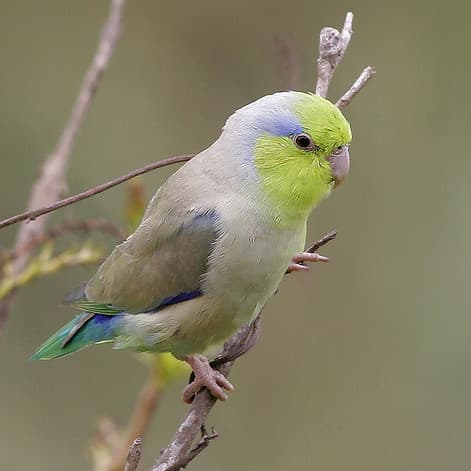
Pacific parrotlet
The Pacific parrotlet, scientifically known as Forpus coelestis, is a small parrot originating from South America, specifically western Ecuador and northwestern Peru. These birds are distinguished by their small size, often referred to as "pocket parrots," and their often feisty and curious personalities, despite their diminutive stature.

Meyer's parrot
Meyer's parrot, also known as the brown parrot, is a species of parrot native to sub-Saharan Africa. This small parrot is distinctive for its black plumage, turquoise belly, blue rump, and bright yellow markings on the wings and often the head. It inhabits various woodland types and is commonly bred for the pet trade due to its relatively quiet nature and ability to learn speech.