
Pacific parrotlet
The Pacific parrotlet, scientifically known as Forpus coelestis, is a small parrot originating from South America, specifically western Ecuador and northwestern Peru. These birds are distinguished by their small size, often referred to as "pocket parrots," and their often feisty and curious personalities, despite their diminutive stature.
Key Facts
- ›Pacific parrotlets are small green parrots native to western Ecuador and northwestern Peru.
- ›Males exhibit blue coloration on their wings, eye streaks, and rumps, while females may have blue eye streaks and rumps but no blue on their wings.
- ›They are known for their "larger-than-life personalities" and can be aggressive towards other birds, especially when confined.
- ›Wild populations are found in dry habitats like deserts and deciduous forests, but they have adapted to humid areas due to deforestation.
- ›The species is classified as Least Concern by the IUCN Red List, with stable wild populations.
- ›In captivity, they can learn to MIMIC speech, though their vocabulary is more limited than larger parrot species.
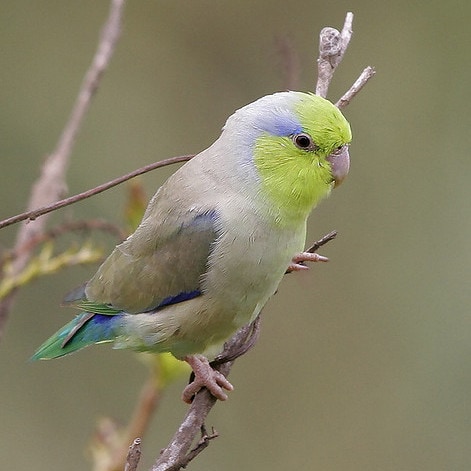
Lesson's Parrotlet, Celestial Parrotlet
South America
Subtropical Or Tropical Dry Forest, Subtropical Or Tropical Moist Lowland Forest, Subtropical Or Tropical Dry Shrubland, Desert, Deciduous Forest, Woodlands, Shrubby Clearings, Gardens, Parks, Crops, Heavily Degraded Former Forest
- Small size
- Males have blue on wings, eye streaks, and rump
- Females may have blue eye streaks and rump
- Feisty and curious personalities
Berries, Cactus Fruits, Fruits, Seeds, Vegetables, Herbs
Feisty, Curious, Aggressive Towards Other Birds When Confined, Can Be Emotionally Distressed Easily
- High-pitched and rapid 'Tchit' calls
- Constant chattering in flocks
- Can mimic speech, but with limited clarity and vocabulary
Tree Cavities, Fence Posts, Abandoned Nests of Other Birds
About Pacific parrotlet
The Pacific Parrotlet
The Pacific parrotlet, scientifically designated as Forpus coelestis, is a small species of parrot found in the family Psittacidae. Commonly referred to as Lesson's parrotlet or the celestial parrotlet, this bird originates from the western regions of Ecuador and northwestern Peru in South America. Its small size, typically ranging from 11 to 14 centimeters in length and weighing around 30 grams, has earned it the nickname "pocket parrot."
Description and Characteristics
In its wild form, the Pacific parrotlet is predominantly green with a subtle dusty grey cast across its body, adorned with a bright green facial mask and a pinkish beak. Its legs and feet are a pinkish-grey hue. A notable characteristic of this species is its sexual dimorphism. Males exhibit distinct blue coloration on their wings, which can range in intensity from cobalt to a pale lavender, particularly on American birds. They also possess blue streaks behind their eyes, often described as "eyeshadow," and blue rumps. Females, while lacking blue on their wings, may still display blue eye streaks and a blue rump.
Beyond their physical traits, Pacific parrotlets are renowned for their "larger-than-life personalities" and feisty, curious attitudes, belying their small stature. This spirited nature can lead to aggression towards other birds, particularly when housed in confined spaces, making them best suited for individual care or carefully supervised pairs in very large enclosures.
Distribution and Habitat
Wild populations of the Pacific parrotlet are native to western Ecuador and northwestern Peru. They are most commonly found in arid environments, such as deserts and deciduous forests. However, in response to deforestation, they have expanded their range into more humid areas and have been observed in the middle Marañón valley and near the Rio Mataje in southwestern Colombia. They inhabit a variety of ecosystems, including subtropical or tropical dry forests, moist lowland forests, dry shrublands, and degraded forest areas. Pacific parrotlets are non-migratory, remaining within their territories year-round.
Diet and Behavior
The natural diet of the Pacific parrotlet primarily consists of berries and cactus fruits, though they are not particularly picky eaters. In captivity, their diet can be broadened to include a variety of fruits, seeds, vegetables, and herbs. They are known to live in flocks of 40 to 50 individuals in the wild, communicating with high-pitched, rapid "tchit" calls that create a constant chattering in group settings.
Reproduction
Pacific parrotlets are protective of their eggs and young. They typically lay clutches of 4 to 6 white eggs, which are incubated for approximately 18 days. In their natural habitat, they nest in tree cavities or on fence posts, and have also been observed utilizing abandoned nests of other bird species.
Conservation Status
The Pacific parrotlet is currently classified as Least Concern by the International Union for Conservation of Nature (IUCN) Red List. While the exact number of mature individuals in the wild is not precisely known, their population size appears to be stable, and they are not significantly threatened by human activities.
Aviculture
This species is valued by breeders and is not as commonly found in pet stores. Since the 1930s, a captive breeding population has been established in the United States. In the wild, the average lifespan is around 10.4 years, but with proper care, captive individuals can live considerably longer. Pacific parrotlets possess the ability to mimic speech, though their vocalizations are less clear than those of larger parrots, and their learned vocabulary is relatively limited.
Source: Wikipedia ↗
Frequently Asked Questions
What are the main physical characteristics of the Pacific parrotlet?
Pacific parrotlets are small green parrots, typically measuring 11–14 cm long and weighing around 30 grams. Wild individuals have a dusty grey cast over their body, a bright green mask, and a pinkish beak, with pinkish-grey legs and feet.
How do male and female Pacific parrotlets differ?
Pacific parrotlets are sexually dimorphic. Males display shades of blue on their wings, often with blue streaks behind their eyes (eyeshadow) and blue rumps. Females lack blue on their wings but may possess blue eye streaks and a blue rump.
What is the natural habitat of the Pacific parrotlet?
Wild Pacific parrotlets are found in dry habitats such as deserts and deciduous forests in western Ecuador and northwestern Peru. They have also adapted to humid areas and woodlands, shrubby clearings, gardens, and parks.
Are Pacific parrotlets social birds?
In the wild, Pacific parrotlets live in flocks of 40 to 50 individuals. However, in captivity, they can be aggressive towards other birds and are often best housed individually or in pairs with extreme supervision and ample space to prevent conflict.
What is the conservation status of the Pacific parrotlet?
The Pacific parrotlet is listed as Least Concern by the IUCN Red List. Their wild populations appear to be stable and are not significantly disturbed by human activity.
What do Pacific parrotlets eat in the wild and in captivity?
In their natural environment, Pacific parrotlets feed on berries and cactus fruits. In captivity, their diet is varied and can include fruits, seeds, vegetables, and herbs, with a pellet-based mix recommended, avoiding excessive high-fat seeds.
Can Pacific parrotlets mimic human speech?
Yes, Pacific parrotlets can learn to mimic human speech, although their 'voices' are not as clear as those of larger parrot species. Their learned vocabulary is generally limited to a few words and phrases.
Related Parrot species

Lord Derby's parakeet
Lord Derby's parakeet is a parrot species found in a limited region of moist evergreen forests in the Himalayas and adjoining areas of China. It is distinguished by its predominantly green plumage, blue-purple crown, and sexually dimorphic beak coloration. The species faces threats from habitat destruction and illegal wildlife trade, leading to its classification as near threatened.

Meyer's parrot
Meyer's parrot, also known as the brown parrot, is a species of parrot native to sub-Saharan Africa. This small parrot is distinctive for its black plumage, turquoise belly, blue rump, and bright yellow markings on the wings and often the head. It inhabits various woodland types and is commonly bred for the pet trade due to its relatively quiet nature and ability to learn speech.
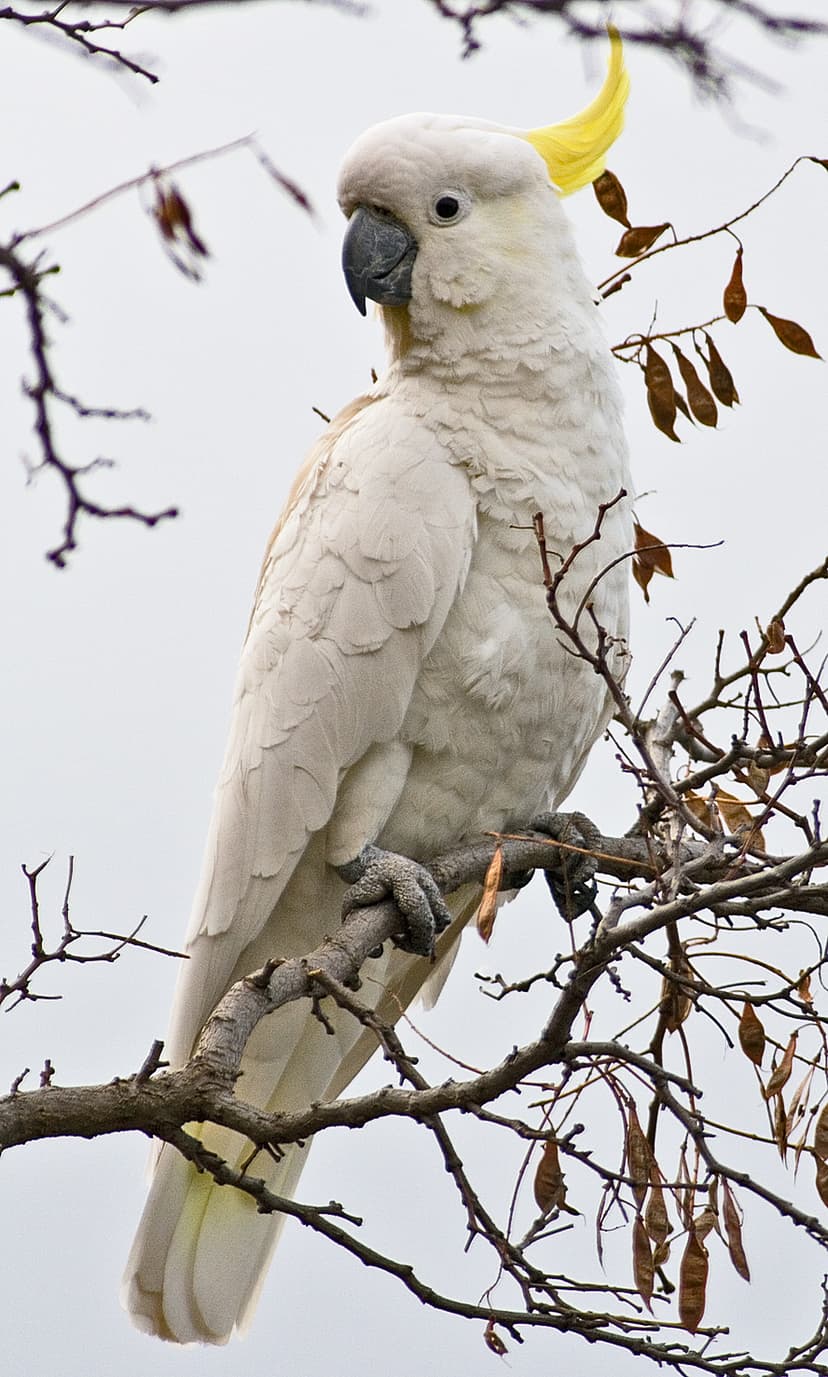
Cacatuidae
Cacatuidae, commonly known as cockatoos, are a family of parrots native to Australasia, characterized by their distinctive erectile crests and curved bills. While generally less colorful than other parrots, often displaying white, grey, or black plumage with colorful accents, they are typically larger and possess a striking appearance. Cockatoos are known for their social nature, monogamous breeding habits, and preference for nesting in tree hollows, feeding on a diet of seeds, tubers, fruits, and insects.