
Paradise parrot
The paradise parrot was an exceptionally colorful, medium-sized parrot native to the grassy woodlands along the Queensland and New South Wales border in eastern Australia. Known for its striking plumage of turquoise, aqua, scarlet, black, and brown, and an unusually long tail, it inhabited areas that were once moderately common for the species. Tragically, it became extinct in 1927, with its decline attributed to various factors including habitat loss and overgrazing.
Key Facts
- ›Plumage featured a vibrant MIX of turquoise, aqua, scarlet, black, and brown.
- ›Possessed a tail nearly as long as its body, unusual for its ground-dwelling habits.
- ›Nested primarily in hollowed-out termite mounds, sometimes near ground level.
- ›Fed almost exclusively on grass seeds, with a recorded range of only two hectares for a pair over a month.
- ›Experienced a rapid decline in the late 19th century, leading to extinction in 1927.
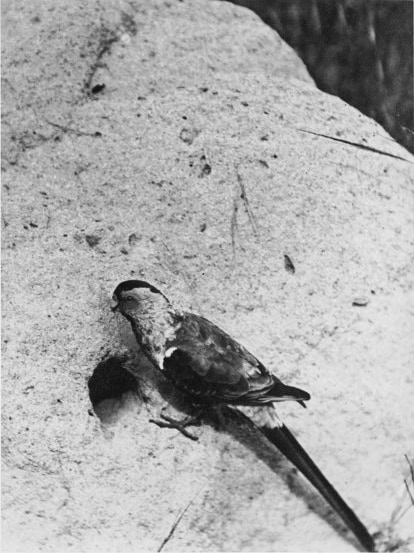
Australia
Grassy Woodlands
Tail Almost the Same Length As the Body
Grass Seeds
Hollowed-Out Termite Mounds, Tree Cavities, Ground-Level Nests
About Paradise parrot
The paradise parrot (Psephotellus pulcherrimus) was a medium-sized, extraordinarily colorful parrot native to the grassy woodlands of eastern Australia, specifically the border region of Queensland and New South Wales. Its plumage was a remarkable blend of turquoise, aqua, scarlet, black, and brown, further distinguished by a tail that was almost as long as its body, an unusual trait for a species that spent most of its time on the ground despite being a rapid flyer.
Ecology and Behavior
Paradise parrots were observed in pairs or small family groups and primarily inhabited grassy woodlands. Their diet consisted almost exclusively of grass seeds. Nesting sites were typically found in hollowed-out termite mounds, often at or near ground level, and sometimes in tree cavities or at the base of trees. Some evidence suggests that breeding pairs would occupy the same termite mound year after year. Their home range was quite limited, with a pair documented as using only two hectares over a month.
Decline and Extinction
Once moderately common within its restricted range, the paradise parrot experienced a precipitous decline towards the end of the 19th century. By 1915, it was considered possibly extinct. The reasons for this rapid disappearance are speculative but likely include a combination of factors such as overgrazing, land clearing, altered fire regimes, hunting by bird collectors, and predation by introduced mammals like cats and dogs. A severe drought in 1902 and changes in land management practices by graziers, which led to the loss of essential seasonal food sources, are also believed to have contributed significantly to its demise.
Last Sightings and Taxonomy
The last confirmed sighting of the paradise parrot occurred on September 14, 1927. Despite searches and public appeals for sightings, no individuals have been reliably reported since. The species was first described by John Gould in 1845, based on descriptions from field worker John Gilbert. Genetic studies have indicated that its closest living relative is the golden-shouldered parrot (Psephotellus chrysopterygius).
Source: Wikipedia ↗
Frequently Asked Questions
What did the paradise parrot look like?
The paradise parrot was exceptionally colorful, even for a parrot, displaying a striking combination of turquoise, aqua, scarlet, black, and brown plumage. It also had a tail that was nearly the same length as its body, which was unusual for a bird that spent most of its time on the ground.
Where did the paradise parrot live?
This species was native to the grassy woodlands found along the border region of Queensland and New South Wales in eastern Australia. Its range was considered fairly restricted during its time.
What caused the paradise parrot to become extinct?
The exact reasons for its extinction are speculative but likely include overgrazing, land clearing, altered fire patterns, hunting by collectors, and predation by introduced mammals like cats and dogs. A severe drought in 1902 and changes in pastoralist practices that led to the loss of seasonal food sources also played a role.
What did the paradise parrot eat?
The paradise parrot fed, as far as is known, almost exclusively on grass seeds. Their diet was a significant factor in their habitat and ecological role.
When was the paradise parrot last seen?
The last confirmed sighting of the paradise parrot was on September 14, 1927. Despite searches and public appeals, no individuals have been reliably reported since then.
Where did paradise parrots make their nests?
Paradise parrots typically nested in hollowed-out termite mounds, often at or near ground level. They sometimes occupied sites previously used by kingfishers or kookaburras, and occasionally nested at the base of trees. Some pairs reused the same termitarium in successive years.
Related Parrot species
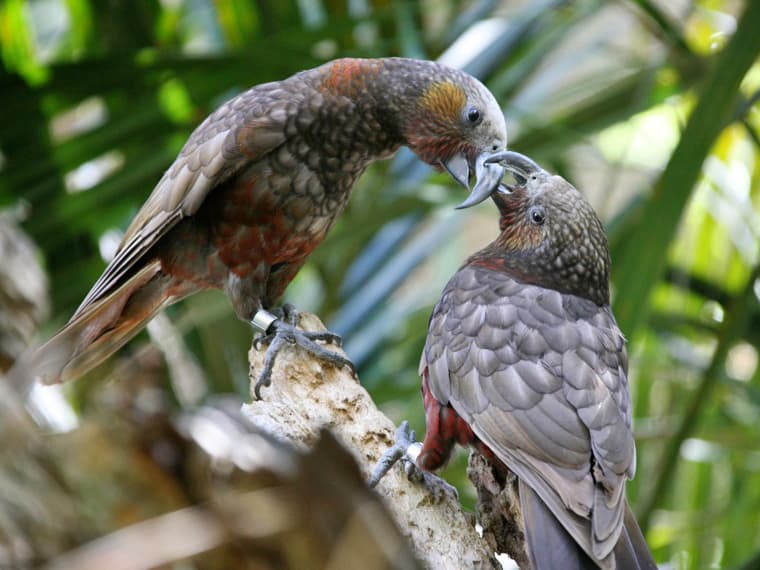
New Zealand kākā
The New Zealand kākā (Nestor meridionalis) is a large, endangered parrot native to the forests of New Zealand. Known for its distinctive brown and green plumage with scarlet flashes, it is an arboreal species that plays a vital role in its ecosystem through its varied diet, which includes fruits, seeds, nectar, and sap. Its conservation is a priority due to significant population declines caused by habitat loss and introduced predators.

Collared lory
The collared lory (Vini solitaria) is a species of parrot endemic to the Fiji Islands. This distinctive bird, measuring about 20 cm, is known for its bright red underparts, purple crown, and greenish upperparts, with males and females showing similar plumage. It is notable for its ability to adapt to urban environments, including the city of Suva, and was historically prized for its vibrant feathers used in trade networks across Polynesia.

Black-lored parrot
The black-lored parrot, also known as the Buru green parrot, is a parrot species endemic to the Indonesian island of Buru. It is distinguished by its 40 cm length, green plumage, black lores, and turquoise crown, with males featuring red beaks and females being gray-brown. Its singing is notable for being high-pitched and more protracted compared to similar species.