
Meyer's parrot
Meyer's parrot, also known as the brown parrot, is a species of parrot native to sub-Saharan Africa. This small parrot is distinctive for its black plumage, turquoise belly, blue rump, and bright yellow markings on the wings and often the head. It inhabits various woodland types and is commonly bred for the pet trade due to its relatively quiet nature and ability to learn speech.
Key Facts
- ›Native to the plateau woodlands of sub-Saharan Africa.
- ›Distinctive black, turquoise, blue, and yellow plumage.
- ›Diet consists of fruits, seeds, nuts, berries, and cultivated crops.
- ›Nests in tree cavities, laying clutches of 3-4 white eggs.
- ›Commonly bred for the pet trade and known for its vocal abilities.
- ›Listed on Appendix II of CITES, allowing limited trade.

Brown Parrot
Africa
Miombo Woodlands, Savanna Woodlands, Wooded Grasslands, Forests Bordering Watercourses, Forests Bordering Agricultural Land
Yellow markings on the carpal joint of wings, Yellow markings on the top of the head
Fruit, Seeds, Nuts, Berries, Cultivated Crops, Seeds of Leguminous Trees
Relatively Quiet
Able To Learn Dozens of Words
Tree Cavities
About Meyer's parrot
Meyer's parrot, scientifically known as Poicephalus meyeri and sometimes referred to as the brown parrot, is a species of parrot native to the diverse woodland environments of sub-Saharan Africa. This species is recognized for its striking plumage, which typically includes black feathers, a turquoise-colored belly, a blue rump, and distinctive bright yellow markings on the carpal joint of the wings. Many subspecies also exhibit yellow coloration on the top of their heads, though the extent of these markings can vary.
Distribution and Habitat
These parrots inhabit the plateau woodlands across a wide swathe of Africa, favoring areas such as miombo woodlands, savanna woodlands, and wooded grasslands. They are also found in forests that lie along watercourses or are adjacent to agricultural land. Meyer's parrots are particularly abundant in regions like the Okavango Delta in Botswana and are distributed across countries including Chad, Ethiopia, Angola, Tanzania, Zambia, and South Africa, among others.
Behavior and Diet
In their natural habitat, Meyer's parrots are primarily frugivorous and granivorous, their diet consisting of fruits, seeds, nuts, and berries. They are known to consume cultivated crops as well, with the seeds of various African leguminous trees often forming a staple part of their diet. While they typically travel in pairs or small flocks, larger congregations can form in areas where food is plentiful. During drought periods, they are known to wander in search of sustenance.
Breeding and Conservation
Meyer's parrots typically nest in tree cavities. The female incubates a clutch of three to four white eggs for approximately 28 days, and the chicks usually fledge about 60 days after hatching. Although local populations may decline due to habitat destruction, Meyer's parrots are generally considered common in the wild and are not currently at high risk of extinction. Their conservation status is listed as Least Concern by the IUCN, supported by their large population size, limited pressure from trade and hunting, and a substantial natural range. Meyer's parrots are listed on Appendix II of the Convention on International Trade in Endangered Species of Wild Fauna and Flora (CITES), which permits limited international trade.
In Aviculture
Due to their relatively small size, quiet disposition, and notable ability to learn speech, Meyer's parrots are frequently bred and kept as pets. Trade in aviculture-bred Meyer's parrots is legal.
Source: Wikipedia ↗
Frequently Asked Questions
What are the distinctive physical characteristics of Meyer's parrot?
Meyer's parrots are characterized by their black feathers, a turquoise belly, and a blue rump. They also possess bright yellow markings on the carpal joint of their wings, and most subspecies have some yellow on the top of their head.
What is the natural habitat of Meyer's parrot?
These parrots are found in the plateau woodlands of sub-Saharan Africa. Their preferred environments include miombo woodlands, savanna woodlands, wooded grasslands, and forests situated near watercourses or agricultural land.
What do Meyer's parrots eat in the wild?
In their natural environment, Meyer's parrots feed on a diet that includes fruits, seeds, nuts, and berries. They also consume cultivated crops, with seeds from various leguminous trees often forming their staple food.
How do Meyer's parrots breed?
Meyer's parrots nest in tree cavities. A clutch typically consists of three to four white eggs, which the female incubates for approximately 28 days. The young birds fledge about 60 days after hatching.
What is the conservation status of Meyer's parrot?
Meyer's parrots are generally not considered to be at risk and are still common in the wild. Their large population, limited pressure from trade and hunting, and extensive home range make them unlikely to face extinction in the near future.
Are Meyer's parrots suitable as pets?
Yes, Meyer's parrots are commonly bred for the pet trade. They are noted for being relatively quiet and small, and they have the ability to learn a significant number of words.
Related Parrot species
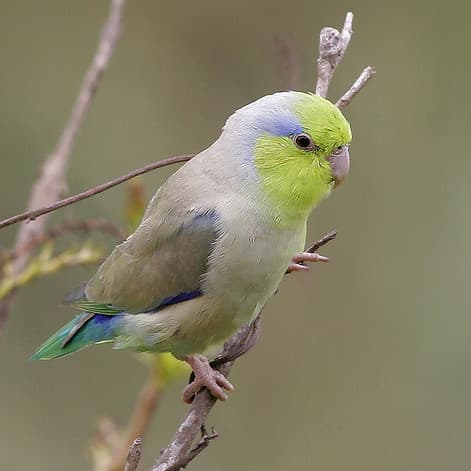
Pacific parrotlet
The Pacific parrotlet, scientifically known as Forpus coelestis, is a small parrot originating from South America, specifically western Ecuador and northwestern Peru. These birds are distinguished by their small size, often referred to as "pocket parrots," and their often feisty and curious personalities, despite their diminutive stature.
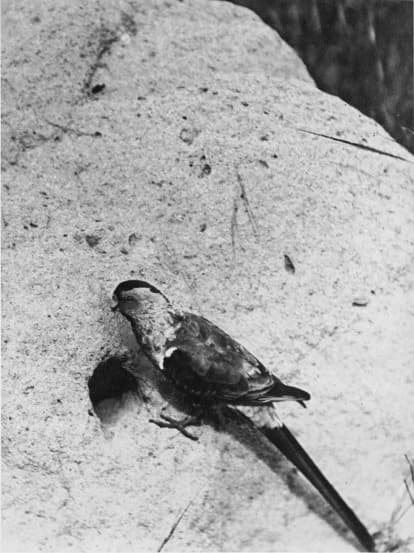
Paradise parrot
The paradise parrot was an exceptionally colorful, medium-sized parrot native to the grassy woodlands along the Queensland and New South Wales border in eastern Australia. Known for its striking plumage of turquoise, aqua, scarlet, black, and brown, and an unusually long tail, it inhabited areas that were once moderately common for the species. Tragically, it became extinct in 1927, with its decline attributed to various factors including habitat loss and overgrazing.

Large fig parrot
The Large fig parrot, also known as the flame-headed fig parrot, is a small parrot species found in the forests of New Guinea and the West Papuan Islands. It is distinguished by its vibrant head coloration, featuring a red to orange cap, a blue eye patch, and a yellow face, set against a predominantly green body.