
Orange-chinned parakeet
The orange-chinned parakeet (Brotogeris jugularis), also known as the Tovi parakeet, is a species of parrot found from southern Mexico through Central America into Colombia and Venezuela. This small, predominantly green parrot is distinctive for its bright orange chin patch, though this can be difficult to see. They inhabit semi-open to open landscapes and are often observed in pairs or small flocks.
Key Facts
- ›The orange-chinned parakeet measures 18 to 19 cm in length and weighs between 53 and 65 grams.
- ›Its plumage is primarily bright green with a bluish wash on the crown, a white eye ring, and a notable orange chin.
- ›They are found in semi-open to open environments such as savannas, deciduous woodlands, and plantations, avoiding dense evergreen forests.
- ›Their diet consists of fruits, seeds, flowers, herbs, nectar, insects, and algae, and they are known to consume mineral-rich soil.
- ›The breeding season occurs from January to April, with nests typically made in old woodpecker or natural cavities, or in arboreal termite nests.
- ›The species is assessed as 'Least Concern' by the IUCN, despite a believed decreasing population.

Tovi Parakeet
North America, Central America, South America
Semi-Open Landscapes, Open Landscapes, Llanos, Deciduous Woodland, Secondary Forest, Gallery Forest, Plantations, Treed Parts of Towns
Orange Chin Patch, White Eye Ring, Bluish Wash On Crown, Brown Wing Coverts
Fruits, Seeds, Flowers, Herbs, Nectar, Insects, Algae, Mineral-Rich Soil
High-Pitched 'Klee', Shrill 'Chree', Bisyllabic 'Chree-Chree', Fast Chattering Series 'Cra-Cra-Cra-Cra-Cra', Near Constant, Shrill, Harsh Chatter
Old Woodpecker Hole, Natural Cavity, Hole Excavated In Arboreal Termite Nest, Communal Nesting In Large Rotten Snag
About Orange-chinned parakeet
The orange-chinned parakeet, scientifically known as Brotogeris jugularis and often referred to as the Tovi parakeet, is a small parrot species inhabiting a broad range across southern Mexico, Central America, Colombia, and Venezuela. This species is a member of the Psittacidae family, encompassing African and New World parrots.
Description and Appearance
Adult orange-chinned parakeets typically measure between 18 and 19 centimeters in length and weigh between 53 and 65 grams. Their plumage is predominantly a bright green, accented by a bluish wash on the crown and a distinct white eye ring. The most characteristic feature, from which it derives its name, is a small orange chin patch, although this can sometimes be subtle. Their upperparts and tail exhibit a bluish-green hue, contrasted by brown wing coverts that appear as 'shoulders' when the bird is perched. The underparts are mostly bright green, with bluish vent and thighs, and the underwing coverts are yellow.
Distribution and Habitat
The orange-chinned parakeet thrives in semi-open to open landscapes. Its preferred habitats include savannas, deciduous woodlands, secondary and gallery forests, agricultural plantations, and even the treed areas within towns. They tend to avoid dense evergreen forests. The species' elevational range extends from sea level up to approximately 1,400 meters (4,600 feet).
Behavior and Diet
These parakeets are generally sedentary, though some populations exhibit local wandering after the breeding season. They are typically observed in pairs or small social flocks. Their diet is diverse, consisting mainly of fruits and seeds, but also including flowers, herbs, nectar, insects, and algae. They have been noted to damage cultivated fruits and, like many parrots, consume mineral-rich soil.
Breeding and Vocalization
The breeding season for the orange-chinned parakeet falls between January and April. They utilize existing cavities for nesting, such as old woodpecker holes or natural tree hollows, and are also known to excavate nests within arboreal termite mounds. Communal nesting has been observed in large, rotten snags. A typical clutch contains four to seven eggs. In captivity, incubation lasts about 21 to 26 days, with fledging occurring approximately two to three weeks after hatching.
Their vocalizations are characterized by high-pitched calls, including a 'klee' sound, a shrill 'chree', and a bisyllabic 'chree-chree', used both while perched and in flight. They also produce a rapid chattering series described as 'cra-cra-cra-cra-cra' and a near-constant, harsh chatter.
Conservation Status
The International Union for Conservation of Nature (IUCN) has assessed the orange-chinned parakeet as 'Least Concern.' The species possesses a very large geographic range and an estimated population of at least half a million mature individuals. However, this population is believed to be undergoing a decrease, though no immediate threats have been identified. They are considered common to abundant across most of their range, with the exception of Oaxaca, Mexico, where they are uncommon.
Source: Wikipedia ↗
Frequently Asked Questions
What is the scientific name for the orange-chinned parakeet?
The scientific name for the orange-chinned parakeet is Brotogeris jugularis. It belongs to the family Psittacidae, which includes African and New World parrots.
Where are orange-chinned parakeets found?
Orange-chinned parakeets are distributed from southern Mexico, specifically Oaxaca, southward through Central America along the Pacific side, into western, central, and northern Colombia, and northwestern Venezuela.
What do orange-chinned parakeets eat?
Their diet is varied, primarily including fruits and seeds. They also consume flowers, herbs, nectar, insects, and algae. Like many parrots, they are known to feed on mineral-rich soil.
What are the nesting habits of the orange-chinned parakeet?
Orange-chinned parakeets nest in cavities, such as old woodpecker holes or natural tree hollows. They may also excavate holes in arboreal termite nests. Communal nesting in large rotten snags has also been observed.
How do orange-chinned parakeets sound?
Their common vocalizations include high-pitched 'klee' sounds, shrill 'chree' calls, and bisyllabic 'chree-chree' sounds, used both when perched and in flight. They also produce a fast, chattering series of 'cra-cra-cra-cra-cra' and a near-constant, shrill, harsh chatter.
What is the conservation status of the orange-chinned parakeet?
The orange-chinned parakeet is listed as 'Least Concern' by the IUCN. While it has a very large range and a substantial population, the population is believed to be decreasing.
Related Parrot species
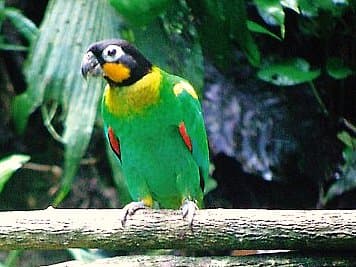
Orange-cheeked parrot
The orange-cheeked parrot, also known as Barraband's parrot, is a species of parrot native to the Amazonian Andes and humid lowland forests of the Amazon Basin in South America. Its distinctive features include an olive throat and breast, yellow thighs, and varying shades of orange on its wings and cheeks, with a notable white eye-ring. This species faces threats from habitat loss due to deforestation in its native range.
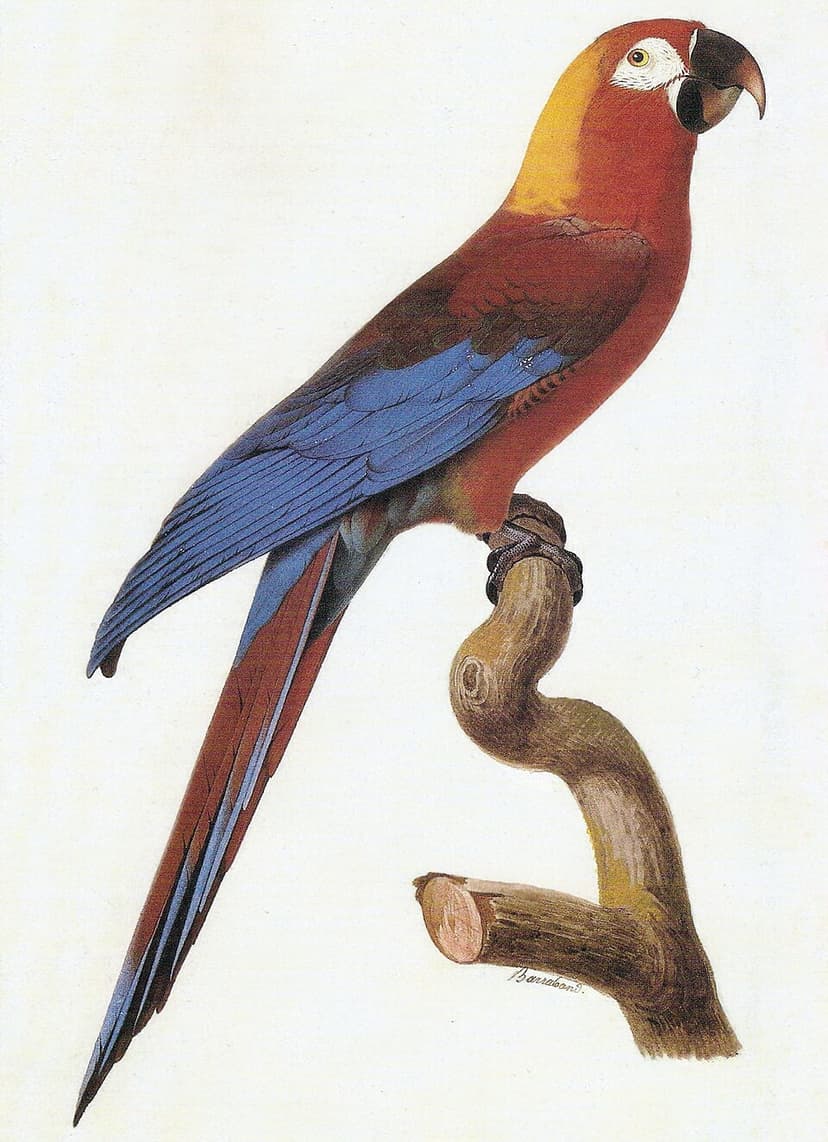
Cuban macaw
The Cuban macaw (Ara tricolor) was a species of macaw native to Cuba and Isla de la Juventud, becoming extinct in the late 19th century. It was one of the smallest macaws, characterized by a vibrant plumage of red, orange, yellow, green, brown, and blue. Its demise was attributed to hunting, habitat destruction, and possibly hurricanes, despite limited knowledge of its behavior.
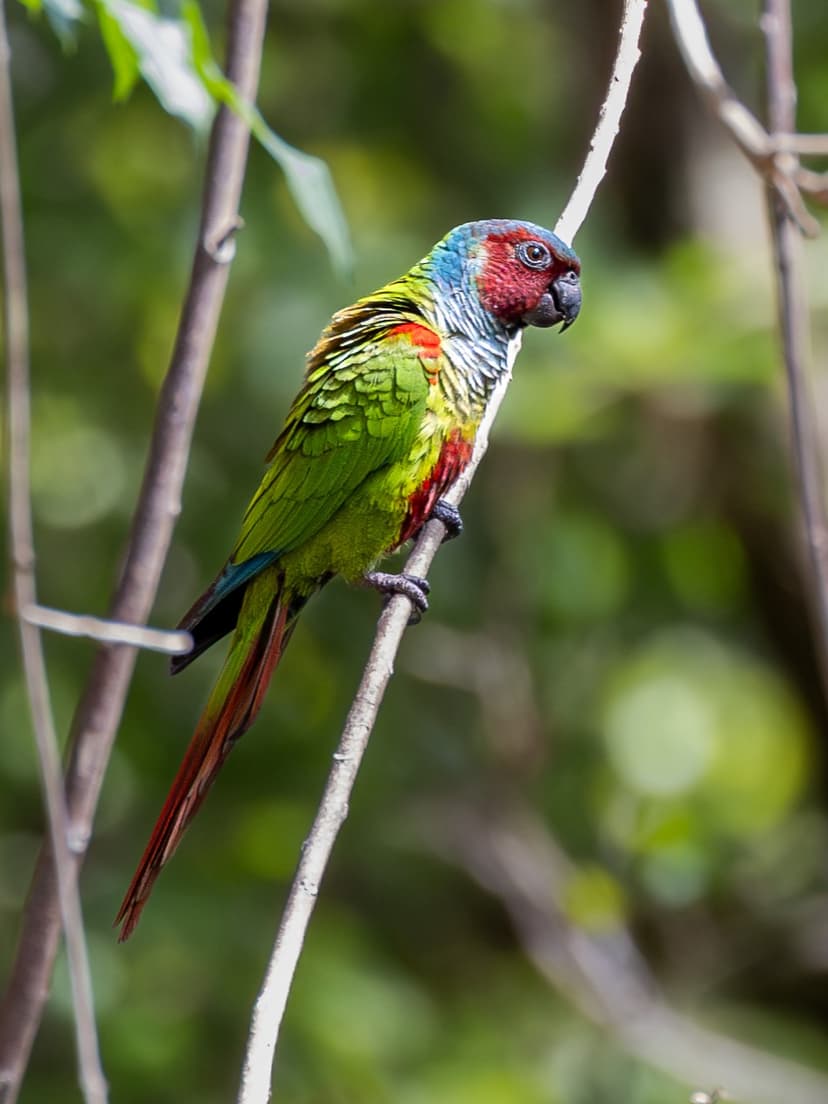
Pfrimer's parakeet
Pfrimer's parakeet, also known as Pfrimer's conure or maroon-faced conure, is a non-migratory parrot species endemic to the Caatinga forest of Brazil's Goiás and Tocantins regions. It is distinguished by its brown and red face, blue crown, and maroon tail, and is currently classified as endangered due to significant habitat loss from deforestation for agriculture.