
Blue-fronted fig parrot
The blue-fronted fig parrot is a species of parrot found in the lowland forests of New Guinea, the Bird's Head Peninsula, and Salawati. It is primarily green with distinctive orange markings on the males' breasts and females' faces. This species is known for its diet of fig seeds and its nesting habits within arboreal termite mounds.
Key Facts
- ›Found in subtropical or tropical moist lowland forests of New Guinea and nearby islands.
- ›Primarily green plumage with a black bill and a white face featuring a black patch.
- ›Males exhibit orange breasts, while females have orange patches on their faces.
- ›Feeds mainly on fig seeds, but also consumes seeds from Glochidion and Acacia auriculaeformis, and flower heads of Poikilospermum plants.
- ›Nests are typically constructed in holes within arboreal termite mounds.
- ›Listed as least concern by the IUCN.

William's Fig Parrot, King of Holland Fig Parrot
New Guinea, Salawati
Subtropical Or Tropical Moist Lowland Forests, Forest Canopy, Lower Forest Stories
Orange Breast, Orange Facial Patches, White Face With A Black Patch
Fig Seeds, Glochidion Seeds, Acacia Auriculaeformis Seeds, Poikilospermum Flower Heads
Not Specified
Not Specified
Holes In Arboreal Termite Mounds, Epiphytes
About Blue-fronted fig parrot
The blue-fronted fig parrot, scientifically known as Nannopsittacus gulielmitertii, is a species of parrot belonging to the Psittaculidae family. This vibrant bird is native to the lowland forests of New Guinea, the Bird's Head Peninsula, and the island of Salawati. Its natural habitat consists of subtropical and tropical moist lowland forests, where it typically resides in the canopy but can also be found in lower forest strata.
Description and Distinguishing Features
This parrot is primarily characterized by its predominantly green plumage, complemented by a black bill and a distinctive white face marked with a black patch. A notable sexual dimorphism is present: males possess bright orange breasts, while females are distinguished by orange patches on their faces. The species is monotypic, meaning no subspecies are currently recognized.
Distribution and Habitat
The blue-fronted fig parrot inhabits lowland forest ecosystems across New Guinea, the Bird's Head Peninsula, and Salawati. It is generally observed at elevations ranging from sea level up to 300 meters (approximately 984 feet), though it has been recorded at higher altitudes, reaching up to 1,100 meters (3,600 feet).
Behavior and Diet
These parrots are social creatures, typically observed in small flocks consisting of 6 to 10 individuals. Their diet is largely composed of fig seeds. They also supplement their diet with seeds from plants such as Glochidion and Acacia auriculaeformis, and they consume the flower heads of Poikilospermum plants.
Breeding and Reproduction
The breeding season for the blue-fronted fig parrot extends from December to June. Their nesting sites are usually found in holes excavated within arboreal termite mounds, although they may also utilize nests within epiphytes. In captive environments, clutches commonly consist of two eggs, with the number potentially ranging from one to three. The incubation period lasts approximately 20 to 22 days, and the nestling period, from hatching to fledging, spans 35 to 42 days.
Conservation Status
The International Union for Conservation of Nature (IUCN) has classified the blue-fronted fig parrot as a species of Least Concern, indicating that it is not currently facing a high risk of extinction in the wild.
Source: Wikipedia ↗
Frequently Asked Questions
What are the alternative names for the blue-fronted fig parrot?
The blue-fronted fig parrot is also known as William's fig parrot and King of Holland fig parrot. The specific epithet, gulielmitertii, honors William III, King of the Netherlands.
Where does the blue-fronted fig parrot live?
This species inhabits lowland forests on New Guinea, the Bird's Head Peninsula, and Salawati. They are generally found at lower elevations but can extend up to 1,100 meters.
What does the blue-fronted fig parrot eat?
Their diet primarily consists of fig seeds. They also consume seeds from plants like Glochidion and Acacia auriculaeformis, as well as the flower heads of Poikilospermum plants.
How does the blue-fronted fig parrot reproduce?
Breeding occurs from December to June. Nests are often made in holes within arboreal termite mounds. In captivity, clutches typically contain 2 eggs, with an incubation period of 20-22 days and a nestling period of 35-42 days.
Related Parrot species
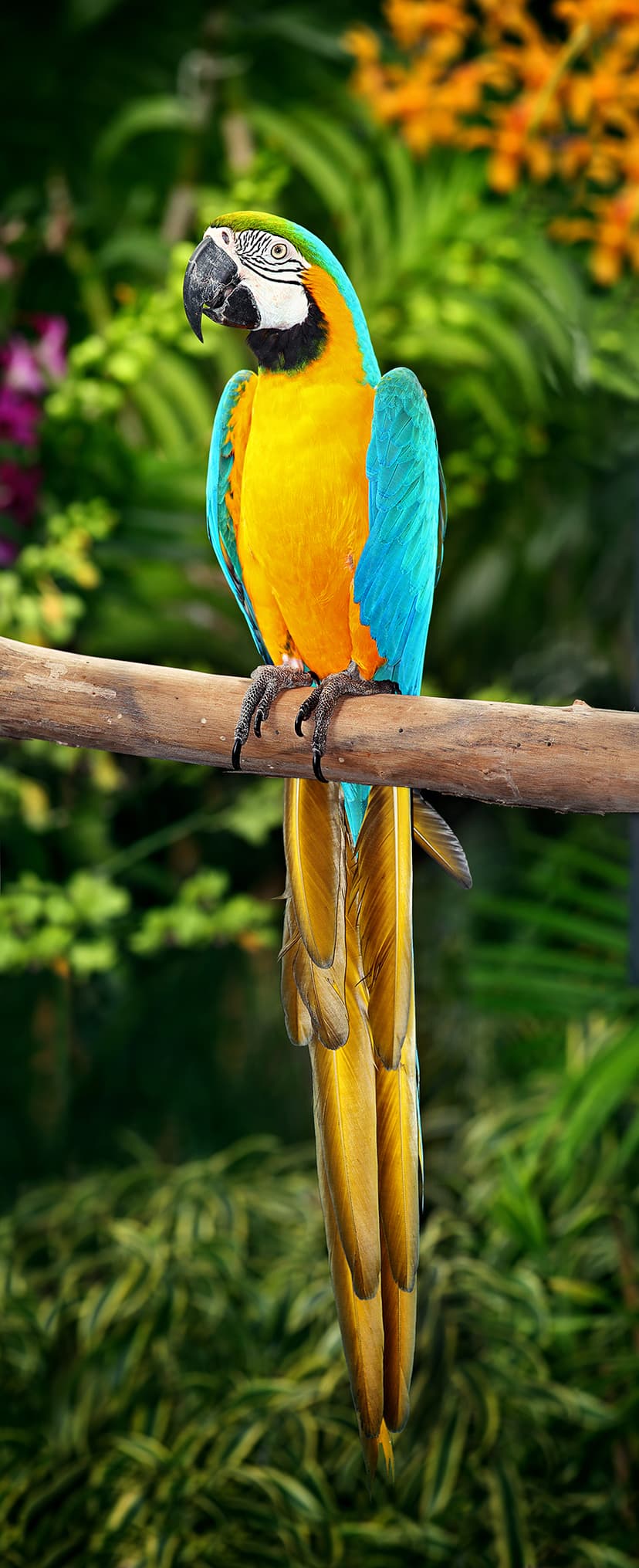
Blue-and-yellow macaw
The blue-and-yellow macaw, also known as the blue-and-gold macaw, is a large Neotropical parrot native to the forests, woodlands, and savannahs of tropical Central and South America, including Trinidad. It is distinguished by its vibrant blue upperparts, yellow to orange underparts, and a green crown, making it one of the most popular and commonly kept macaw species in aviculture due to its striking appearance and ability to bond with humans.
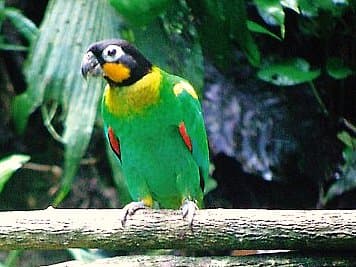
Orange-cheeked parrot
The orange-cheeked parrot, also known as Barraband's parrot, is a species of parrot native to the Amazonian Andes and humid lowland forests of the Amazon Basin in South America. Its distinctive features include an olive throat and breast, yellow thighs, and varying shades of orange on its wings and cheeks, with a notable white eye-ring. This species faces threats from habitat loss due to deforestation in its native range.

Duchess lorikeet
The Duchess lorikeet (Vini margarethae) is a species of parrot native to the Solomon Islands archipelago. This vibrantly colored bird, primarily bright red with distinctive yellow and purple markings, inhabits lowland and montane forests, as well as plantations. It is currently listed as Least Concern but faces threats from habitat loss and potential large-scale pet trade.