
Grey-cheeked parakeet
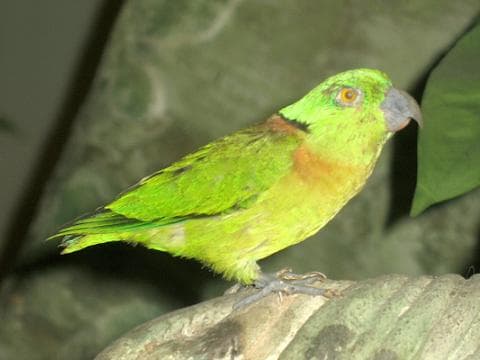
The grey-cheeked parakeet, also known as the fire-winged parakeet, is a vulnerable bird species native to Ecuador and Peru. It is distinguished by its predominantly green plumage, pale blue crown, ashy gray cheeks, and striking orange to orange-red underwing coverts. This species inhabits a variety of forest types and scrublands and is known for its noisy, chattering vocalizations.
Key Facts
- ›Found in western Ecuador and northwestern Peru.
- ›Adults are mostly green with a pale blue crown and ashy gray cheeks.
- ›Underwing coverts are a distinctive orange to orange-red.
- ›Inhabits deciduous and evergreen forests, open woodlands, scrublands, and cultivated areas.
- ›Diet consists of flowers, seeds, and fruits, potentially including cultivated bananas.
- ›Classified as Vulnerable by the IUCN due to threats from illegal trade and habitat loss.

Fire-Winged Parakeet
Ecuador, Peru
Deciduous Forests, Evergreen Forests, Open Woodlands, Scrublands, Cultivated Areas
Pale Blue Crown, Pale Ashy Gray Cheeks, Whitish Eye Ring and Bill, Deep Blue Primary Coverts, Orange To Orange-Red Underwing Coverts
Flowers, Seeds, Fruits, Cultivated Bananas
- Noisy
- May be taught to mimic human sounds with patience
- Noisy, Giving A Variety of Rather Shrill, Chattering Calls
- Calls Described As 'Chree', 'Chree-Chree', and 'Cra-Cra-Cra-Cra-Cra'
- Members of A Flock Often Call Simultaneously
Natural cavities in large hollow tree limbs, Excavated nests in arboreal termite nests
About Grey-cheeked parakeet
The grey-cheeked parakeet, scientifically known as Brotogeris pyrrhoptera and sometimes referred to as the fire-winged parakeet, is a vulnerable bird species found in the diverse landscapes of western Ecuador and northwestern Peru. These parakeets are recognized for their predominantly green plumage, which is paler and more yellowish on their undersides. Distinctive features include a pale blue crown, pale ashy gray cheeks and neck sides, a whitish eye ring and bill, deep blue primary wing coverts, and striking orange to orange-red underwing coverts. Immature birds can be identified by their green crowns instead of blue.
Habitat and Distribution
This species inhabits a range of environments, from deciduous and evergreen forests to more open woodlands, scrublands, and cultivated areas. Their altitudinal range varies, being found up to 300 meters in the northern part of their range and up to 1,550 meters in the south. They are thought to undertake some seasonal movements within their territories.
Diet and Behavior
The diet of the grey-cheeked parakeet is varied, consisting of flowers, seeds, and fruits from numerous plant species. There is also a suspicion that they may consume cultivated bananas. They are known to be noisy birds, producing a range of shrill, chattering calls, and flock members frequently vocalize simultaneously.
Reproduction
The breeding season for the grey-cheeked parakeet typically occurs between January and March. They exhibit interesting nesting habits, often utilizing natural cavities found in large, hollow tree limbs. Additionally, they are known to excavate nests within arboreal termite nests. In captivity, a clutch usually consists of four to seven eggs, and the young fledge approximately six weeks after hatching.
Conservation Status and Aviculture
Once assessed as Endangered, the grey-cheeked parakeet has been downlisted to Vulnerable by the IUCN. The species faces significant threats from the illegal cage-bird trade and ongoing habitat loss, driven by agricultural conversion, logging, and grazing. Despite these challenges, the grey-cheeked parakeet is widely kept as a pet, even in its native regions, and with patience, they can learn to mimic human sounds, though not with the clarity of larger parrot species.
Source: Wikipedia ↗
Frequently Asked Questions
What is the scientific name of the grey-cheeked parakeet?
The scientific name of the grey-cheeked parakeet is Brotogeris pyrrhoptera. It is part of the Arinae subfamily within the Psittacidae family.
Where does the grey-cheeked parakeet live?
The grey-cheeked parakeet is found in western Ecuador's Manabí Province and extends south into extreme northwestern Peru, reaching the northern Department of Piura.
What do grey-cheeked parakeets eat?
Their diet includes flowers, seeds, and fruits from various plants. They are also suspected to feed on cultivated bananas.
What are the main threats to the grey-cheeked parakeet?
The primary threats to the grey-cheeked parakeet are the illegal cage-bird trade and habitat loss. Agricultural conversion, logging, and grazing by livestock contribute to habitat destruction.
What are the physical characteristics of an adult grey-cheeked parakeet?
Adults are mostly green, with paler and yellower underparts. They have a pale blue crown, pale ashy gray cheeks, a whitish eye ring and bill, deep blue primary coverts, and orange to orange-red underwing coverts.
Related Parrot species

Golden-capped parakeet
The golden-capped parakeet is a species of parrot endemic to Brazil, inhabiting dry and moist lowland forests, savannas, and plantations. It is distinguished by its predominantly green plumage with a black beak, white eyerings, orange-red belly, and a face that transitions from red to yellow on its crown. This parakeet is recognized as a valuable biological indicator due to its sensitivity to habitat fragmentation and vulnerability.

Kea
The kea, a large parrot endemic to New Zealand's South Island, is distinguished by its olive-green plumage, orange underwings, and a distinctive large, curved beak. Known for exceptional intelligence and curiosity, they inhabit both forested and alpine regions and have a varied omnivorous diet that includes carrion. Historically persecuted by sheep farmers, the kea is now a protected species.
Black-collared lovebird
The black-collared lovebird, also known as Swindern's lovebird, is a small African parrot characterized by a distinctive black band around its neck and a dark greyish-black bill. It is primarily found in the dense tropical rainforests of Africa. This species is rarely kept in captivity due to its specific dietary needs, particularly its reliance on native figs.