
Blue-headed macaw
Vulnerable (suggested)
The blue-headed macaw (Primolius couloni), also known as Coulon's macaw, is a smaller species of macaw native to the humid forests of eastern Peru, northwestern Bolivia, and western Brazil. It is distinguished by its predominantly green plumage contrasted with a vibrant blue head and flight feathers, and its relatively small size compared to larger macaws.
Key Facts
- ›Native to eastern Peru, northwestern Bolivia, and far western Brazil.
- ›Measures approximately 41 cm in length, classifying it as a mini-macaw.
- ›Plumage is primarily green with a blue head and flight feathers.
- ›Known to visit clay-licks and found in humid forest openings, riverine areas, and palm swamps.
- ›Typically observed in small groups of 2-4 individuals, but larger flocks have been recorded.
- ›Conservation status is debated, with previous IUCN uplisting to endangered, but a more recent assessment suggests vulnerable might be more appropriate.
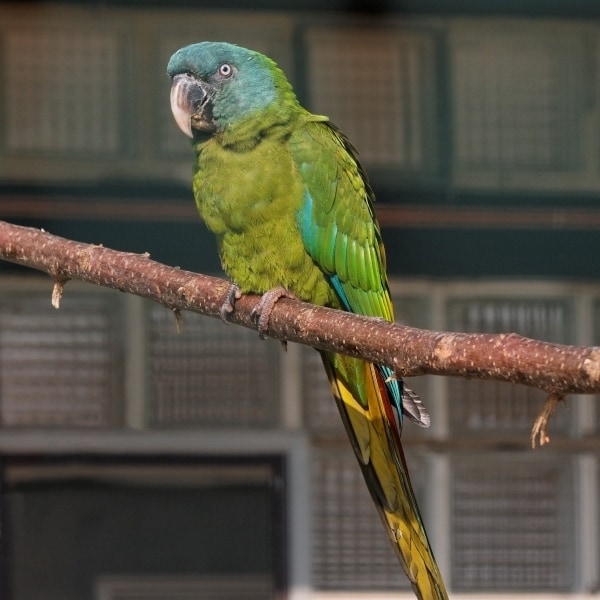
Coulon's Macaw
South America
Humid Forest Openings, Riverine Areas, Clearings, Moriche Palm Swamps, Outskirts of Towns, Lowlands To 1550m Altitude
- Blue head and flight feathers
- Long, pointed tail
- Medium-sized pale greyish-horn bill with black base
- Dark greyish facial skin and lores
- Higher-Pitched and Softer Call Than Most Other Macaws
Possible Nest In Bamboo Cavity, Possible Nest In Tree Cavity
About Blue-headed macaw
The blue-headed macaw, scientifically known as Primolius couloni and sometimes referred to as Coulon's macaw, is a striking species of parrot native to the humid forests of eastern Peru, northwestern Bolivia, and the far western reaches of Brazil. Belonging to the group of smaller macaws, often called mini-macaws, it measures approximately 41 centimeters (16 inches) in length, distinguishing it from its larger relatives.
Description and Identification
This species is characterized by its predominantly green plumage, which is often tinged with olive, particularly on the underside. The head, flight feathers, and primary coverts display a vibrant blue hue. The tail is long and pointed, featuring a maroon base, a narrow green center, and a blue tip. The underparts of the tail and wings are a greenish-yellow. Adult macaws possess a medium-sized bill that is pale greyish-horn with a black base, and their iris is whitish, often surrounded by a narrow, barely visible maroon eye-ring. Uniquely among many macaws, their facial skin and lores are dark greyish. Juvenile birds are similar but have entirely black bills, greyer legs, darker irises, and white facial skin and lores.
Habitat and Behavior
The blue-headed macaw inhabits the southwestern Amazon region and the adjacent eastern Andean foothills. They prefer open areas within humid forests, frequently found along rivers or in natural clearings. Their habitat also extends to Moriche Palm swamps and the edges of settled areas, with sightings recorded from lowlands up to an altitude of 1550 meters (5,100 feet). Like other parrots, they are known to visit clay-licks. In the wild, they are typically observed in small social groups of two to four individuals, though larger congregations of up to around 60 have been documented. Their vocalizations are described as being higher-pitched and softer compared to those of most other macaw species.
Conservation and Trade
Historically considered fairly common, recent assessments have led to concerns about the population of the blue-headed macaw. While one review suggested it was rare with a declining population, leading to an uplisting to endangered status on the IUCN Red List, subsequent research has proposed that vulnerable might be a more accurate classification, with estimates of mature individuals potentially ranging from 9,200 to 46,000. Habitat loss is a potential threat, although significant portions of its range remain intact. The species is present in several protected areas. The capture of individuals for the wild bird trade has been a concern, especially given its rarity in captivity and high prices. International trade has seen fluctuations, and illegal confiscation of birds has been reported.
Source: Wikipedia ↗
Frequently Asked Questions
What is the scientific name for the blue-headed macaw?
The scientific name for the blue-headed macaw is Primolius couloni. It has also been placed in the genera Propyrrhura and Ara in the past.
Where does the blue-headed macaw live?
The blue-headed macaw is found in the south-west Amazon region and adjacent east Andean foothills. Its natural range includes eastern Peru, northwestern Bolivia, and far western Brazil.
What does a blue-headed macaw look like?
This macaw is largely green, with the head, flight feathers, and primary coverts being blue. It has a long, pointed tail with a maroon base, green center, and blue tip. The undertail and underwing are greenish-yellow.
What is the size of a blue-headed macaw?
The blue-headed macaw reaches a total length of about 41 cm (16 inches). This makes it one of the smaller species of macaw, often referred to as a mini-macaw.
What kind of habitat does the blue-headed macaw prefer?
They prefer openings in humid forests, such as those found along rivers or in clearings. They have also been observed in Moriche Palm swamps and the outskirts of towns, and can be found from lowlands up to altitudes of 1550 meters.
How do blue-headed macaws behave in the wild?
In the wild, they are typically seen in small groups of two to four individuals. Occasionally, much larger groups of up to approximately 60 individuals have been recorded. Their call is noted as being higher-pitched and softer than that of most other macaws.
What is the conservation status of the blue-headed macaw?
The conservation status has been subject to review. A 2006 assessment suggested it was endangered due to a decreasing population, but a later study proposed that vulnerable might be a more fitting category, with estimates of mature individuals ranging from 9,200 to 46,000.
Related Parrot species

Grey-hooded parakeet
The grey-hooded parakeet, also known as the Aymara parakeet, is a small parrot species found in the high-altitude shrublands of northwestern Argentina and Bolivia. It is distinguished by its slender build, green upperparts, and a distinctive greyish hood covering its head and breast.

Golden-shouldered parrot
The golden-shouldered parrot is a rare bird found in the southern Cape York Peninsula of Queensland, Australia. This species is distinguished by the adult male's yellow shoulder patch, black cap, and pale yellow frontal band. It is critically endangered due to habitat changes, which increase predation, and is the subject of significant conservation efforts.

Blaze-winged parakeet
The blaze-winged parakeet is a species of parrot found in parts of Brazil, Bolivia, Paraguay, and potentially Argentina. It is characterized by its mostly green plumage with distinctive red and yellow markings on its wings and a maroon belly. This species inhabits the Pantanal and Chaco regions, primarily in deciduous and gallery forests, and is known for its noisy, chattering vocalizations, especially in flight.