
Elegant parrot
The elegant parrot (Neophema elegans) is a small parrot species native to Australia, belonging to the Psittaculidae family. It is distinguished by its predominantly golden olive plumage, with a distinctive blue frontal band and yellow abdomen, and is one of six species of grass parrots in the genus Neophema.
Key Facts
- ›Endemic to Australia, found in two disjunct regions: southwestern and southeastern parts.
- ›Measures approximately 23 cm (9.1 inches) in length.
- ›Plumage is predominantly golden olive with a dark blue frontal band and yellow abdomen; females are duller.
- ›Nests in tree hollows, typically in eucalypts, higher than 15 meters above the ground.
- ›Lays a clutch of four to six round white eggs.
- ›Breeding season occurs between July and November, often influenced by rainfall.

Elegant Parakeet, Elegant Grass Parakeet, Grass Parrot
Australia
Eucalypt Forests, Stringybark Forests, Areas Along Watercourses
Golden Olive, Dark Blue, Lighter Blue, Yellow
Dark Blue Frontal Band, Yellow Abdomen and Vent
Tree Hollows Higher Than 15 m
About Elegant parrot
The Elegant Parrot
The elegant parrot, scientifically known as Neophema elegans, is a species of parrot endemic to Australia. It belongs to the Psittaculidae family and is one of six recognized species of grass parrot within the genus Neophema. Historically, Aboriginal peoples referred to this bird by names such as carteri, bilgir, or koolyederong.
Description and Identification
This species measures approximately 23 cm (9.1 inches) in length. Its plumage is predominantly a golden olive color, distinguished by a dark blue frontal band above the beak, with lighter blue accents. The abdomen and vent are a vibrant yellow. The wings are primarily olive, featuring dark blue outer flight feathers. The tail is edged with yellow and displays shades of olive and blue. Both the bill and legs are grey, and the eyes are dark brown. Females are generally duller in coloration overall and possess a narrower blue frontal band. Juvenile elegant parrots are less vibrant and lack the distinctive frontal bands found on adults.
Distribution and Habitat
The elegant parrot occupies two distinct geographical regions within Australia. One range extends across southwestern Australia, from Moora in the north to Merredin and Esperance in the east. The other population is found in southeastern South Australia, including Kangaroo Island, extending north to Marree and eastward into western Victoria.
Breeding Habits
The breeding season for the elegant parrot typically occurs between July and November, though it can also be influenced by rainfall. They are capable of raising one, and occasionally two, broods per season, depending on environmental conditions. Nesting occurs in tree hollows, usually situated more than 15 meters (49 feet) above the ground. Preferred nesting sites are found in eucalypt trees, often along watercourses or within stringybark forests. A clutch typically consists of four to six round white eggs, each measuring about 21 x 18 mm.
Source: Wikipedia ↗
Frequently Asked Questions
What is the scientific name for the elegant parrot?
The scientific name for the elegant parrot is Neophema elegans. This binomial nomenclature distinguishes it within the scientific community.
Where is the elegant parrot found?
The elegant parrot is endemic to Australia. It inhabits two separate regions: southwestern Australia and southeastern South Australia, extending into western Victoria.
What are the key physical characteristics of the elegant parrot?
The elegant parrot is about 23 cm long and primarily golden olive in color. It features a dark blue frontal band above the beak and a yellow abdomen and vent. Females are typically a duller shade of olive.
What is the nesting behavior of the elegant parrot?
The elegant parrot nests in tree hollows, usually in eucalypt trees located along watercourses or within stringybark forests. These hollows are typically situated more than 15 meters above the ground.
How many eggs does an elegant parrot typically lay?
An elegant parrot typically lays a clutch of four to six round white eggs. These eggs measure approximately 21 x 18 mm.
Related Parrot species

Hyacinth macaw
The hyacinth macaw, also known as the hyacinthine macaw, is the largest parrot species, native to central and eastern South America. It is distinguished by its entirely cobalt-blue plumage and its impressive size, reaching up to one meter in length. Unfortunately, habitat loss and illegal trapping for the pet trade have led to its classification as Vulnerable, with strict protections in place.
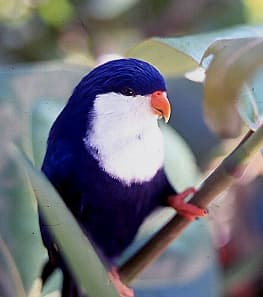
Blue lorikeet
The blue lorikeet (Vini peruviana) is a small lorikeet native to French Polynesia and the Cook Islands, also known as the Tahiti lorikeet or indigo lory. It is distinguished by its predominantly dark blue plumage with a white chest, throat, and face, and is known for its active nature and diet of nectar, pollen, and insects.

Black-headed parrot
The black-headed parrot is a species of parrot native to the tropical forests of South America, primarily found in countries like Brazil, Colombia, and Venezuela. It is distinguished by its striking black cap, rufous-orange hindneck band, and vibrant yellow and green plumage. These parrots are known for their playful and energetic nature when kept as pets, often mimicking environmental sounds.