
Blue-naped parrot
The blue-naped parrot, also known as the blue-crowned green parrot or pikoy, is a medium-sized parrot primarily found throughout the Philippines and the Talaud Islands of Indonesia. Its distinctive plumage includes a light blue crown and nape, contrasting with its predominantly green body. This species faces threats from habitat loss and the pet trade, leading to its classification as near threatened.
Key Facts
- ›Primarily green plumage with a distinctive light blue rear crown and nape.
- ›Measures approximately 31 cm (12 inches) in length.
- ›Found in secondary forests, forest edges, and plantations.
- ›Feeds on a diet of mangoes, berries, seeds, nuts, and grains.
- ›Nests in tree holes.
- ›Classified as near threatened by the IUCN due to habitat loss and trapping.

Blue-Crowned Green Parrot, Luzon Parrot, Philippine Green Parrot, Pikoy
Philippines, Indonesia
Secondary Forest, Forest Edges, Plantations
- Light blue rear crown and nape
- Pale blue lower back and rump
- Scalloped shoulders with orange-brown on black coverts
Mangoes, Berries, Seeds, Nuts, Grains
Tree Holes
About Blue-naped parrot
The blue-naped parrot, scientifically known as Tanygnathus lucionensis, is a medium-sized parrot native to the Philippines and the Talaud Islands of Indonesia. This species is also commonly referred to as the blue-crowned green parrot, Luzon parrot, or locally as pikoy. Its plumage is predominantly green, distinguished by a striking light blue rear crown and nape, a pale blue lower back and rump, and scalloped shoulders featuring orange-brown on black coverts.
Distribution and Habitat
The blue-naped parrot is widespread throughout the Philippine archipelago, with three of its four subspecies being endemic to the Philippines. The subspecies T. l. talautensis extends its range to the Talaud Islands in Indonesia. They inhabit secondary forests, forest edges, and plantations, typically found at elevations up to 1000 meters. These parrots usually gather in flocks of fewer than a dozen individuals.
Diet and Nesting
In their natural environment, blue-naped parrots feed on a variety of food sources, including mangoes, berries, seeds, and nuts. Their nesting habits involve utilizing tree holes for shelter and raising their young.
Conservation Concerns
Globally, the blue-naped parrot is classified as Near Threatened by the International Union for Conservation of Nature (IUCN). The species faces significant threats from habitat loss, primarily due to deforestation, and from trapping for the pet trade. These pressures have led to a decline in their population, with estimates suggesting between 1,500 and 7,000 mature individuals remain. The illegal trade of these birds is a particular concern in areas such as Palawan. Despite the existence of protected areas, conservation efforts are often hampered by lax enforcement, allowing deforestation and trapping to persist.
Legal Status
In the Philippines, it is illegal to hunt, capture, or possess blue-naped parrots under Republic Act 9147, which aims to conserve and manage the country's wildlife resources.
Source: Wikipedia ↗
Frequently Asked Questions
What are the different subspecies of the blue-naped parrot?
There are four recognized subspecies: T. l. lucionensis found on Luzon and Mindoro, T. l. hybridus on the Polillo Islands, T. l. salvadorii in the southern Philippines and Palawan, and T. l. talautensis on the Talaud Islands of Indonesia. These subspecies differ slightly in the extent of blue coloration on their heads and backs.
What is the conservation status of the blue-naped parrot?
The blue-naped parrot is assessed as near threatened by the International Union for Conservation of Nature. Its population is estimated to be between 1,500 and 7,000 mature individuals and is experiencing a continuing decrease.
What are the main threats to the blue-naped parrot population?
The primary threats to the blue-naped parrot are habitat loss and trapping for the pet trade. These factors have led to its scarcity on many islands, and illegal trade remains a concern in areas like Palawan.
Where are blue-naped parrots found naturally?
This species is widespread throughout the Philippines and also inhabits the Talaud Islands of Indonesia. Some subspecies are endemic to specific island groups within the Philippines, while others have been introduced to islands off Sabah, Malaysia, and on the mainland of Borneo.
What do blue-naped parrots eat?
Their diet in the wild consists of a variety of food sources including mangoes, berries, seeds, nuts, and grains. They forage in their natural habitats for these food items.
Related Parrot species

Blossom-headed parakeet
The Blossom-headed parakeet is a vibrant parrot species native to Southeast Asia, characterized by its lime-green body and a distinctive pink or bluish-grey head. It is known for its social behavior, often seen in small flocks, and its fondness for fruits and blossoms. This species is also referred to as the rosy-headed parakeet and faces threats from habitat loss and the illegal cage-bird trade.
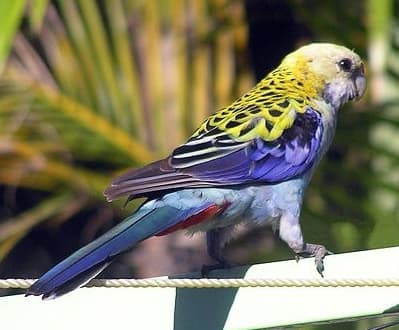
Pale-headed rosella
The pale-headed rosella is a moderately sized parrot native to northeastern Australia, characterized by its pale yellow head, white cheeks, scalloped black and gold back, and pale blue underparts. It inhabits open woodlands and feeds on seeds and fruits, nesting in tree hollows. This species readily adapts to aviculture and is a popular cagebird.
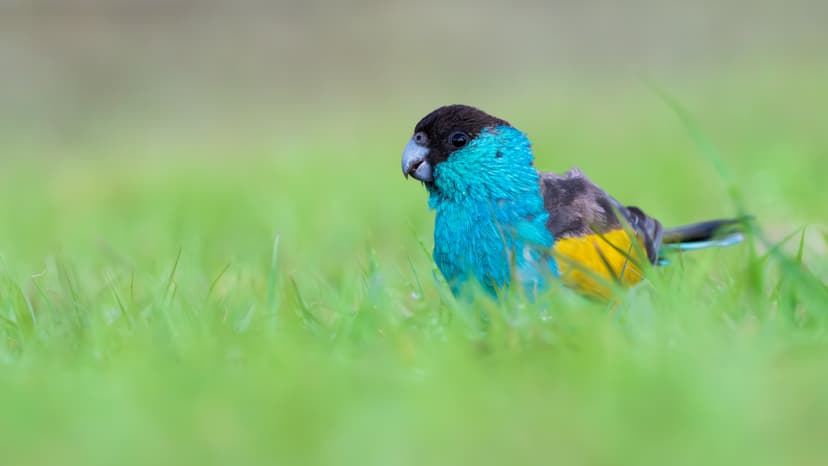
Hooded parrot
The hooded parrot is a species native to the Northern Territory in Australia, inhabiting savannah and open woodland. It is distinctive for being one of the few parrots that breed in termite mounds, and males are recognized by their black head and yellow wing patches. While once more widespread, it remains common in protected areas.