
Hooded parrot
The hooded parrot is a species native to the Northern Territory in Australia, inhabiting savannah and open woodland. It is distinctive for being one of the few parrots that breed in termite mounds, and males are recognized by their black head and yellow wing patches. While once more widespread, it remains common in protected areas.
Key Facts
- ›Native to the Northern Territory, Australia.
- ›Breeds in cavities dug into termite mounds.
- ›Males have a black head and yellow wing patches, while females are dull green.
- ›Diet consists mainly of seeds, berries, and vegetables.
- ›Can be aggressive, making it unsuitable for mixed aviaries.
- ›Evaluated as Least Concern on the IUCN Red List.
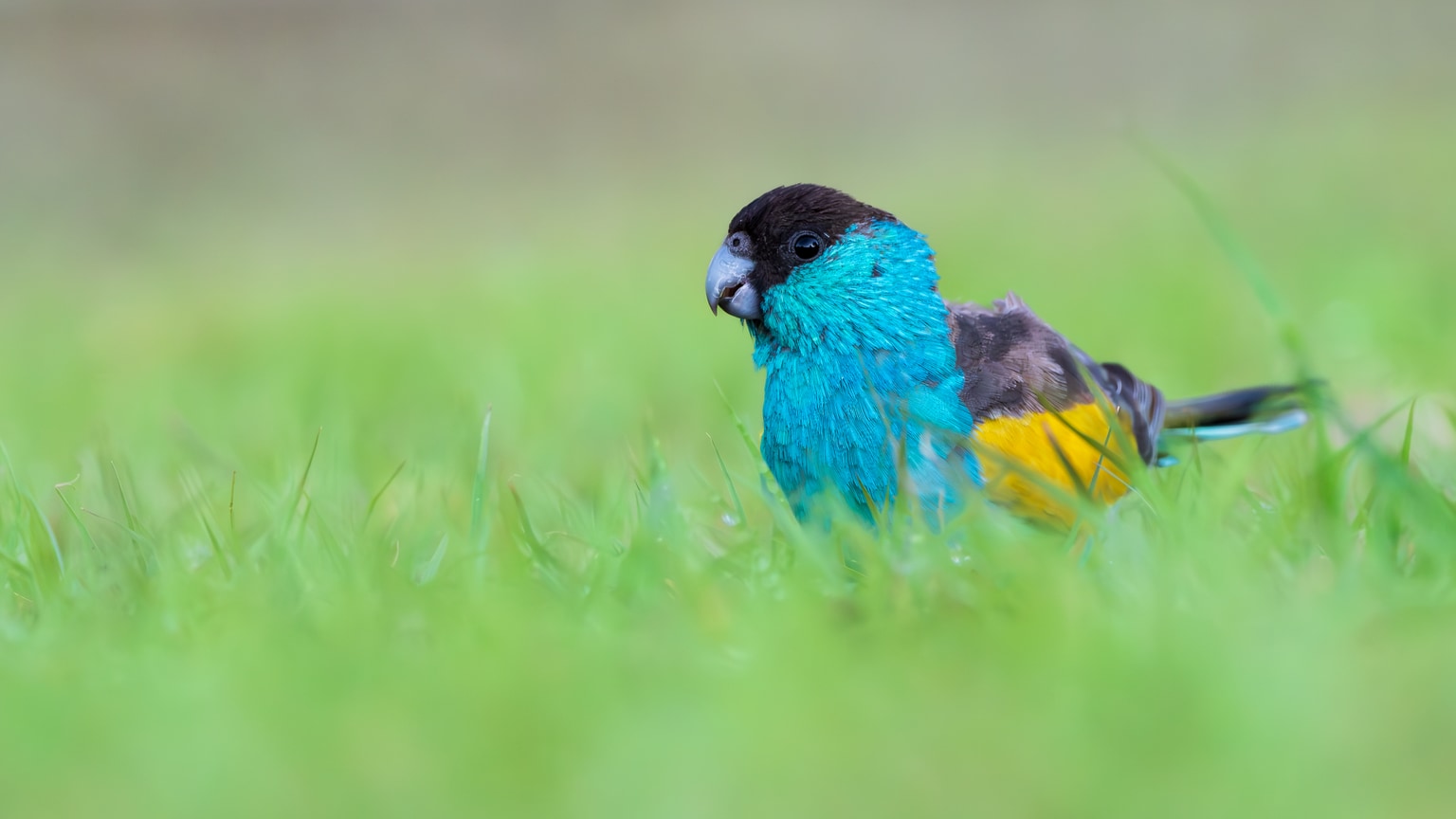
Black-Hooded Parrot
Australia
Savannah, Open Woodland
Black, Blue-Grey, Yellow, Brown, Turquoise Blue, Olive Green, Pale Blue, Dull Green, Grey-Brown, Pink
Black Head In Males, Yellow Wing Patch In Males, Breeding In Termite Mounds
Seeds, Berries, Vegetables
Aggressive
Digs Cavities In Termite Mounds
About Hooded parrot
The hooded parrot (Psephotellus dissimilis), also known by the common name black-hooded parrot, is a species of parrot native to the Northern Territory in Australia. Its scientific name, dissimilis, is Latin for "different," likely referring to its sexual dimorphism or its distinct appearance compared to its closest relative, the golden-shouldered parrot.
Description and Identification
This is a medium-sized parrot, reaching up to 26 cm in length and weighing between 50 and 60 grams. The male is striking with a black head, bluish-grey beak, and dark-brown irises. A notable feature is the yellow patch on its wings. Its upper body is brown, transitioning to turquoise blue on the lower parts, with an olive-green tail tipped in pale blue. The legs are pink-grey. The female is more subdued, presenting as a dull-green parrot with a grey-brown head and pink undertail coverts. Juveniles resemble the female. The hooded parrot can be distinguished from the similar golden-shouldered parrot by the absence of a pale frontal band and the presence of a larger yellow wing patch in males, and the absence of red on the abdomen in both sexes.
Distribution and Habitat
An Australian endemic, the hooded parrot is found in semi-arid regions of the northeast Northern Territory. It inhabits savannah and open woodland environments. Historically, it has declined from much of its original territory, but it remains common in protected areas.
Behavior and Ecology
The hooded parrot exhibits unique nesting behavior, digging cavities in termite mounds. These nests are typically excavated in conical mounds, with the tunnel construction taking around three weeks. The breeding season occurs once or twice a year between April and August. Females lay four or five white, slightly shiny eggs. The species has a fascinating ecological relationship with the moth species Trisyntopa neossophila, whose larvae live in the nesting cavities and feed on parrot feces. The termite mounds used for nesting are vulnerable to damage from cattle, and nesting sites can be threatened by environmental incidents.
Diet
In its natural habitat, the hooded parrot's diet primarily consists of seeds, berries, and vegetables.
Conservation Status
The hooded parrot is currently listed as Least Concern on the IUCN Red List of Threatened Species. Despite habitat loss, its populations are considered stable in protected regions.
Aviculture
In captivity, the hooded parrot breeds readily. However, it can exhibit aggressive tendencies, which complicates its keeping in mixed aviaries with other parrot species. It gained significant popularity in captivity in Australia during the 1980s, and a yellow color mutation has been successfully bred.
Source: Wikipedia ↗
Frequently Asked Questions
What does the hooded parrot look like?
The male hooded parrot has a distinctive black head, a bluish-grey beak, and a yellow patch on its wings. Its upper parts are brown, lower parts turquoise blue, and tail olive green tipped pale blue. The female is a dull-green parrot with a grey-brown head and pink undertail coverts.
Where does the hooded parrot live?
This species is endemic to the semi-arid areas of the northeast Northern Territory in Australia. It inhabits savannah and open woodland environments.
What is unique about the hooded parrot's nesting habits?
Hooded parrots are known for digging cavities in termite mounds to use as nests. They generally select conical termite mounds and excavate a tunnel about 50 to 80 cm long, which takes approximately three weeks.
What is the diet of the hooded parrot?
The diet of the hooded parrot mainly consists of seeds, berries, and vegetables. Information on specific plant species or fruits consumed is not detailed.
Is the hooded parrot endangered?
The hooded parrot is currently evaluated as Least Concern on the IUCN Red List of Threatened Species. Although it has declined from much of its original range, it remains common in protected areas.
Can hooded parrots be kept as pets?
Yes, the hooded parrot breeds readily in captivity and was popular in Australia in the 1980s. However, they can be aggressive, which makes them unsuitable for keeping in mixed aviaries with other parrot species.
Related Parrot species
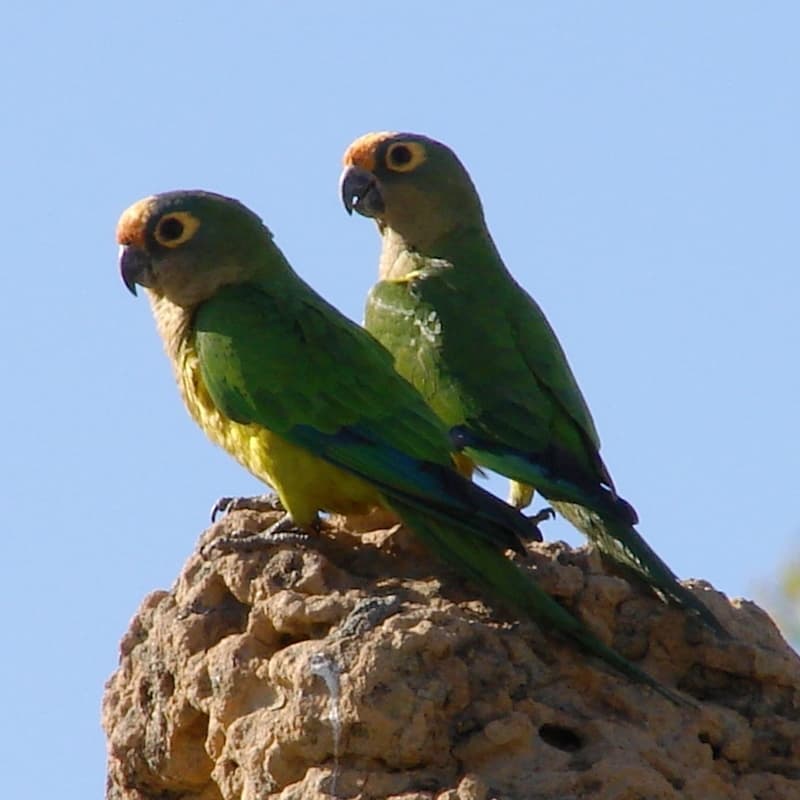
Peach-fronted parakeet
The Peach-fronted parakeet is a species of parrot found in South America, inhabiting a variety of semi-open to wooded landscapes. It is distinguished by its peachy orange forehead and hindcrown of dull blue, and is known for its varied diet and nesting habits.

Blue-winged racket-tail
The blue-winged racket-tail is a critically endangered parrot species endemic to Tawi-Tawi island in the Philippines. Its plumage is predominantly dark green with blue primary feathers and distinctive racquet-shaped tail feathers. The species faces severe threats from habitat loss and poaching for the illegal pet trade, leading to a drastically reduced population.

Burrowing parrot
The burrowing parrot, also known as the Patagonian conure, is a species of parrot native to Argentina and Chile. It is distinguished by its white eye ring, white breast marking, olive green body, and brightly colored underparts. These parrots are unique for excavating elaborate burrows in cliff faces for nesting and raising their young.