
Bourke's parrot
Neopsephotus bourkii·Psittaculidae·18-23·41-49
Bourke's parrot, also known as the blue-vented parrot or sundown parrot, is a small, nomadic parrot native to Australia. It is distinguished by its soft brown plumage with pinkish abdomen and breast, and a blue rump, with males exhibiting a distinct blue forehead. These parakeets are known for their quiet temperament and are popular in aviculture.
Key Facts
- ›Approximately 19 cm long and weighing around 45 grams.
- ›Characterized by brown plumage, a pink abdomen and breast, and a blue rump.
- ›Males have a blue forehead, while females have little to no blue on the forehead.
- ›Native to arid and semi-arid regions of Australia, often found in mulga and spinifex habitats.
- ›Known for its quiet, passive temperament, making it a popular aviary bird.
- ›Feeds primarily on grasses and seeds, with peak activity at dusk and dawn.

Blue-Vented Parrot, Sundown Parrot, Pink-Bellied Parrot, Bourke's Parakeet, Bourke, Bourkie, Rosy Bourke
Australia
Arid and Semi-Arid Regions, Mulga Woodlands, Spinifex Plains, Open Eucalypt Woodlands, Areas Dominated By Acacia Species
Pink Abdomen and Breast, Blue Rump, Blue Forehead In Adult Males, Feathers That Camouflage With Reddish Soil
Grasses, Seeds
Quiet, Passive, Peaceful
Soft Twitter, "Chu-Vee", "Chirrup Chirrup", Alarm Call: "Kik-Kik-Kik"
Tree hollows in Mulga or other Acacia species, Nests are situated 1-3 meters above ground, Eggs laid on a bed of decayed wood
About Bourke's parrot
Bourke's parrot (Neopsephotus bourkii), also known by names such as the blue-vented parrot, sundown parrot, or pink-bellied parrot, is a small avian species native exclusively to Australia. It is the sole member of its genus, Neopsephotus. Named in honor of General Sir Richard Bourke, the Governor of New South Wales from 1831 to 1837, this parrot is noted for its relatively compact size, typically measuring between 18 to 23 cm in length and weighing around 45 grams. Its plumage is a blend of soft brown with a distinctive pink abdomen and breast, complemented by a blue rump. Adult males are further distinguished by a blue forehead, while females exhibit little to no blue in this area, aiding in visual differentiation after about nine months of age.
Distribution and Habitat
As a nomadic species, Bourke's parrot follows water and food availability across vast, sparsely populated arid and semi-arid regions of Australia. Its range extends through southwestern Queensland, western New South Wales, central Australia, and parts of South Australia and Western Australia. The primary habitat consists of areas rich in Acacia species, particularly mulga, and expansive spinifex plains. They can also be found in native cypress and open eucalypt woodlands, with occasional sightings in urban fringe areas.
Ecology and Behaviour
Bourke's parrots are known for their quiet and passive temperament, making them a popular choice for aviculture. They exhibit both arboreal and terrestrial behaviors, perching and nesting in trees but also spending significant time on the ground where their coloration provides effective camouflage. Their flight is short and swift, often characterized by gliding motions close to the ground. In the wild, they typically form pairs or small social groups of four to six individuals, though larger flocks numbering in the hundreds may gather during drought periods.
Breeding and Diet
The breeding season for Bourke's parrots usually spans from August to October, potentially extending to December depending on resource availability. These parrots are monogamous. Nests are constructed in tree hollows, typically within mulga trees, between 1 to 3 meters above ground, with eggs laid on decayed wood. The female incubates the clutch of 3 to 6 eggs for 18–19 days, being fed by the male during this time. Both parents care for the young, which fledge around four weeks after hatching and become independent about a week to ten days later. Their diet consists mainly of grasses and seeds, foraged actively at dusk and dawn, contributing to their role as seed dispersers.
Aviculture and Conservation
In captivity, Bourke's parrots are highly regarded for their peaceful nature, allowing them to coexist with other small bird species. While they rarely learn to mimic speech, their gentle disposition and attractive appearance make them common among new bird owners. Captive individuals often live 10-15 years, with some exceeding this age. Several color mutations, such as yellow, Isabel, fallow, and the popular pink or rosa, exist in aviculture. The species is not listed as threatened by the IUCN, with populations considered stable and potentially increasing. Introduced predators and environmental factors like drought pose threats, but their widespread habitat and limited contact with predators in some areas contribute to their resilience.
Source: Wikipedia ↗
Frequently Asked Questions
What is Bourke's parrot?
Bourke's parrot is a small parrot species native to Australia. It is recognized by its distinctive brown, pink, and blue plumage and is known for its gentle nature.
Where does Bourke's parrot live?
This nomadic species is found across arid and semi-arid regions of Australia. Its habitat includes areas dominated by acacia species like mulga, spinifex plains, and open eucalypt woodlands.
What does Bourke's parrot eat?
Bourke's parrots forage on the ground and in bushes for grasses and seeds. They are most active when feeding at dusk and dawn.
How long does Bourke's parrot live?
In captivity, Bourke's parrots typically live for 10-15 years, though some individuals can live longer. Information on their lifespan in the wild is less documented.
What are the main threats to Bourke's parrot?
The primary threats to Bourke's parrots are predation by introduced red foxes and feral cats, as well as drought and habitat clearing. Despite these threats, their numbers are reported to be steadily increasing.
Can Bourke's parrots talk?
Bourke's parrots rarely learn to talk. Their vocalizations are generally described as soft twitters and chirps.
Are Bourke's parrots social?
Yes, Bourke's parrots tend to live in pairs or small groups in the wild, typically ranging from four to six individuals. Larger flocks can form, especially during times of drought.
Related Parrot species
Hooded parrot
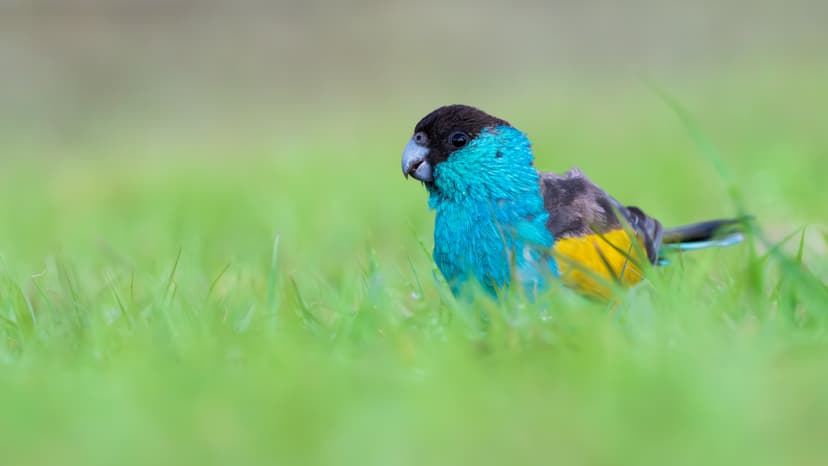
The hooded parrot is a species native to the Northern Territory in Australia, inhabiting savannah and open woodland. It is distinctive for being one of the few parrots that breed in termite mounds, and males are recognized by their black head and yellow wing patches. While once more widespread, it remains common in protected areas.

Princess parrot
The Princess parrot is a medium-sized, vibrantly colored Australian bird known for its striking pink throat and bluish crown. Named in honor of Princess Alexandra of Denmark, this elusive species inhabits arid Australian woodlands and scrublands. It is distinguished by the male's unique 'spatula' extension on its primary feathers and its nomadic breeding habits, appearing opportunistically when food is abundant.

Blossom-headed parakeet
The Blossom-headed parakeet is a vibrant parrot species native to Southeast Asia, characterized by its lime-green body and a distinctive pink or bluish-grey head. It is known for its social behavior, often seen in small flocks, and its fondness for fruits and blossoms. This species is also referred to as the rosy-headed parakeet and faces threats from habitat loss and the illegal cage-bird trade.