
Princess parrot
Polytelis alexandrae·Psittaculidae·34-46·110-120
The Princess parrot is a medium-sized, vibrantly colored Australian bird known for its striking pink throat and bluish crown. Named in honor of Princess Alexandra of Denmark, this elusive species inhabits arid Australian woodlands and scrublands. It is distinguished by the male's unique 'spatula' extension on its primary feathers and its nomadic breeding habits, appearing opportunistically when food is abundant.
Key Facts
- ›Measures 34 to 46 cm in length and weighs 110 to 120 g.
- ›Plumage is predominantly green with a pink throat, bluish crown, and blue rump.
- ›Males possess longer tail feathers, brighter coloring, a coral-red beak, and an orange iris.
- ›Nests in tree hollows, laying 4-6 white eggs incubated for 19 days.
- ›Feeds primarily on the seeds of grasses and shrubs.
- ›Known for being elusive and nomadic, making it one of Australia's least understood parrots.

Queen Alexandra Parrot, Queen Alexandra Parakeet, Alexandra's Parakeet, Princess of Wales Parakeet, Rose-Throated Parakeet, Spinifex Parrot
Australia
Arid Woodland, Scrub With Spinifex, Eucalypts, Acacias
Pink Throat, Bluish Crown, Blue Rump, Male 'Spatula' On Primary Feather, Male Coral-Red Beak, Male Orange Iris
Seeds of Grasses, Seeds of Shrubs
Elusive, Bond To Multiple Family Members, Good Personality
Can Make Loud Calls, Short Range of Mimicking Ability, Some Have the Ability To 'Talk'
Hollow In A Eucalypt, Hollow In A Desert Oak
About Princess parrot
The Princess Parrot
The Princess parrot (Polytelis alexandrae) is a medium-sized parrot native to Australia, renowned for its striking coloration and elusive nature. Named in honor of Princess Alexandra of Denmark, who later became Queen of the United Kingdom, this species is also known by several other common names, including the Queen Alexandra parrot and the rose-throated parakeet.
Description and Identification
Princess parrots measure between 34 to 46 cm in length and typically weigh between 110 and 120 grams. Their plumage is predominantly green, but they are most recognized for their vibrant pink throat and a bluish crown. The rump is also blue, and the tail is long and narrow. Males are generally more brightly colored than females, possessing longer tail feathers, a coral-red beak, and an orange iris. A unique distinguishing feature of mature males is the presence of a 'spatula' or 'spatule,' a projecting extension from the end of the third primary flight feather on each wing. Females have duller beaks and browner irises.
Habitat and Behavior
This nomadic species inhabits arid woodland and scrub environments across the interior of Australia, often found in areas with spinifex grass, eucalypts, and acacias. They are known for their elusiveness, making them one of Australia's least understood parrots. Princess parrots typically arrive in small groups to breed and then disappear, often making them difficult to observe. Unusually for parrots, they engage in mobbing behavior against predators. Their diet primarily consists of seeds from grasses and shrubs.
Breeding and Reproduction
Princess parrots are opportunistic breeders, nesting when food is abundant. They choose hollows in eucalypt or desert oak trees for their nests. Females lay between four and six white eggs, which are incubated for approximately 19 days. The chicks fledge, or leave the nest for the first time, about 35 days after hatching.
Captivity and Conservation
In captivity, Princess parrots can live for up to 30 years and are known for their ability to bond with multiple family members. While their mimicking ability is limited, some individuals can learn to talk, contributing to their popularity among aviculturists and pet owners. They are favored for their attractive appearance and agreeable personality. Three common color mutations exist in captivity: Lutino, Blue, and Albino, in addition to the natural green coloration.
Source: Wikipedia ↗
Frequently Asked Questions
What are the Princess parrot's distinctive physical characteristics?
The Princess parrot is characterized by its predominantly green plumage, a distinctive pink throat, and a bluish crown. Males are further distinguished by longer tail feathers, a coral-red beak, an orange iris, and a unique 'spatula' projection on their primary flight feathers.
Where does the Princess parrot live?
This species is found in the interior of Australia, inhabiting arid woodland and scrub environments that feature spinifex, eucalypts, and acacias.
What is the Princess parrot's diet?
Their natural diet consists of the seeds from grasses and shrubs. They can become ill if their food sources are contaminated, and care must be taken with their feeding dishes.
How long do Princess parrots live?
The lifespan of the Princess parrot is thought to be as long as 30 years. This applies to both their wild existence and their lives in captivity under appropriate care.
Can Princess parrots mimic sounds?
Princess parrots possess a limited ability to mimic sounds, and some individuals can be taught to 'talk'. They are popular among aviculturists and pet owners due to their appearance and personality.
When do Princess parrots breed?
These parakeets are opportunistic breeders, choosing to nest when food resources are plentiful. They nest in hollows of eucalypt or desert oak trees.
Related Parrot species

Bourke's parrot
Bourke's parrot, also known as the blue-vented parrot or sundown parrot, is a small, nomadic parrot native to Australia. It is distinguished by its soft brown plumage with pinkish abdomen and breast, and a blue rump, with males exhibiting a distinct blue forehead. These parakeets are known for their quiet temperament and are popular in aviculture.
Pacific parrotlet
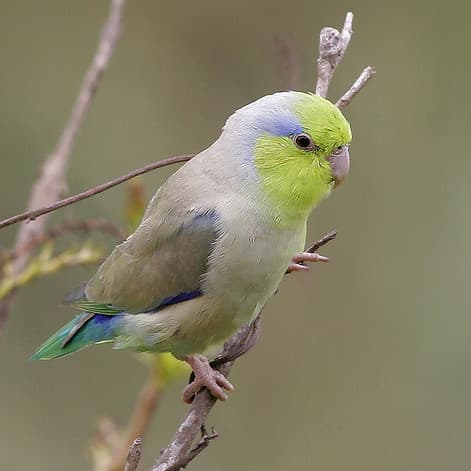
The Pacific parrotlet, scientifically known as Forpus coelestis, is a small parrot originating from South America, specifically western Ecuador and northwestern Peru. These birds are distinguished by their small size, often referred to as "pocket parrots," and their often feisty and curious personalities, despite their diminutive stature.

Blossom-headed parakeet
The Blossom-headed parakeet is a vibrant parrot species native to Southeast Asia, characterized by its lime-green body and a distinctive pink or bluish-grey head. It is known for its social behavior, often seen in small flocks, and its fondness for fruits and blossoms. This species is also referred to as the rosy-headed parakeet and faces threats from habitat loss and the illegal cage-bird trade.