
Brown-headed parrot
Poicephalus cryptoxanthus·Psittacidae
The brown-headed parrot is a species of parrot native to southeastern Africa. Its plumage is predominantly green, with distinctive yellow underwing coverts and a grey-brown neck that transitions to brown on the head. Known for its sweet temperament and relatively quiet nature, it is popular in aviculture.
Key Facts
- ›Predominantly green plumage with bright yellow underwing coverts.
- ›Head is brown, transitioning from grey-brown on the neck.
- ›Feeds opportunistically on berries, figs, shoots, flowers, fruit, and seeds.
- ›Popular in aviculture due to its sweet and quiet temperament.
- ›Found in southeastern Africa, with subspecies potentially occurring in Mozambique, Zimbabwe, Malawi, Tanzania, and Kenya.

Africa
Yellow Underwing Coverts, Brown Head, Metallic Green Rump
Berries, Figs, Shoots, Flowers, Fruit, Seeds, Natal Mahogany Tree Flowers and Fruit, Acacia Spp. Flowers and Fruit, Lepidopteran Larvae
Sweet, Quiet
Generally Quiet
About Brown-headed parrot
The brown-headed parrot, scientifically known as Poicephalus cryptoxanthus, is a species of parrot native to southeastern Africa. Its general plumage is green, leading Sinclair et al. (1993) to describe it as "the greenest parrot of the sub-region." A distinctive feature is the bright yellow of its underwing coverts, from which its specific name derives, with 'kryptos' meaning hidden and 'xanthos' meaning yellow in Greek. The rump is a very bright, almost metallic green, and the margins of the feathers on the underparts become more pronounced towards the vent and thighs. The neck is grey-brown, transitioning to brown on the head, while the mantle is greener.
Some individuals may exhibit random yellow feathers on their head, neck, and wings, the cause of which is not fully understood, though over-vigorous preening by parents has been suggested. The tail is edged olive-brown and tipped green. Its iris is greenish-yellow or yellow, and its legs and feet are blackish grey. The bill is dark, almost black on the upper mandible and lighter below. Immature birds are typically duller than adults and appear more yellowish underneath. Their flight is noted as fast and direct.
Historically, three subspecies were recognized, though the existence of P. c. zanzibaricus, confined to Zanzibar and Pemba islands, is now doubted due to a lack of significant size differences from mainland birds and potential interbreeding. The other recognized subspecies are P. c. cryptoxanthus and P. c. tanganyikae, distinguished by plumage variations.
In terms of diet, brown-headed parrots are opportunistic generalists, adapting their food sources to availability. They commonly feed on berries, figs, shoots, flowers, fruit, and seeds, with a particular preference for the flowers and fruit of the Natal Mahogany tree (Trichilia emetica) and Acacia species, as well as lepidopteran larvae. Their sweet temperament and relatively quiet nature make them popular in aviculture, often considered suitable for apartment living.
Source: Wikipedia ↗
Frequently Asked Questions
What are the defining physical characteristics of the brown-headed parrot?
The brown-headed parrot is primarily green, with a notable bright yellow on its underwing coverts that gives it its scientific name. Its neck is grey-brown, merging into a brown head, and the rump is a bright, almost metallic green.
What does the brown-headed parrot eat in the wild?
In its natural habitat, the brown-headed parrot is an opportunistic feeder. Its diet typically includes berries, figs, shoots, flowers, fruit, and seeds, with a preference for the flowers and fruit of the Natal Mahogany tree and Acacia species, as well as lepidopteran larvae.
Is the brown-headed parrot a good pet?
Yes, the brown-headed parrot is popular in aviculture. They are described as having a very sweet temperament and tend to be a quieter bird, making them suitable for apartment living.
What is the typical appearance of an immature brown-headed parrot?
Immature brown-headed parrots are generally described as duller than adults. They also tend to be more yellowish on their underparts compared to the adults.
Where is the brown-headed parrot found geographically?
The brown-headed parrot is native to southeastern Africa. Its range extends from northern KwaZulu-Natal northwards through Mozambique and southeastern Zimbabwe, with subspecies potentially found in Malawi, eastern Tanzania, and coastal Kenya.
Related Parrot species
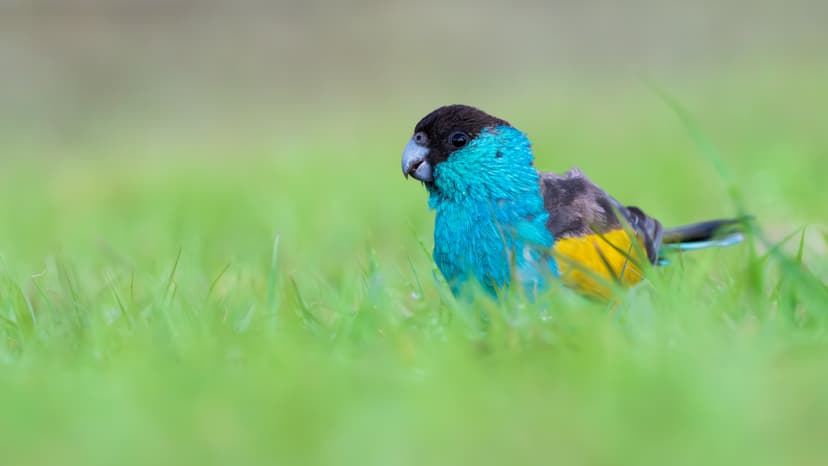
Hooded parrot
The hooded parrot is a species native to the Northern Territory in Australia, inhabiting savannah and open woodland. It is distinctive for being one of the few parrots that breed in termite mounds, and males are recognized by their black head and yellow wing patches. While once more widespread, it remains common in protected areas.

Blue-rumped parrot
The blue-rumped parrot is a small parrot native to Southeast Asia, found in countries like Malaysia, Borneo, and Sumatra. It is distinguished by its predominantly green plumage, with males featuring a striking blue rump and head, while females have a more subdued grey-brown head. These parrots are often observed in flocks and feed on a diet of seeds, fruits, and blossoms.

Golden-shouldered parrot
The golden-shouldered parrot is a rare bird found in the southern Cape York Peninsula of Queensland, Australia. This species is distinguished by the adult male's yellow shoulder patch, black cap, and pale yellow frontal band. It is critically endangered due to habitat changes, which increase predation, and is the subject of significant conservation efforts.