
Burrowing parrot
The burrowing parrot, also known as the Patagonian conure, is a species of parrot native to Argentina and Chile. It is distinguished by its white eye ring, white breast marking, olive green body, and brightly colored underparts. These parrots are unique for excavating elaborate burrows in cliff faces for nesting and raising their young.
Key Facts
- ›Native to Argentina and Chile, with four recognized subspecies.
- ›Known for excavating deep burrows in cliff faces for nesting colonies.
- ›Distinctive features include a white eye ring, white breast marking, and red abdominal patches.
- ›Diet consists of seeds, berries, fruits, and vegetable matter, varying seasonally.
- ›Populations have declined due to exploitation for trade and persecution as a crop pest.
- ›Popular in aviculture, known for being playful and affectionate.

Burrowing Parakeet, Patagonian Conure, Greater Patagonian Conure
Argentina, Chile
Dry, Open Country, Montane Grassy Shrubland, Patagonian Steppes, Arid Lowland, Woodland Savanna, Gran Chaco Plains, Farmland, Edges of Urban Areas
Olive Green, Grey-Brown, Whitish Pectoral Marking, Orange-Red Abdomen, Yellow Lower Back and Flanks, Blue Caste On Tail
Bare White Eye Ring, White Post-Ocular Patch, Variable Whitish Pectoral Marking, Prominent Red Abdominal Patches
Seeds, Berries, Fruits, Vegetable Matter
Playful, Gentle, Affectionate, Cuddly
Can Learn To Talk, Can Mimic Sounds
- Excavate burrows in cliff faces
- Nest in ravines
- Colonial nesting
- May reuse and enlarge existing burrows
- Rarely nest in tree cavities or anthropogenic substrates
About Burrowing parrot
The burrowing parrot, scientifically known as Cyanoliseus patagonus and also referred to as the Patagonian conure or burrowing parakeet, is a distinctive species of parrot found in Argentina and Chile. It is recognized for its unique nesting behavior, where it excavates elaborate burrows in cliff faces and ravines to create colonies for raising its young.
Description and Identification
Adult burrowing parrots measure between 39 and 52 cm in length, with a wingspan of 23–25 cm and a long, graduated tail. A key identifying feature is a bare white eye ring and a post-ocular patch. Their plumage is predominantly olive-brown on the head and upper back, with grey-brown throat and breast, often featuring a variable whitish pectoral marking. The lower thighs and central abdomen are typically orange-red, with the extent and hue of this coloration believed to indicate breeding quality. The lower back, upper thighs, rump, vent, and flanks are yellow, and the wing coverts are olive green. The tail exhibits an olive green color with a blue caste when viewed from above and brown from below. They possess a grey bill, yellow-white iris, and pink legs. While visually similar, burrowing parrots exhibit slight sexual dimorphism; males are generally larger and have more prominent red abdominal patches. Under UV light, males display brighter green feathers, while females show brighter blue feathers.
Distribution and Habitat
This species is native to much of Argentina, with isolated populations in central Chile. During winter, Argentinian populations may migrate north to southern Uruguay, and Chilean birds undertake vertical migrations to lower altitudes. They prefer dry, open country environments up to 2000 meters in elevation. Their preferred habitats include montane grassy shrubland, Patagonian steppes, arid lowlands, woodland savanna, and the plains of the Gran Chaco. They are also adaptable and can be found in farmland and at the edges of urban areas.
Diet and Behavior
The diet of the burrowing parrot is varied, consisting of seeds, berries, fruits, and vegetable matter. Their feeding habits change seasonally, with fruit consumption peaking in the summer months. In winter, they rely more heavily on seeds from cultivated crops and wild plants. Burrowing parrots are known to be socially and genetically monogamous. They nest in large colonies, which is thought to offer protection against predation. In the absence of suitable cliffs, they may utilize anthropogenic sites like quarries and pits, and rarely, tree cavities.
Reproduction
The breeding season commences in September, with eggs laid until December. A clutch typically contains two to five eggs, with an incubation period of 24–25 days. The female is the sole incubator, while the male provides sustenance. Eggs hatch asynchronously, and chicks fledge approximately eight weeks after hatching, remaining dependent on their parents for up to four months.
Conservation and Human Interaction
While the burrowing parrot is currently listed as Least Concern by the IUCN, its populations are in decline due to exploitation for the wildlife trade and persecution as a crop pest. Their unique nesting habits make them susceptible to human disturbances and habitat degradation. The Chilean subspecies, C. p. bloxami, is particularly vulnerable and listed on the Chilean national vertebrate red list. Despite being officially recognized as a crop pest in Argentina, studies suggest the economic impact of their crop predation is insignificant. In aviculture, the burrowing parrot is a popular companion bird, known for its playful and affectionate nature, and ability to mimic sounds and learn speech. Verified lifespans in captivity have reached up to 19.5 years, with plausible claims extending to over 34 years.
Source: Wikipedia ↗
Frequently Asked Questions
What are the different subspecies of burrowing parrots?
There are four recognized subspecies: C. p. patagonus (nominate), C. p. andinus, C. p. conlara, and C. p. bloxami (Greater Patagonian Conure). The subspecies C. p. conlara is considered doubtfully distinct and may represent a hybrid zone.
Where do burrowing parrots typically live?
They inhabit dry, open country up to 2000 meters in elevation, including montane grassy shrubland, Patagonian steppes, arid lowlands, woodland savanna, and the plains of the Gran Chaco. They may also be found in farmland and the edges of urban areas.
What makes the burrowing parrot's nesting habits unique?
Burrowing parrots excavate elaborate burrows, often up to 3 meters deep, in cliff faces and ravines to create nesting chambers. They often nest in large colonies, sometimes connecting multiple tunnels into a labyrinth.
What is the diet of a burrowing parrot?
Their diet includes seeds, berries, fruits, and vegetable matter. Fruit consumption peaks during Argentina's summer, while in winter they predominantly feed on seeds from cultivated crops and wild plants.
Are burrowing parrots endangered?
The burrowing parrot is listed as Least Concern by the IUCN, but its populations are declining. The Chilean subspecies, C. p. bloxami, is listed on the Chilean national vertebrate red list.
Can burrowing parrots be kept as pets?
Yes, the burrowing parrot, commonly known as the Patagonian conure in aviculture, is a popular companion parrot. They are known for being playful, gentle, and affectionate when tame, and can learn to talk.
Related Parrot species
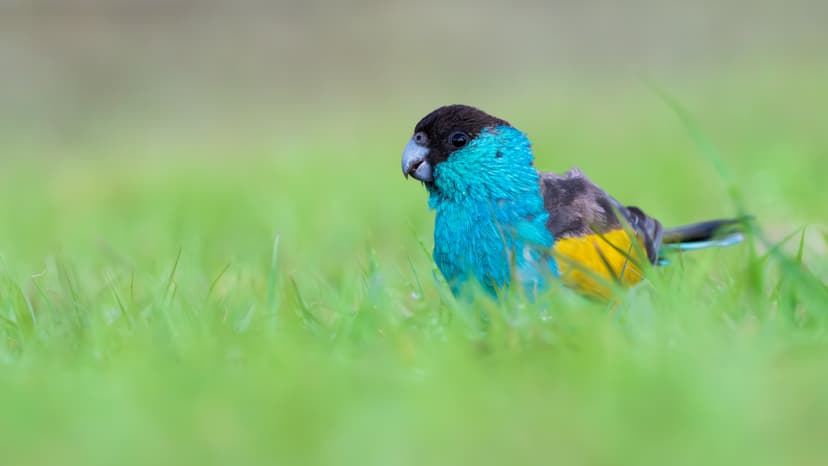
Hooded parrot
The hooded parrot is a species native to the Northern Territory in Australia, inhabiting savannah and open woodland. It is distinctive for being one of the few parrots that breed in termite mounds, and males are recognized by their black head and yellow wing patches. While once more widespread, it remains common in protected areas.

Great-billed parrot
The great-billed parrot is a medium-sized, primarily green parrot distinguished by its exceptionally large red bill. Native to the forest and mangrove ecosystems of Southeast Asian islands, its diet consists mainly of fruits. It is currently assessed as Least Concern due to its widespread and locally common status.

Pacific parakeet
The Pacific parakeet, also known as the Pacific conure or Nicaraguan green conure, is a species of parrot found in woodland and scrubland habitats across southern Mexico, Guatemala, El Salvador, Honduras, and Nicaragua. Adults are predominantly olive-green with yellowish underparts and some individuals may display red speckles on their necks, with distinctive orange-red irises.