
Pacific parakeet
The Pacific parakeet, also known as the Pacific conure or Nicaraguan green conure, is a species of parrot found in woodland and scrubland habitats across southern Mexico, Guatemala, El Salvador, Honduras, and Nicaragua. Adults are predominantly olive-green with yellowish underparts and some individuals may display red speckles on their necks, with distinctive orange-red irises.
Key Facts
- ›Found in southern Mexico, Guatemala, El Salvador, Honduras, and Nicaragua.
- ›Inhabits various woodland types, including deciduous, semi-deciduous, evergreen, gallery, swamp forests, arid scrublands, and urban areas.
- ›Adults are generally olive-green with yellowish underparts and orange-red irises.
- ›Diet includes seeds and fruits, and it can be a crop pest.
- ›Breeding season appears to include June to September.
- ›Flight call is a sharp 'kreh!-kreh!-kreh!-kreh!', with a lower-pitched, scratchy perched call.

Pacific Conure, Nicaraguan Green Conure
North America, Central America
Deciduous Forest, Semi-Deciduous Forest, Evergreen Forest, Gallery Forest, Swamp Forest, Arid Scrubland, Upland Pine-Oak Forest, Urban Parks and Gardens
Orange-Red Irises, Bare Pale Beige Skin Around Eyes
Seeds, Fruits
- Flight Call: 'Kreh!-Kreh!-Kreh!-Kreh!'
- Perched Call: 'A Scratchy Kreeh-Kreeh-Kreeh-Kreei-Kreei'
Rock Crevices, Cavities In Earthen Banks, Cavities In Trees, Termitaria
About Pacific parakeet
The Pacific parakeet, scientifically designated as Psittacara strenuus, is a species of parrot found primarily along the Pacific slope of Central America. It is also known in aviculture as the Pacific conure or Nicaraguan green conure. This species inhabits a wide array of environments, ranging from dense deciduous, semi-deciduous, and evergreen forests to gallery forests, swamp forests, and arid scrublands. They have also adapted to coexist with humans, being found in upland pine-oak forests and urban parks and gardens.
Description and Identification
Adult Pacific parakeets measure approximately 32 centimeters (13 inches) in length. The sexes are visually alike, both displaying a predominantly olive-green plumage that transitions to a slightly yellowish hue on their underparts. Some individuals may exhibit distinctive red speckles on their necks. The undersides of their flight feathers and tail are also olive-yellow. A notable characteristic is their iris, which is a striking orange-red, surrounded by bare, pale beige skin. Their bill is horn-colored, and their legs and feet are brownish.
Distribution and Behavior
The Pacific parakeet's range extends from southern Mexico, specifically Oaxaca state, southward through Guatemala, El Salvador, and Honduras, into central Nicaragua. These birds are non-migratory but will undertake local movements in response to the availability of food resources. Their diet is known to include seeds and fruits, and they can sometimes pose a challenge to agriculture as a crop pest. Pacific parakeets are social creatures, often observed in flocks that can exceed 100 individuals. Their vocalizations include a sharp flight call of "kreh!-kreh!-kreh!-kreh!" and a lower-pitched, scratchy perched call described as "kreeh-kreeh-kreeh-kreei-kreei".
Breeding and Conservation
Information regarding the breeding biology of the Pacific parakeet is not extensively documented. However, nesting has been observed in rock crevices and cavities within earthen banks. It is also believed that they utilize cavities in trees and termitaria for nesting. The breeding season appears to occur between June and September. While the species is listed as Least Concern by the IUCN, its population is estimated at around 200,000 mature individuals and is reportedly decreasing. Despite this decline, no immediate threats have been identified, and the species is considered fairly numerous in certain parts of its range, with a presence in at least two protected areas.
Source: Wikipedia ↗
Frequently Asked Questions
What is the scientific name of the Pacific parakeet?
The scientific name of the Pacific parakeet is Psittacara strenuus. It was formerly placed in the genus Aratinga but has been classified under Psittacara since approximately 2013.
Where is the Pacific parakeet found?
The Pacific parakeet is found on the Pacific slope, extending from Oaxaca state in southern Mexico southward through Guatemala, El Salvador, and Honduras, into central Nicaragua.
What kind of habitats does the Pacific parakeet prefer?
This species inhabits a diverse range of woodland environments, including deciduous, semi-deciduous, and evergreen forests, as well as gallery forests, swamp forests, and arid scrublands. They also venture into upland pine-oak forests and can be found in urban parks and gardens.
What do Pacific parakeets eat?
The diet of the Pacific parakeet is not fully documented, but it is known to consist of seeds and fruits. They can sometimes be considered a crop pest due to their feeding habits.
What are the distinctive features of the Pacific parakeet?
Adult Pacific parakeets are typically olive-green, with underparts that are slightly yellowish. Some individuals may have red speckles on their necks. They possess orange-red irises surrounded by bare, pale beige skin, a horn-colored bill, and brownish legs and feet.
What is the conservation status of the Pacific parakeet?
The Pacific parakeet is considered Least Concern by the IUCN, as it is often assessed as part of the green parakeet. The estimated population of mature individuals is around 200,000, and it is experiencing a decrease, though no immediate threats have been identified.
How do Pacific parakeets communicate?
The flight call of the Pacific parakeet is described as a sharp 'kreh!-kreh!-kreh!-kreh!'. When perched, they produce a lower-pitched call that sounds like 'a scratchy kreeh-kreeh-kreeh-kreei-kreei'.
Related Parrot species

Burrowing parrot
The burrowing parrot, also known as the Patagonian conure, is a species of parrot native to Argentina and Chile. It is distinguished by its white eye ring, white breast marking, olive green body, and brightly colored underparts. These parrots are unique for excavating elaborate burrows in cliff faces for nesting and raising their young.
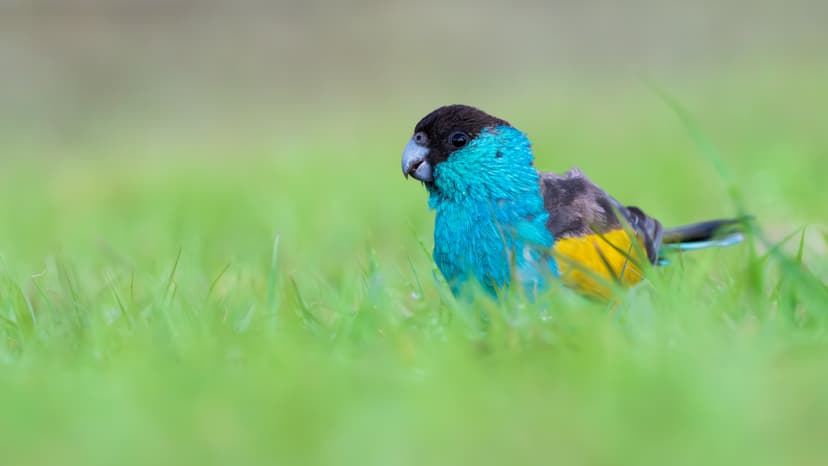
Hooded parrot
The hooded parrot is a species native to the Northern Territory in Australia, inhabiting savannah and open woodland. It is distinctive for being one of the few parrots that breed in termite mounds, and males are recognized by their black head and yellow wing patches. While once more widespread, it remains common in protected areas.

Great-billed parrot
The great-billed parrot is a medium-sized, primarily green parrot distinguished by its exceptionally large red bill. Native to the forest and mangrove ecosystems of Southeast Asian islands, its diet consists mainly of fruits. It is currently assessed as Least Concern due to its widespread and locally common status.