
Gang-gang cockatoo
The gang-gang cockatoo is a distinctive parrot native to the cooler, wetter forests and woodlands of southeastern Australia. It is the sole member of its genus, easily recognized by its unique "creaky gate" call and the male's striking red head and crest, contrasting with the female's grey plumage. This species plays a significant role in its ecosystem and is the faunal emblem of the Australian Capital Territory.
Key Facts
- ›Endemic to coastal regions of south-eastern Australia.
- ›Males have a red head and crest, while females have a grey crest.
- ›Nests in young, solid trees, often near water.
- ›Diet primarily consists of eucalyptus flowers and buds.
- ›Listed as vulnerable in New South Wales due to habitat loss and population decline.
- ›Its call is described as resembling a creaky gate or a cork being pulled from a bottle.

Gang-Gang
Australia
Forests, Woodlands, Alpine Bushland, Dense Shrub Understories
Male's Red Head and Crest, Female's Grey Crest, Wispy Crests, Scalloped Feather Edges
Eucalyptus Flowers, Eucalyptus Buds
Social, Not Overly Noisy
- Resembles a creaky gate
- Resembles the sound of a cork being pulled from a wine bottle
- Not overly noisy
- Excavate nesting cavities in young, solid trees
- Often nest near water
About Gang-gang cockatoo
The Gang-Gang Cockatoo
The gang-gang cockatoo (Callocephalon fimbriatum) is a unique parrot species endemic to the cooler, wetter forests and woodlands of south-eastern Australia. It is the sole representative of the genus Callocephalon and is readily identified by its distinctive vocalizations, often described as sounding like a creaky gate or a cork being pulled from a bottle. This species is particularly notable for its sexual dimorphism; males sport a striking red head and crest, while females have a more subdued grey crest.
Taxonomy and Classification
First illustrated by British Royal Navy officer James Grant in 1803, the gang-gang cockatoo was initially given the binomial name Psittacus fimbriatus. It was later placed in its own genus, Callocephalon, by French naturalist René Lesson in 1837. The genus name combines the Greek words for 'beauty' (kallos) and 'head' (kephalē), referring to its distinctive cranial features. While its unusual appearance and coloration, especially its sexual dichromatism, have led to debate, modern molecular phylogenetic analyses suggest it diverged from the lineage of the palm cockatoo, placing it within the Cacatuinae clade rather than the black cockatoos.
Description and Characteristics
Adult gang-gang cockatoos measure between 32–37 cm (13–15 in) in length, with a wingspan of 62–76 cm (24–30 in), and typically weigh between 230–334 grams. Their plumage is predominantly a mild grey, often with lighter scalloping on the feathers, which can appear barred on the upperparts. The male's bright red head and crest are its most prominent feature, contrasting with the female's small, fluffy grey crest. Juvenile males can be distinguished by brighter crowns and shorter crests. While they may resemble the Galah in flight, their unique calls and crests make them easily identifiable.
Distribution and Habitat
Gang-gangs are found along the coastal regions of south-eastern Australia. Historically, they inhabited King Island but are now extinct there, and they have been introduced to Kangaroo Island. They prefer mountainous forests and woodlands characterized by dense shrub understories. During winter, they may undertake short migrations to more open habitats, but they must return to denser forests for breeding, as they require tall trees for nesting.
Behaviour and Ecology
Gang-gang cockatoos are social birds but are not excessively noisy. Unlike many other cockatoo species, they nest in young, solid trees, often in proximity to water. The female uses her strong beak to excavate the nesting cavity. These parrots are monogamous, with a breeding season extending from spring to summer. They typically lay 2-3 white eggs, which are incubated for approximately four weeks, with both parents sharing in the care of the young.
Diet
Their diet mainly consists of flowers and buds from eucalyptus trees, which they forage for in the canopy.
Conservation Status
The gang-gang cockatoo faces significant threats, primarily due to the loss of older, hollow trees and the clearing of feeding habitats across its range. This has led to a considerable reduction in their numbers. Consequently, the species is listed as vulnerable in New South Wales and is protected under the Biodiversity Conservation Act 2016. Recent assessments indicate a substantial population decline, and the impact of the 2019–20 bushfires has further exacerbated its precarious situation, leading to considerations for listing it as endangered.
Source: Wikipedia ↗
Frequently Asked Questions
What makes the gang-gang cockatoo unique?
The gang-gang cockatoo is unique for being the only species in its genus, Callocephalon. It is also distinguished by its specific vocalizations, described as a creaky gate sound, and the noticeable sexual dimorphism in its head and crest coloration.
Where can I find gang-gang cockatoos?
Gang-gang cockatoos are found throughout south-eastern Australia, preferring cooler and wetter forests and woodlands, particularly in alpine bushland. They are endemic to the coastal regions of this area.
What is the difference between male and female gang-gang cockatoos?
Male gang-gang cockatoos are easily identified by their bright red head and crest. Females, while also possessing a crest, have a small, fluffy grey crest and their overall plumage is a mild grey with lighter scalloping.
What do gang-gang cockatoos eat?
The diet of the gang-gang cockatoo primarily consists of the flowers and buds of eucalyptus trees. They forage for these food sources in the canopies of the trees.
What is the conservation status of the gang-gang cockatoo?
The gang-gang cockatoo is listed as vulnerable in New South Wales due to significant population reductions, primarily caused by habitat loss and clearing. It is also facing potential listing as endangered under threatened fauna classifications.
How do gang-gang cockatoos build their nests?
Unlike many other cockatoos, gang-gangs nest in young, solid trees. The females excavate nesting cavities using their strong beaks, often choosing locations near water.
Related Parrot species
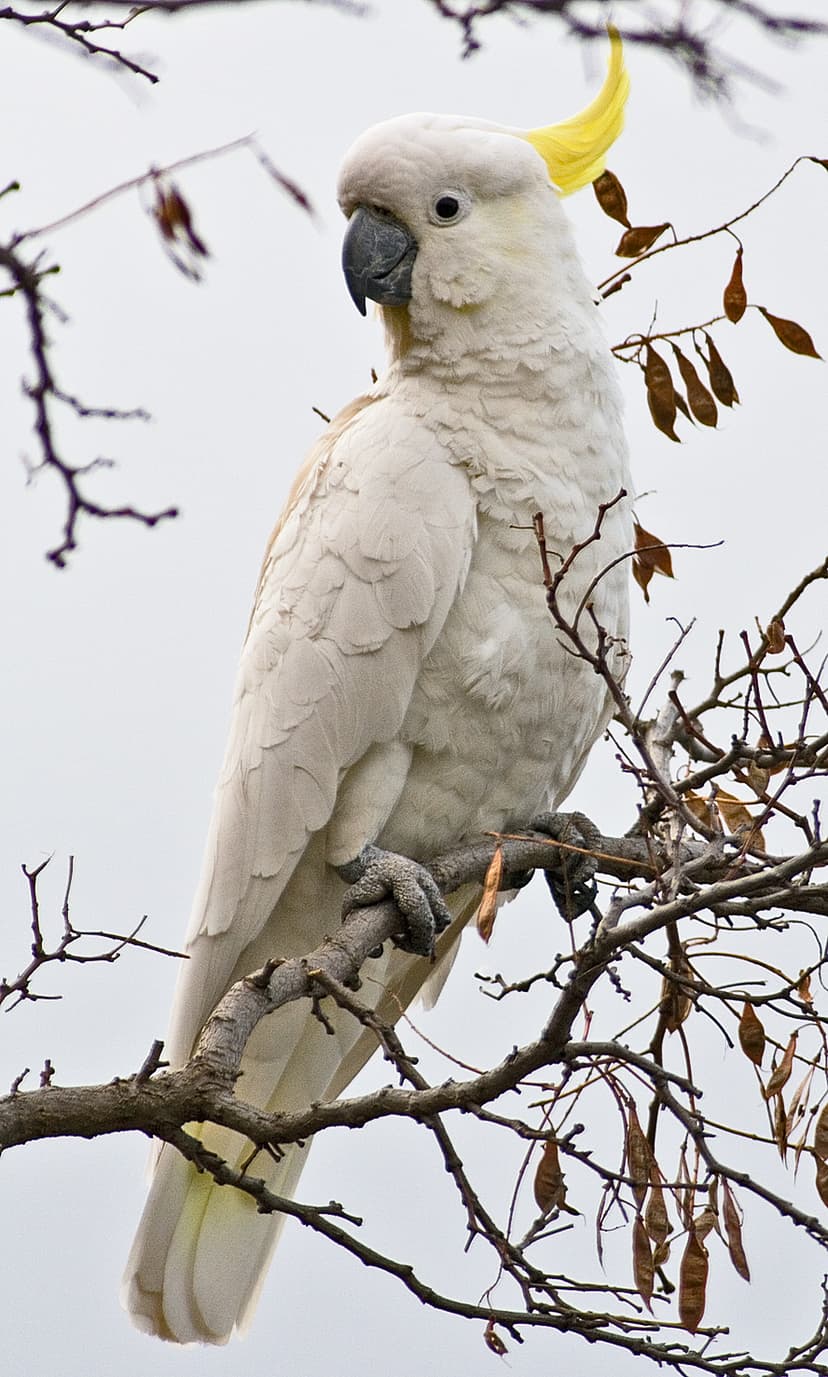
Cacatuidae
Cacatuidae, commonly known as cockatoos, are a family of parrots native to Australasia, characterized by their distinctive erectile crests and curved bills. While generally less colorful than other parrots, often displaying white, grey, or black plumage with colorful accents, they are typically larger and possess a striking appearance. Cockatoos are known for their social nature, monogamous breeding habits, and preference for nesting in tree hollows, feeding on a diet of seeds, tubers, fruits, and insects.
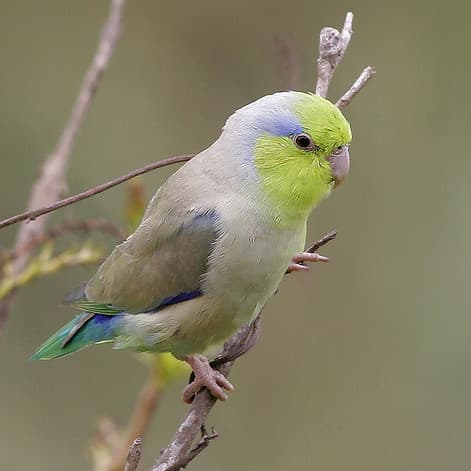
Pacific parrotlet
The Pacific parrotlet, scientifically known as Forpus coelestis, is a small parrot originating from South America, specifically western Ecuador and northwestern Peru. These birds are distinguished by their small size, often referred to as "pocket parrots," and their often feisty and curious personalities, despite their diminutive stature.

Galah
The Galah is a distinctive Australian cockatoo, easily recognized by its vibrant pink and grey plumage. It is one of the most common and widespread bird species across mainland Australia, thriving in a variety of habitats from open country to metropolitan areas. The species is notable for its social nature, tendency to hybridize, and its unique linguistic and cultural associations within Australia.