
Mindanao lorikeet
Near Threatened (IUCN), Vulnerable (Philippine Red List)
The Mindanao lorikeet is a parrot species endemic to the island of Mindanao in the Philippines. It is distinguished by its vibrant green plumage, red face, and a distinctive dark purple band across its head. This species inhabits tropical moist montane forests and faces significant threats from habitat loss and the illegal pet trade.
Key Facts
- ›Found exclusively on the island of Mindanao in the Philippines.
- ›Inhabits tropical moist montane forests above 1,000 meters (3,300 ft).
- ›Characterized by green plumage, a red face, and a dark purple head band.
- ›Feeds on fruits and nectar in its natural habitat.
- ›Threatened by habitat loss and trapping for the illegal wildlife trade.
- ›Population estimated to be as low as 1,500 individuals.

Mount Apo Lorikeet
Philippines
Tropical Moist Montane Forests, Forest Edge
Red Face, Dark Purple Band On the Head, Orange Beak, Red Iris
Fruits, Nectar
About Mindanao lorikeet
The Mindanao lorikeet, scientifically known as Trichoglossus johnstoniae, is a species of parrot native to the island of Mindanao in the Philippines. Also referred to as the Mount Apo lorikeet, this bird is characterized by its vibrant green plumage, a striking red face, and a distinctive dark purple band across its head. It also possesses an orange beak, dark gray eye-rings, and red irises, with males and females appearing identical.
Habitat and Ecology
This lorikeet inhabits tropical moist montane forests and forest edges, typically found at elevations above 1,000 meters (3,300 feet). Mindanao lorikeets are known to migrate between altitudes, roosting in lower areas and feeding in higher forest regions during the day. Their diet consists primarily of fruits and nectar.
Breeding and Conservation
Birds observed in breeding condition with enlarged gonads in March and May suggest a breeding season aligned with that of other Philippine forest birds. In captivity, they lay two eggs that incubate in approximately two weeks and fledge within 30 to 35 days.
The Mindanao lorikeet faces significant conservation challenges. It is threatened by extensive habitat loss resulting from deforestation, mining, land conversion, and slash-and-burn practices. Despite its montane habitat being relatively secure due to its ruggedness, the species is severely impacted by trapping for the illegal pet trade, leading to local extinctions in some parts of its range. The IUCN classifies the species as near threatened, a status many believe underestimates its precarious situation. The Philippine Red List designates it as vulnerable. While found in protected areas like Mount Apo and the Kitanglad Mountain Range, conservation efforts are hampered by lax protection. Proposed conservation actions include population and range surveys and habitat protection.
Source: Wikipedia ↗
Frequently Asked Questions
What is the scientific name of the Mindanao lorikeet?
The scientific name of the Mindanao lorikeet is Trichoglossus johnstoniae. This binomial name is used to classify it within the scientific community.
Where is the Mindanao lorikeet found?
The Mindanao lorikeet is found only on the island of Mindanao in the Philippines. It is endemic to this specific geographic location.
What are the main threats to the Mindanao lorikeet?
The primary threats to the Mindanao lorikeet are habitat loss due to deforestation, mining, land conversion, and slash-and-burn agriculture, as well as trapping for the illegal pet trade. These factors significantly impact its survival.
What does the Mindanao lorikeet eat?
In its natural habitat, the Mindanao lorikeet feeds on fruits and nectar. These food sources are essential for its diet in the montane forests it inhabits.
What is the conservation status of the Mindanao lorikeet?
The IUCN has classified the Mindanao lorikeet as near threatened, though many believe it is more severely threatened. The Philippine Red List has listed it as vulnerable due to local extinctions.
How large is a Mindanao lorikeet?
The Mindanao lorikeet is approximately 20 cm (7.9 inches) in length. This size is typical for lorikeets found in its region.
Are male and female Mindanao lorikeets visually different?
No, males and females of the Mindanao lorikeet are the same in appearance. They exhibit sexual monomorphism.
Related Parrot species

Imperial amazon
The Imperial Amazon, also known as the sisserou parrot, is a critically endangered parrot endemic to the Caribbean island of Dominica. It is distinguished by its striking plumage, with males and females sharing identical dark purple chests and dark green upper parts, and its designation as Dominica's national bird, featured on its flag. Sadly, its population has dwindled significantly, facing threats from hurricanes, habitat loss, and illegal trade.
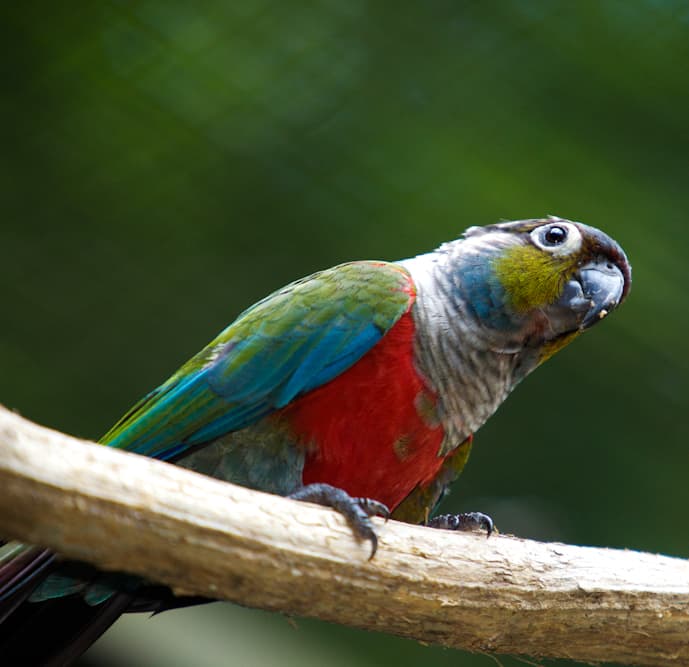
Crimson-bellied parakeet
The crimson-bellied parakeet, also known as the crimson-bellied conure in aviculture, is a species of parrot native to Bolivia and Brazil. This bird is distinctive for its striking red belly contrasting with its predominantly green plumage, and it inhabits the canopy of humid forests. Despite its large range, its population is believed to be decreasing due to deforestation.

Cliff parakeet
The cliff parakeet is a species of parrot endemic to Bolivia, known for its distinctive green and blue plumage with a yellow belly. Unlike its close relative, the monk parakeet, it builds solitary stick nests on cliffs rather than communal ones in trees, a unique characteristic among parrots. Its diet consists primarily of fruits and seeds, though it also consumes crops, leading to conflict with agriculture.