
Cobalt-winged parakeet
The cobalt-winged parakeet (Brotogeris cyanoptera) is a species of parrot found across several South American countries, inhabiting diverse environments from rainforest interiors to savannas. This small, predominantly green bird is distinguished by the vibrant blue of its flight feathers and often a blue tinge on its crown and nape, along with a yellowish forehead and orange chin in the nominate subspecies.
Key Facts
- ›Found in Bolivia, Brazil, Colombia, Ecuador, Guyana, Peru, and Venezuela.
- ›Measures approximately 18 to 20 cm (7.1 to 7.9 inches) in length and weighs around 67 g (2.4 oz).
- ›Primarily green plumage with blue flight feathers and tail feathers, and adult nominate subspecies have a yellowish forehead and orange chin.
- ›Inhabits rainforest edges and interiors, secondary forests, Várzea, savannas, and Llanos, reaching elevations up to 1,350 m.
- ›Diet includes flowers, fruits, Cecropia catkins, and mineral-impregnated soil.
- ›Assessed by the IUCN as Least Concern due to its large range and believed stable population.

South America
Rainforest Edges and Interiors, Secondary Forest, VáRzea, Savanna, Llanos
Blue Flight Feathers, Blue Central Tail Feathers, Blue Tinge On Crown and Nape, Yellowish Forehead, Orange Chin
Flowers, Fruits, Cecropia Catkins, Mineral-Impregnated Soil
High-Pitched 'Klee', Shrill 'Chree', Bisyllabic 'Chree-Chree', Fast Chattering Series 'Chichichichichi', Shrill Chattering
Tree Cavities
About Cobalt-winged parakeet
The cobalt-winged parakeet (Brotogeris cyanoptera) is a visually striking species of parrot native to the diverse landscapes of South America. This parakeet is found across a wide geographical area including Bolivia, Brazil, Colombia, Ecuador, Guyana, Peru, and Venezuela. Its presence spans various ecosystems, from the dense interiors and edges of rainforests to secondary forests, seasonally flooded várzea, savannas, and the open Llanos plains, typically inhabiting elevations up to 1,000 meters and occasionally reaching 1,350 meters.
Description and Identification
Measuring between 18 to 20 cm in length and weighing approximately 67 grams, the cobalt-winged parakeet is predominantly green, with the upperparts being a darker shade. A key distinguishing feature is the vibrant blue coloration of its flight feathers and central tail feathers. Adults of the nominate subspecies, B. c. cyanoptera, are further identified by a yellowish forehead, an orange chin, and a noticeable blue tinge on their crown and nape. Subspecies like B. c. gustavi and B. c. beniensis exhibit variations in head coloration and carpal edges, with some less blue on the head and yellow carpal edges.
Behavior and Diet
While the cobalt-winged parakeet is generally considered sedentary, some seasonal elevational movements may occur. Little is extensively documented about its specific foraging techniques, but it has been observed to feed on flowers, fruits, and Cecropia catkins. Interestingly, it also consumes mineral-impregnated soil, likely for mineral supplementation.
Reproduction and Vocalization
The breeding season is not precisely known but appears to include June and July in the western parts of its range. Nests are constructed in tree cavities. In captivity, pairs typically lay clutches of about five eggs, which hatch after approximately 24 days. The vocalizations of the cobalt-winged parakeet are characterized by high-pitched calls such as 'klee' and 'chree', as well as a bisyllabic 'chree-chree', used both when perched and in flight. A rapid chattering series, 'chichichichichi', is also part of its repertoire, and flocks often vocalize together with a shrill chattering sound.
Conservation Status
The International Union for Conservation of Nature (IUCN) has assessed the cobalt-winged parakeet as Least Concern. This status is attributed to its extensive range and a population that is believed to be stable, with no significant immediate threats identified. The species is noted as being common throughout its range, with little evidence of recent trade, making it relatively rare in captivity.
Source: Wikipedia ↗
Frequently Asked Questions
What is the scientific name of the cobalt-winged parakeet?
The scientific name of the cobalt-winged parakeet is Brotogeris cyanoptera. This binomial name was first attributed to August von Pelzeln in 1870.
Where is the cobalt-winged parakeet found geographically?
The cobalt-winged parakeet is found in South America, with its range extending across Bolivia, Brazil, Colombia, Ecuador, Guyana, Peru, and Venezuela. Different subspecies inhabit specific regions within this broad distribution.
What are the main physical characteristics of the cobalt-winged parakeet?
This parakeet is predominantly green, with darker upperparts. Adults of the nominate subspecies feature a yellowish forehead, an orange chin, and blue flight feathers and central tail feathers. A blue tinge is also present on their crown and nape.
What kind of habitats does the cobalt-winged parakeet prefer?
The cobalt-winged parakeet is adaptable, inhabiting a variety of landscapes. These include the edges and interiors of rainforests, secondary forests, várzea (seasonally flooded forests), savannas, and Llanos, typically at elevations up to 1,000 meters, occasionally reaching 1,350 meters.
What does the cobalt-winged parakeet eat?
While detailed knowledge of its foraging habits is limited, the cobalt-winged parakeet has been observed feeding on flowers, fruits, and Cecropia catkins. It also consumes mineral-impregnated soil.
What is the conservation status of the cobalt-winged parakeet?
The cobalt-winged parakeet is listed as Least Concern by the IUCN. This assessment is based on its very large range, an estimated stable population, and the absence of identified immediate threats.
How does the cobalt-winged parakeet communicate?
The common calls of the cobalt-winged parakeet include high-pitched 'klee', shrill 'chree', and bisyllabic 'chree-chree' sounds, used both when perched and in flight. They also produce a fast chattering series 'chichichichichi' and flocks engage in simultaneous shrill chattering.
Related Parrot species
Blue-and-yellow macaw
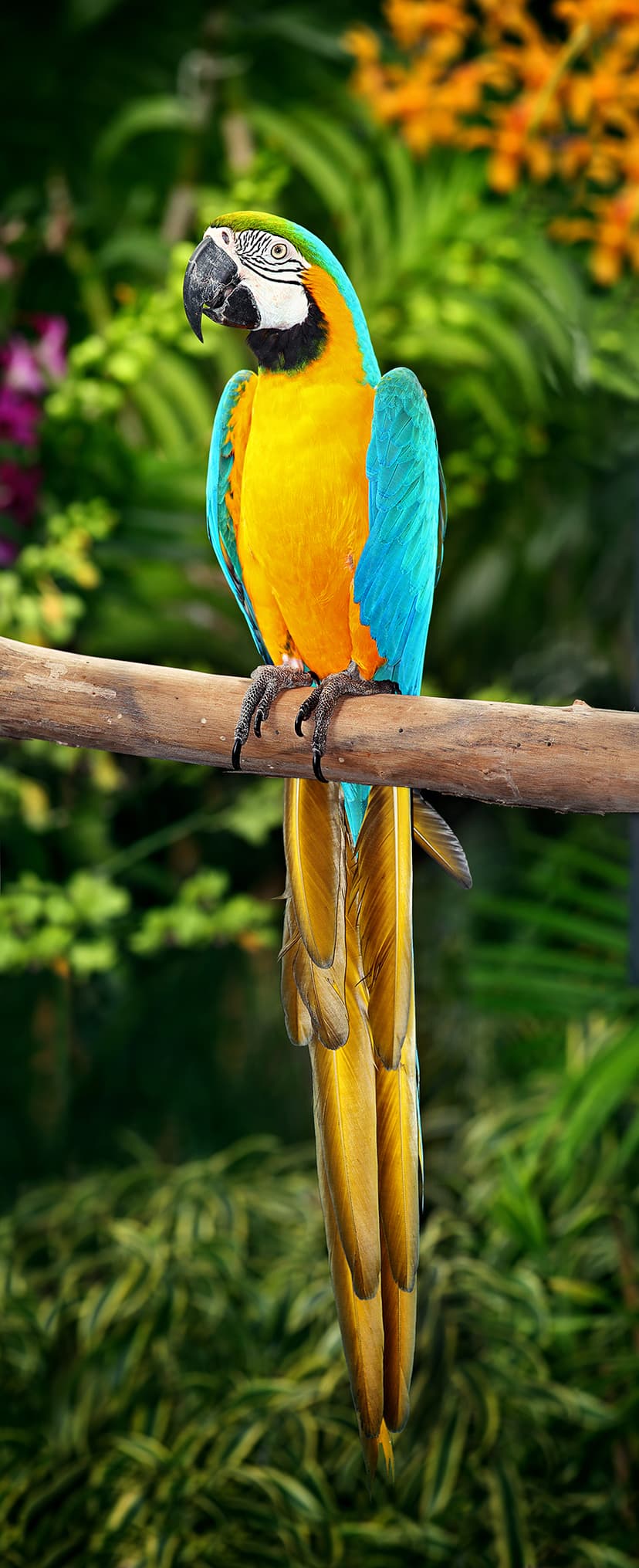
The blue-and-yellow macaw, also known as the blue-and-gold macaw, is a large Neotropical parrot native to the forests, woodlands, and savannahs of tropical Central and South America, including Trinidad. It is distinguished by its vibrant blue upperparts, yellow to orange underparts, and a green crown, making it one of the most popular and commonly kept macaw species in aviculture due to its striking appearance and ability to bond with humans.

Brown-throated parakeet
The brown-throated parakeet is a species of parrot found in Central and South America, as well as Caribbean islands. It is known for its distinctive yellow forehead and face, and its adaptability to various habitats, from savannas to forests. This vocal species plays a role in seed dispersal and is sometimes considered a crop pest.

Jandaya parakeet
The Jandaya parakeet, scientifically known as Aratinga jandaya, is a small Neotropical parrot native to the wooded habitats of northeastern Brazil. It is distinguished by its vibrant plumage, featuring a yellow head and neck, reddish-orange body, and green wings and tail. While common in aviculture, where it is often called a "jenday conure," the species is considered locally rare in the wild.