
Collared lory
The collared lory (Vini solitaria) is a species of parrot endemic to the Fiji Islands. This distinctive bird, measuring about 20 cm, is known for its bright red underparts, purple crown, and greenish upperparts, with males and females showing similar plumage. It is notable for its ability to adapt to urban environments, including the city of Suva, and was historically prized for its vibrant feathers used in trade networks across Polynesia.
Key Facts
- ›Endemic to the Fiji Islands, it can also be found in urban Suva.
- ›Measures approximately 20 cm (7.9 inches) in length.
- ›Distinguished by bright red underparts and face, a purple crown, and greenish upperparts.
- ›Feeds on fruit, seeds, nectar, and blossoms, favoring trees like Erythrina variegata and coconut palms.
- ›Nests in tree hollows or holes in rotting coconuts, with a clutch size of two eggs in captivity.
- ›Historically prized for its vibrant feathers, which were traded across western Polynesia.

Kula, Fiji Lory, Ruffled Lory, Solitary Lory
Fiji
Subtropical Or Tropical Moist Lowland Forests, Urban Landscapes
Bright Red Underparts and Face, Purple Crown, Greenish Upperparts, Elongated Nape Feathers
Fruit, Seeds, Nectar, Blossoms
High Pitched Single Or Double Shriek
- Hollow in a tree
- Hole in a rotting coconut still attached to the tree
About Collared lory
The Collared Lory: A Jewel of the Fijian Islands
The collared lory, scientifically known as Vini solitaria, is a captivating parrot species exclusively found in the Fiji Islands. This bird is notable for its remarkable adaptability, thriving not only in its natural subtropical or tropical moist lowland forests but also within urban environments, including the city of Suva. Measuring approximately 20 cm in length, the collared lory is adorned with vibrant plumage, featuring bright scarlet cheeks, throat, breast, and upper abdomen, contrasted by a deep purple crown and greenish wings, back, and tail.
Taxonomy and Nomenclature
First described in 1800, the collared lory was later placed in the genus Phigys before being moved to the genus Vini based on molecular phylogenetic studies. Its Fijian name is 'kula,' and historically, these birds and their feathers were highly prized throughout western Polynesia. Maritime trading networks were established between Fiji, Samoa, and Tonga, centered on the 'kula' feathers, which persisted until colonial times. Other common names for this species include Fiji lory, ruffled lory, and solitary lory, though the latter is a misnomer as the species is known to be social.
Description and Dimorphism
Adult collared lories exhibit slight sexual dimorphism. Males display vivid scarlet on their cheeks, throat, breast, and upper abdomen, with a dark purple crown and lime green nape and upperparts. The wings, back, and tail are predominantly greenish, while the lower abdomen is purple. The bill is a striking yellow-orange, the feet are pink-orange, and the irises are orange-red. Females share a similar appearance but have a paler crown with a greenish hue posteriorly. Juveniles are duller, with less distinct markings and a brown beak with pale brown irises.
Distribution and Habitat
Naturally, the collared lory inhabits subtropical or tropical moist lowland forests across Fiji's larger islands and the Lau Islands. Its presence in urban areas, particularly Suva, highlights its capacity to adjust to human-modified landscapes. Fossil evidence suggests that the species once occurred in Tonga but was extirpated by early human settlers.
Behavior and Diet
Collared lories are fast, straight flyers with quick, shallow wingbeats. They are typically observed in pairs or small groups, demonstrating their social nature. Their call is a high-pitched single or double shriek. Their diet is varied, consisting of fruit, seeds, nectar, and blossoms. They show a preference for trees such as Erythrina variegata (drala), the coconut palm (Cocos nucifera), and the introduced African tulip tree (Spathodea campanulata).
Breeding and Aviculture
Nesting occurs in hollows within trees or in holes found in rotting coconuts still attached to their trees. In captivity, a clutch typically consists of two eggs, with incubation lasting around 30 days. The nestling period, from hatching to fledging, extends to about nine weeks. The collared lory has been bred in captivity, with early exhibitions in London and Taronga Zoos in the 1940s. While early attempts to keep the species alive proved challenging, it readily became tame in captivity.
Source: Wikipedia ↗
Frequently Asked Questions
What are the main physical characteristics of the collared lory?
The collared lory is about 20 cm long and features bright red underparts and face, a purple crown, and greenish upperparts. The bill is yellow-orange, feet are pink-orange, and irises are orange-red.
Where is the collared lory found naturally?
This species is endemic to the Fiji Islands, inhabiting subtropical or tropical moist lowland forests. It has also adapted to urban landscapes and can be observed in Suva.
What does the collared lory eat?
Its diet consists of fruit, seeds, nectar, and blossoms. It shows a preference for trees such as Erythrina variegata, the coconut palm, and the African tulip tree.
How does the collared lory breed?
Nests are typically made in tree hollows or in holes within rotting coconuts still attached to trees. While the wild clutch size is unknown, captive birds lay two eggs, with incubation lasting around 30 days.
Are male and female collared lories visually different?
Yes, there is slight sexual dimorphism. While both sexes have similar plumage, females possess a paler crown that exhibits a greenish hue towards the posterior.
Is the collared lory a solitary bird?
Despite one of its common names being the 'solitary lory,' this is a misnomer. The collared lory is not solitary and can be found in pairs or small groups.
Related Parrot species
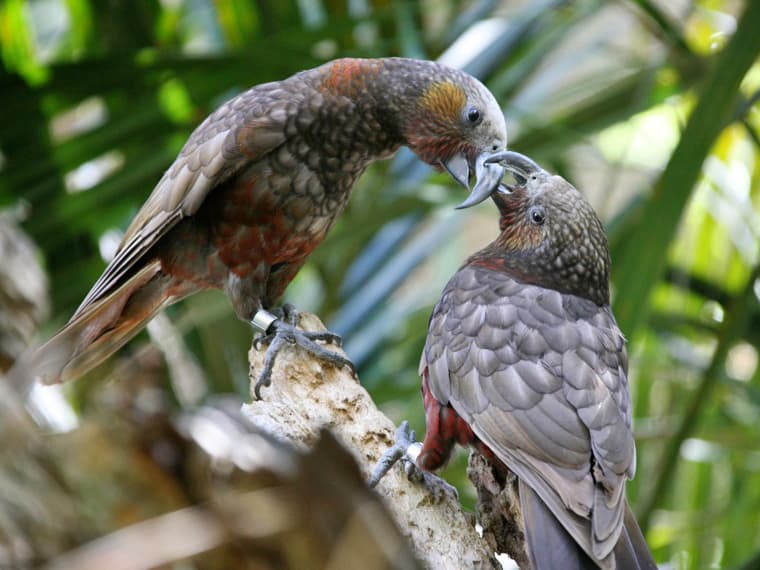
New Zealand kākā
The New Zealand kākā (Nestor meridionalis) is a large, endangered parrot native to the forests of New Zealand. Known for its distinctive brown and green plumage with scarlet flashes, it is an arboreal species that plays a vital role in its ecosystem through its varied diet, which includes fruits, seeds, nectar, and sap. Its conservation is a priority due to significant population declines caused by habitat loss and introduced predators.
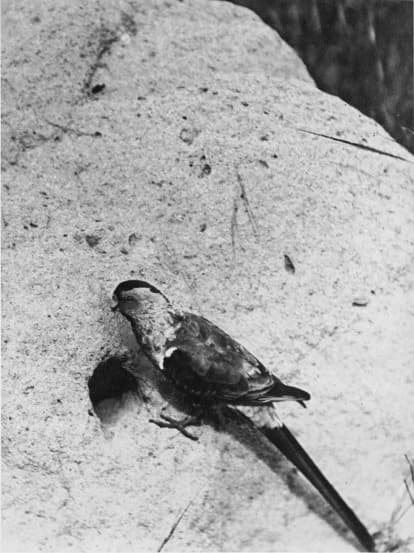
Paradise parrot
The paradise parrot was an exceptionally colorful, medium-sized parrot native to the grassy woodlands along the Queensland and New South Wales border in eastern Australia. Known for its striking plumage of turquoise, aqua, scarlet, black, and brown, and an unusually long tail, it inhabited areas that were once moderately common for the species. Tragically, it became extinct in 1927, with its decline attributed to various factors including habitat loss and overgrazing.

Duchess lorikeet
The Duchess lorikeet (Vini margarethae) is a species of parrot native to the Solomon Islands archipelago. This vibrantly colored bird, primarily bright red with distinctive yellow and purple markings, inhabits lowland and montane forests, as well as plantations. It is currently listed as Least Concern but faces threats from habitat loss and potential large-scale pet trade.