
Coracopsinae
The vasa parrots, belonging to the genus Coracopsis, are a group of four parrot species endemic to Madagascar and nearby islands in the western Indian Ocean. They are distinguished by their unusual appearance, including truncated bodies, long necks, black to grey plumage, and pink beaks. Notably, females undergo unique physiological changes during the breeding season, including feather color alteration and significant feather loss.
Key Facts
- ›Four species comprise the genus Coracopsis, all endemic to Madagascar and western Indian Ocean islands.
- ›Vasa parrots have a peculiar appearance with truncated bodies, long necks, and pink beaks.
- ›Females exhibit unique breeding physiology, including feather color changes and potential baldness.
- ›Chicks have a very short incubation period of 18-20 days.
- ›Males possess a unique eversible cloaca that functions as a hemipenis.
- ›Young vasa parrots have beak pads that stimulate a strong feeding response, even into adulthood.

Vasa Parrot
Madagascar, Western Indian Ocean Islands
Extremely Truncated Bodies, Long Necks, Pink Beak, Eversible Cloaca In Males, Beak Pads In Chicks
About Coracopsinae
The Vasa Parrots (Genus Coracopsis)
The vasa parrots, comprising the genus Coracopsis, are a distinctive group of four parrot species found exclusively on Madagascar and other islands in the western Indian Ocean. They are noted for their peculiar physical appearance, which includes unusually truncated bodies, elongated necks, and prominent pink beaks, set against a backdrop of black to grey feathers.
Unique Physiology and Breeding
Vasa parrots exhibit several unusual physiological traits. During the breeding season, both male and female vasas develop yellow skin, and feather loss is common, with females sometimes becoming completely bald. A remarkable characteristic of females is that their usually black to grey feathers can turn brown without molting, a change attributed to the redistribution of melanin pigment.
Remarkable Chick and Male Anatomy
Their reproductive biology also presents unique aspects. Vasa parrot chicks hatch remarkably early, typically within 18–20 days of incubation, significantly shorter than the usual incubation period for parrots of comparable size. Male vasas possess a unique anatomical feature: their cloaca can evert into a hemipenis, which becomes erect during mating, facilitating prolonged copulations through a copulatory tie. Furthermore, young vasa parrots are born with pads on their beaks that stimulate a strong feeding response, a reflex that persists unusually late into adulthood, sometimes necessitating specialized feeding methods for hand-reared birds.
Source: Wikipedia ↗
Frequently Asked Questions
What are the main distinguishing features of vasa parrots?
Vasa parrots are notable for their peculiar appearance, characterized by extremely truncated bodies, long necks, black to grey feathers, and a pink beak. They also possess unique physiological traits not commonly found in other parrots.
What happens to female vasa parrots during the breeding season?
During the breeding season, the skin of female vasa parrots turns yellow. Their feathers, usually black to grey, can turn brown without molting due to melanin redistribution, and they often experience significant feather loss, sometimes resulting in complete baldness.
Are vasa parrots known for any unusual breeding or chick characteristics?
Yes, vasa parrot chicks hatch unusually quickly, after only 18–20 days of incubation. Additionally, baby vasas have pads on their beaks that trigger a strong feeding response, a reflex that persists unusually long into adulthood.
Do male vasa parrots have any unique anatomical features?
Male vasa parrots possess a unique cloaca that can evert into a hemipenis, which becomes erect during mating. This is a feature exclusive to the genus and is associated with prolonged copulations.
Can vasa parrots change color?
While their primary plumage is black to grey, female vasa parrots can change their feather color to brown during the breeding season due to melanin redistribution. Birds infected with psittacine beak and feather disease are also known to turn white.
Related Parrot species
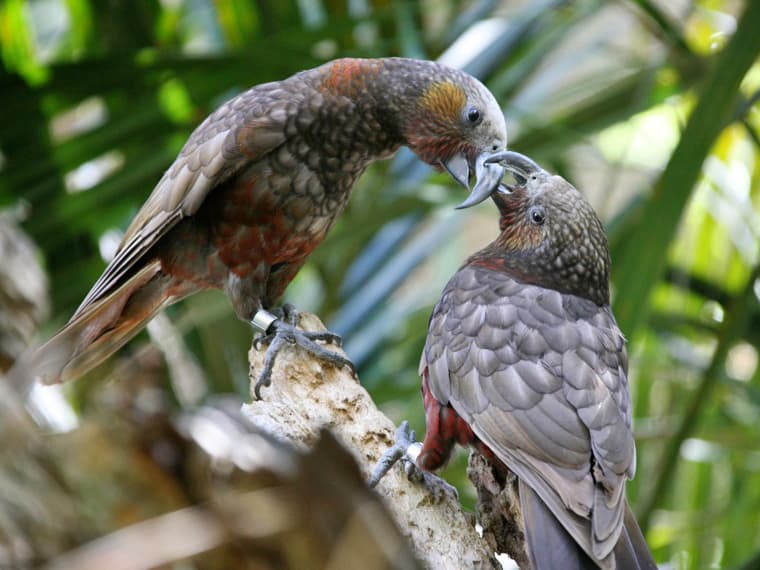
New Zealand kākā
The New Zealand kākā (Nestor meridionalis) is a large, endangered parrot native to the forests of New Zealand. Known for its distinctive brown and green plumage with scarlet flashes, it is an arboreal species that plays a vital role in its ecosystem through its varied diet, which includes fruits, seeds, nectar, and sap. Its conservation is a priority due to significant population declines caused by habitat loss and introduced predators.
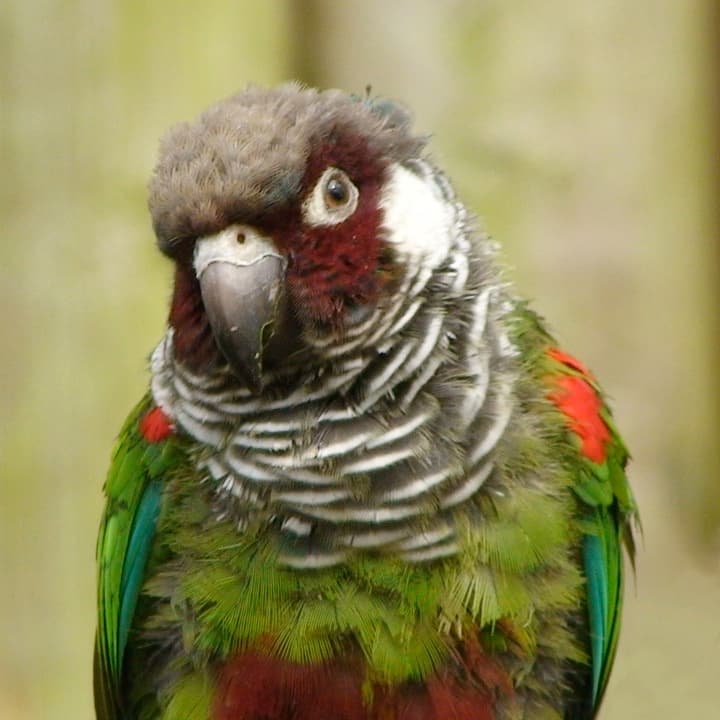
Grey-breasted parakeet
The grey-breasted parakeet is an Endangered species of bird native to northeastern Brazil, with recent documentation in Bahia. It is a small, vibrantly colored parrot distinguished by its scaly grey breast, plum-red face, and green plumage with red and blue accents. Historically considered a subspecies, it is now recognized as a distinct species facing significant threats from habitat loss and illegal trapping.
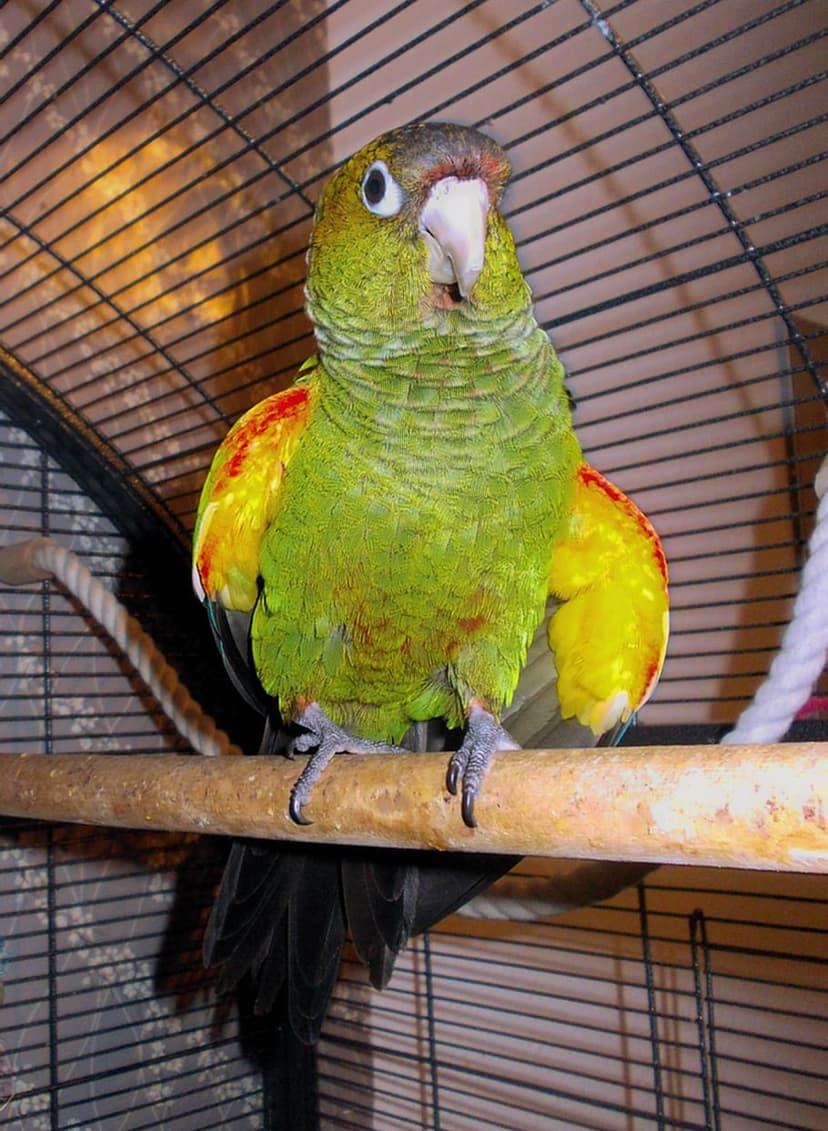
Fiery-shouldered parakeet
The Fiery-shouldered parakeet is a species of parrot native to the montane forests of Guyana, Brazil, and Venezuela. It is distinguished by its grey head, green body with yellow and orange markings on the wings, and a reddish-brown abdomen. This species is generally considered fairly common, though its habitat faces threats from logging.