
Fiery-shouldered parakeet
The Fiery-shouldered parakeet is a species of parrot native to the montane forests of Guyana, Brazil, and Venezuela. It is distinguished by its grey head, green body with yellow and orange markings on the wings, and a reddish-brown abdomen. This species is generally considered fairly common, though its habitat faces threats from logging.
Key Facts
- ›Found in subtropical or tropical moist montane forests.
- ›Measures approximately 26 cm (10 in) in length and weighs around 75 g (2.6 oz).
- ›Distinctive plumage includes a grey head, green body, yellow and orange wing markings, and a reddish-brown abdomen.
- ›Typically seen in small groups of up to 25 individuals.
- ›Feeds on plant material, with a particular fondness for Cecropia trees.
- ›Assessed as 'least concern' by the IUCN, despite habitat threats.
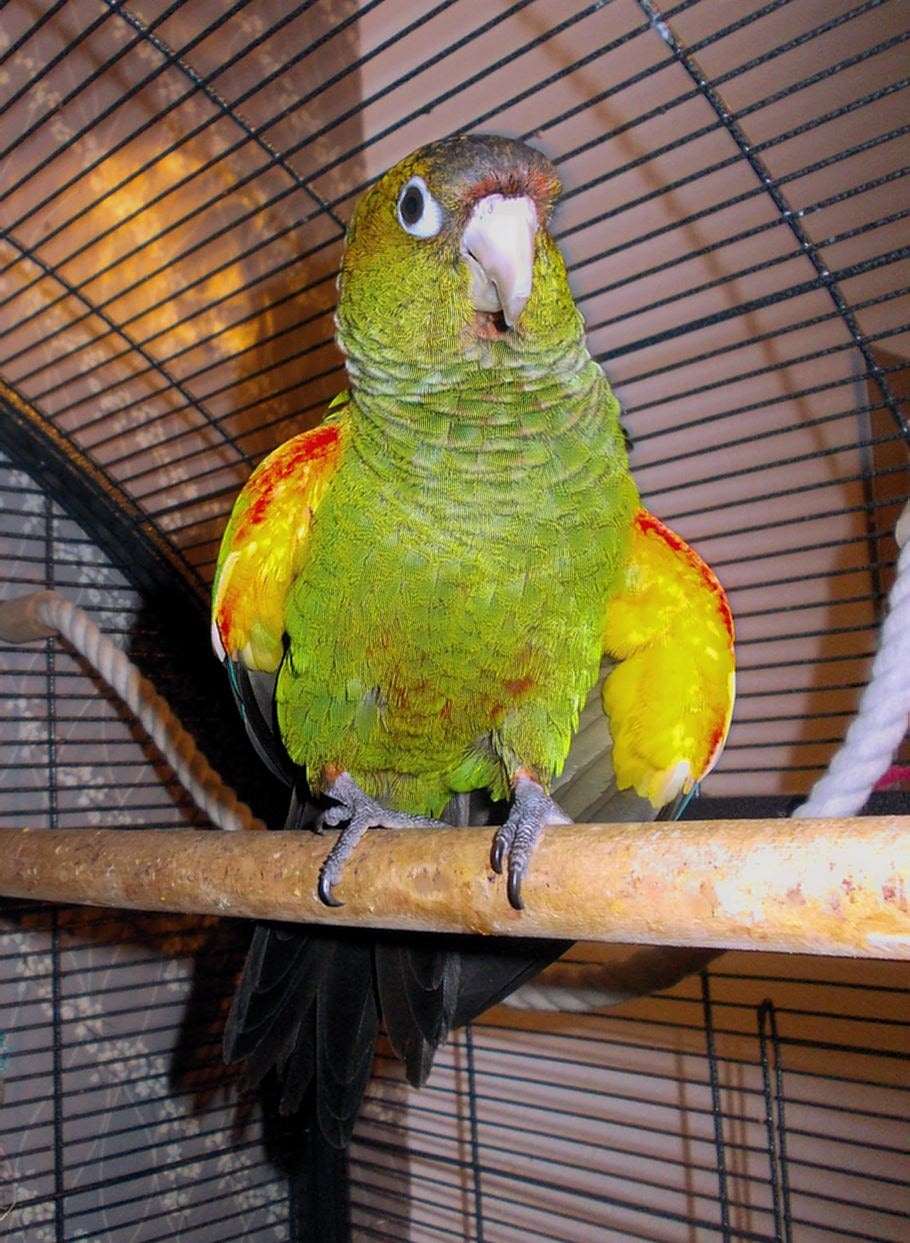
Fiery-Shouldered Conure
South America, Guyana, Brazil, Venezuela
Subtropical Or Tropical Moist Montane Forests, Primary and Secondary Forests, Woodland Verges
- Grey head
- Green neck and upper body
- Yellow and orange markings on wing edges and underwing coverts
- Reddish-brown abdomen
- Bare white skin around the eyes
- Horn-coloured beak
Plant Material, Cecropia Trees
Shy, Adept At Hiding
Shrill Cries When Taking Off
About Fiery-shouldered parakeet
The Fiery-shouldered parakeet, scientifically known as Pyrrhura egregia and sometimes referred to as the Fiery-shouldered conure, is a species of parrot found in the montane forests of South America. Its native range encompasses Guyana, Brazil, and Venezuela, where it inhabits subtropical and tropical moist environments at elevations between 700 and 1,800 meters.
Description and Identification
This parakeet typically measures around 26 cm (10 inches) in length and weighs approximately 75 grams (2.6 ounces). The nominate subspecies, P. e. egregia, is characterized by a grey head and neck, with the rest of its body and wings being green. A distinguishing feature is the front edge of the wing and underwing coverts, which display yellow with orange markings. Its breast is green and barred with brown and yellowish-white, while the central abdomen is a notable reddish-brown, mirroring the color of the upper side of its tail. The underside of the tail is grey. The bird has brown eyes surrounded by bare white skin and a horn-coloured beak. A second subspecies, P. e. obscura, exhibits a deeper shade of green on its upper parts and less vibrant color on its abdomen.
Distribution and Habitat
The Fiery-shouldered parakeet is endemic to a specific area of tropical rainforest within South America, covering parts of Guyana, Brazil, and Venezuela. Its total area of occupancy is estimated to be around 50,000 square kilometers, including regions within Canaima National Park. The subspecies P. e. egregia is found in southeastern Venezuela and southwestern Guyana, while P. e. obscura resides in southern Venezuela and northeastern Brazil. These parrots are found in both primary and secondary forests, as well as woodland verges, and have been observed visiting parks and gardens.
Behavior and Diet
These parakeets are typically observed in small social groups, with individuals numbering up to 25. They are known for their fast and agile flight between trees, often emitting shrill cries as they take off. The Fiery-shouldered parakeet is considered rather shy and adept at concealing itself within the foliage. Their diet consists of plant material, and they show a particular preference for feeding on Cecropia trees in the forest canopy.
Conservation Status
Despite its restricted geographic range, the Fiery-shouldered parakeet has been described as being "fairly common." However, its rainforest habitat is under threat from logging activities, and its population is believed to be declining. Nevertheless, the rate of this decline is considered slow, leading the International Union for Conservation of Nature (IUCN) to assess the species as being of "least concern." Little is recorded about the specific breeding habits of these birds.
Source: Wikipedia ↗
Frequently Asked Questions
What is the scientific name for the Fiery-shouldered parakeet?
The scientific name for the Fiery-shouldered parakeet is Pyrrhura egregia. It belongs to the Psittacidae family of parrots.
Where does the Fiery-shouldered parakeet live?
This parakeet is endemic to a region of tropical rainforest in South America, specifically found in Guyana, Brazil, and Venezuela. They inhabit moist montane forests at altitudes between 700 and 1,800 meters.
What does the Fiery-shouldered parakeet look like?
The Fiery-shouldered parakeet is about 26 cm long with a grey head. Its body and wings are primarily green, featuring yellow and orange markings on the front edge of the wing and underwing coverts. The breast is barred, and the abdomen is reddish-brown.
What is the conservation status of the Fiery-shouldered parakeet?
The International Union for Conservation of Nature (IUCN) has assessed the Fiery-shouldered parakeet as 'least concern'. While its range is restricted and its habitat is threatened by logging, its numbers are considered fairly common and the rate of decline is slow.
What do Fiery-shouldered parakeets eat?
In their natural habitat, Fiery-shouldered parakeets forage in the canopy for plant material. They are known to particularly appreciate feeding on Cecropia trees.
Are Fiery-shouldered parakeets social birds?
Yes, Fiery-shouldered parakeets are typically seen in small social groups, often consisting of up to 25 individuals. They fly agilely between trees and communicate with shrill cries.
Related Parrot species

Pearly parakeet
The pearly parakeet (Pyrrhura lepida), also known as the pearly conure in aviculture, is a Vulnerable species endemic to Brazil. Its plumage features a striking combination of greens, blues, and reddish-browns, with scaling on its breast giving it a pearly appearance. The species inhabits humid forests and is threatened primarily by habitat loss due to deforestation.

Black-cheeked lovebird
The black-cheeked lovebird is a small parrot species native to southwest Zambia, characterized by its predominantly green plumage, brown head, red beak, and distinctive white eyerings. It inhabits deciduous woodlands where permanent water sources are available and faces vulnerability due to habitat loss and desiccation of water bodies. These birds are known for their loud, piercing shrieks and can gather in large flocks, particularly during the dry season.
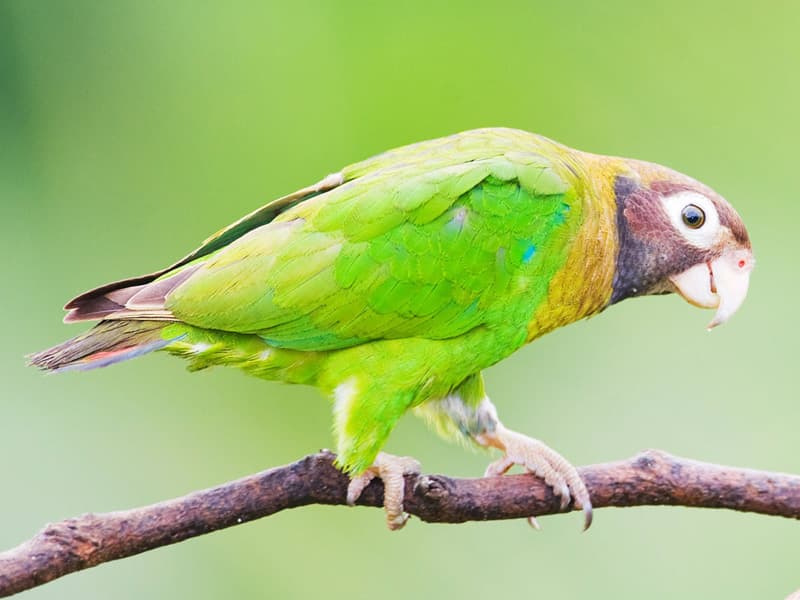
Brown-hooded parrot
The brown-hooded parrot is a species of parrot found from Mexico to Colombia, belonging to the family Psittacidae. It is distinguished by its vibrant plumage, featuring a reddish-brown crown and throat, olive-yellow breast, and green body with blue accents on the wings and tail.