
Cordilleran parakeet
The Cordilleran parakeet is a species of bird found in Ecuador and Peru, belonging to the Psittacidae family. This parakeet is characterized by its predominantly green plumage with red markings on its forehead and wing bends, and it is known for its vocal nature, often traveling in small flocks within a variety of Andean forest habitats.
Key Facts
- ›Inhabits western slopes of the Andes in Ecuador and Peru, including inter-Andean valleys.
- ›Found in diverse environments such as cloudforest edges, montane forests, agricultural areas, and parks.
- ›Adults are generally green with yellower underparts, often featuring red on the forehead, crown, and wing bends.
- ›Its diet consists of fruits, nuts, and seeds, and it typically forages in the forest canopy.
- ›Breeds in small colonies, often in cliff face fissures.
- ›Classified as near Threatened by the IUCN due to a suspected decreasing population and threats from trapping and habitat loss.

Cordilleran Parakeet
Ecuador, Peru
Cloudforest Edges, Montane Forest, Gallery Forest, Secondary Forest, Agricultural Areas, Parks
Red forehead, Red front part of crown, Red bend of wing, Pale gray iris surrounded by bare white skin
Fruits, Nuts, Seeds
Not Specified
Very Vocal, Continuous Loud Screeching Chatter, Squeaky Notes and Screeches
Nests In Small Colonies, Nests In Fissures In Cliff Faces
About Cordilleran parakeet
The Cordilleran parakeet (Psittacara frontatus) is a species of bird native to Ecuador and Peru, belonging to the family Psittacidae. It is characterized by its generally green plumage, which is yellower on the underparts, and often features red markings on its forehead, the front part of its crown, and the bend of its wing. The undersides of its flight feathers and tail are typically olive-yellow.
Distribution and Habitat
This parakeet is found in the western Andean regions of Ecuador and Peru. The nominate subspecies inhabits the western slopes of the Andes, while another subspecies, P. f. minor, is found in the inter-Andean valleys. The Cordilleran parakeet occupies a range of habitats, including the edges of cloudforest, montane forests, and gallery and secondary forests. It has also adapted to agricultural areas and parks within urban environments, with its elevation range extending from 1,000 to 3,000 meters depending on the region.
Behavior and Diet
The Cordilleran parakeet is a social species, typically traveling in small flocks. While its exact movements are not well-documented, it is known to forage in the forest canopy. Its diet primarily consists of fruits, nuts, and seeds.
Breeding and Vocalization
Breeding in small colonies, the Cordilleran parakeet often nests in fissures found in cliff faces. The specific nesting season for this species remains unknown. They are notably vocal birds, especially when in flight, producing a continuous loud screeching chatter, along with other squeaky notes and screeches.
Conservation Status
The International Union for Conservation of Nature (IUCN) has assessed the Cordilleran parakeet as Near Threatened. Although it possesses a relatively large geographic range, its population size is not precisely known and is believed to be declining. The primary threats contributing to its conservation status include trapping pressure, persecution, and habitat loss driven by land-use changes.
Source: Wikipedia ↗
Frequently Asked Questions
Where is the Cordilleran parakeet found?
The Cordilleran parakeet is found in Ecuador and Peru. Its nominate subspecies inhabits the western slopes of the Andes in Ecuador and western Peru, while another subspecies is found in inter-Andean valleys of northern and south-central Peru.
What does the Cordilleran parakeet look like?
Adults are generally green, with yellower underparts and red speckles on the throat in some individuals. Distinctive red markings appear on the forehead, the front part of the crown, and the bend of the wing. The undersides of their flight feathers and tail are olive-yellow.
What is the habitat of the Cordilleran parakeet?
This species inhabits a variety of landscapes, including the edges of cloudforest, montane forest, and gallery and secondary forests. They also adapt to agricultural areas and parks within built-up regions.
What does the Cordilleran parakeet eat?
While its diet is not fully described, the Cordilleran parakeet is known to consume fruits, nuts, and seeds. It typically forages in the forest canopy.
How does the Cordilleran parakeet breed?
The Cordilleran parakeet breeds in small colonies, often choosing fissures in cliff faces as nesting sites. Their specific nesting season is not yet known.
What is the conservation status of the Cordilleran parakeet?
The Cordilleran parakeet is assessed as Near Threatened by the IUCN. Its population size is unknown but believed to be decreasing, facing threats from trapping, persecution, and habitat loss.
What sounds does the Cordilleran parakeet make?
The Cordilleran parakeet is very vocal, particularly when in flight, producing a continuous loud screeching chatter. They also emit squeaky notes and screeches, described as 'kreee'.
Related Parrot species

Fuertes's parrot
Fuertes's parrot, also known as the indigo-winged parrot, is an endangered species endemic to the west slope of Colombia's Central Andes. This parrot is distinguished by its striking blue and green plumage, accented with red and violet-blue markings on its wings and tail. It inhabits wet temperate cloudforests and is known to feed in flocks, with conservation efforts focusing on nest box programs to aid its population recovery.
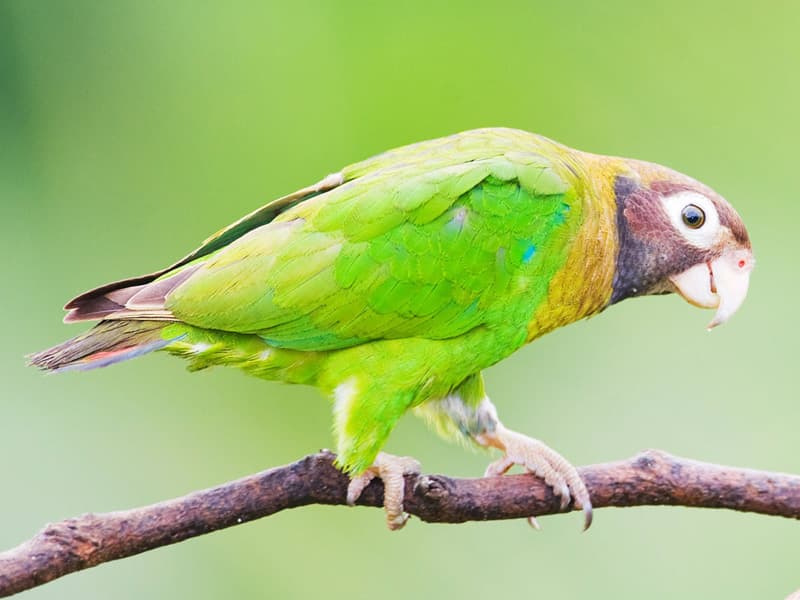
Brown-hooded parrot
The brown-hooded parrot is a species of parrot found from Mexico to Colombia, belonging to the family Psittacidae. It is distinguished by its vibrant plumage, featuring a reddish-brown crown and throat, olive-yellow breast, and green body with blue accents on the wings and tail.
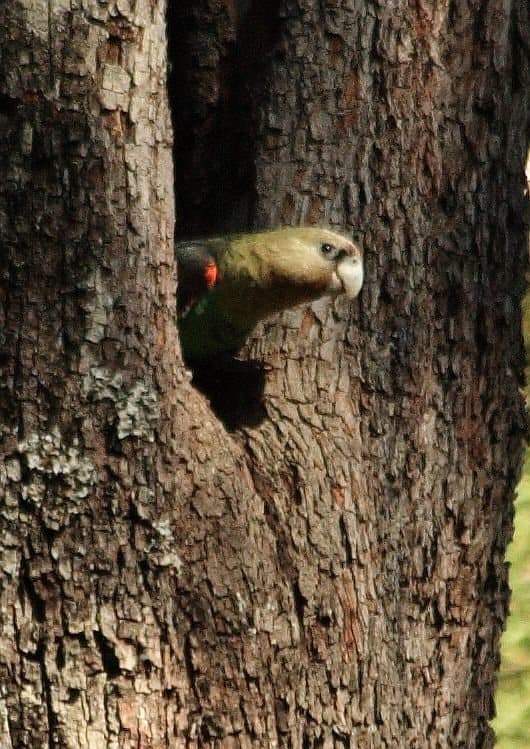
Cape parrot
The Cape parrot (Poicephalus robustus), also known as Levaillant's parrot, is a large parrot endemic to the temperate Afromontane forests of South Africa. It is distinguished by its very large beak, used for cracking hard nuts and fruit kernels, and a distinctive olive-yellow head, differentiating it from closely related savanna species. The species faces threats from habitat loss and a specific viral disease, leading to conservation efforts.