
Masked shining parrot
Threatened
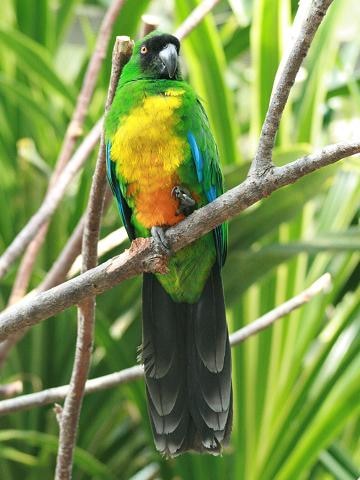
The masked shining parrot, also known as the masked parrot or masked musk parrot, is a species of parrot endemic to Viti Levu in Fiji. This striking bird is characterized by its predominantly bright green plumage, a distinctive black mask on its face, and a vibrant yellow to orange breast and abdomen. Its natural habitats range from lowland and montane forests to mangrove forests, and it is currently threatened by habitat loss.
Key Facts
- ›Endemic to Viti Levu in Fiji.
- ›Measures approximately 47 cm in length and weighs around 322 g.
- ›Features a prominent black mask on its face and a bright green body.
- ›Has a yellow center to its breast, transitioning to orange towards the abdomen.
- ›Wing feathers have blue or purple outer webs, and tail feathers are green with a blue wash.
- ›Inhabits various forest types, mangrove forests, and even agricultural land and gardens.
Masked Parrot, Masked Musk Parrot, Yellow-Breasted Musk Parrot
Fiji
Subtropical Or Tropical Moist Lowland Forest, Subtropical Or Tropical Mangrove Forest, Subtropical Or Tropical Moist Montane Forest, Arable Land, Rural Gardens
Black Mask On Face, Yellow To Orange Breast and Abdomen
About Masked shining parrot
The masked shining parrot (Prosopeia personata), also referred to as the masked parrot or masked musk parrot, is a species of parrot belonging to the Psittaculidae family. This bird is uniquely endemic to the island of Viti Levu in Fiji, making its geographic range highly specific.
Description and Habitat
Measuring approximately 47 cm in length and weighing around 322 grams, the masked shining parrot possesses a striking appearance. Its plumage is predominantly bright green, distinguished by a prominent black mask across its face. The center of its breast is a vibrant yellow, which transitions to orange as it extends towards the abdomen. Further adding to its visual appeal, the outer webs of its primary wing feathers are blue or purple, and its tail feathers are green washed with blue. The natural habitats of the masked shining parrot are varied, including subtropical or tropical moist lowland forests, mangrove forests, and moist montane forests. They have also adapted to inhabit arable land and rural gardens within their native Fiji.
Conservation Status
Regrettably, the masked shining parrot is currently classified as threatened. The primary factor contributing to its vulnerable status is habitat loss, which poses a significant challenge to the species' survival and proliferation in its natural environment.
Source: Wikipedia ↗
Frequently Asked Questions
What are the different common names for the masked shining parrot?
The masked shining parrot is also known by several other common names. These include the masked parrot, the masked musk parrot, and the yellow-breasted musk parrot.
Where does the masked shining parrot naturally live?
This species is endemic to the island of Viti Levu in Fiji. Its natural range includes subtropical and tropical moist lowland forests, mangrove forests, and montane forests.
What does the masked shining parrot look like?
The masked shining parrot is a medium-sized parrot, about 47 cm long. It is predominantly bright green, with a distinctive black mask across its face. Its breast is yellow, fading to orange on the abdomen, and its wings and tail feature blue or purple coloration.
What are the natural habitats of the masked shining parrot?
The natural habitats for this parrot are diverse, encompassing subtropical or tropical moist lowland forests, subtropical or tropical mangrove forests, and subtropical or tropical moist montane forests. They can also be found in arable land and rural gardens.
What are the threats facing the masked shining parrot?
The primary threat to the masked shining parrot is habitat loss. This loss of natural environment impacts their ability to thrive in their native range.
Related Parrot species

Duchess lorikeet
The Duchess lorikeet (Vini margarethae) is a species of parrot native to the Solomon Islands archipelago. This vibrantly colored bird, primarily bright red with distinctive yellow and purple markings, inhabits lowland and montane forests, as well as plantations. It is currently listed as Least Concern but faces threats from habitat loss and potential large-scale pet trade.

Moluccan eclectus
The Moluccan eclectus is a vibrantly colored parrot native to the Maluku Islands (Moluccas) in Indonesia. It is distinguished by its extreme sexual dimorphism, with males being predominantly emerald green and females a striking red and purple/blue. These parrots are known for their unusual social breeding system and their long digestive tracts, which allow them to process a high-fiber diet.

Fischer's lovebird
Fischer's lovebird is a small parrot species native to a limited area of east-central Africa, south and southeast of Lake Victoria. Named after German explorer Gustav Fischer, this species is distinguished by its vibrant plumage, featuring a green body, yellow neck, orange chest, and a striking red beak. They are known for their strong pair bonds and are popular in aviculture, though they require specialized care.