
Dusky parrot
Pionus fuscus·Psittacidae·24·three or four
The dusky parrot (Pionus fuscus) is a medium-sized parrot native to northern South America, primarily inhabiting humid lowland forests. It is distinguished by its predominantly dark brownish-gray plumage, a gray eye-ring, and distinct red and blue markings on its underparts and tail.
Key Facts
- ›Approximately 24 cm (9.4 in) in length.
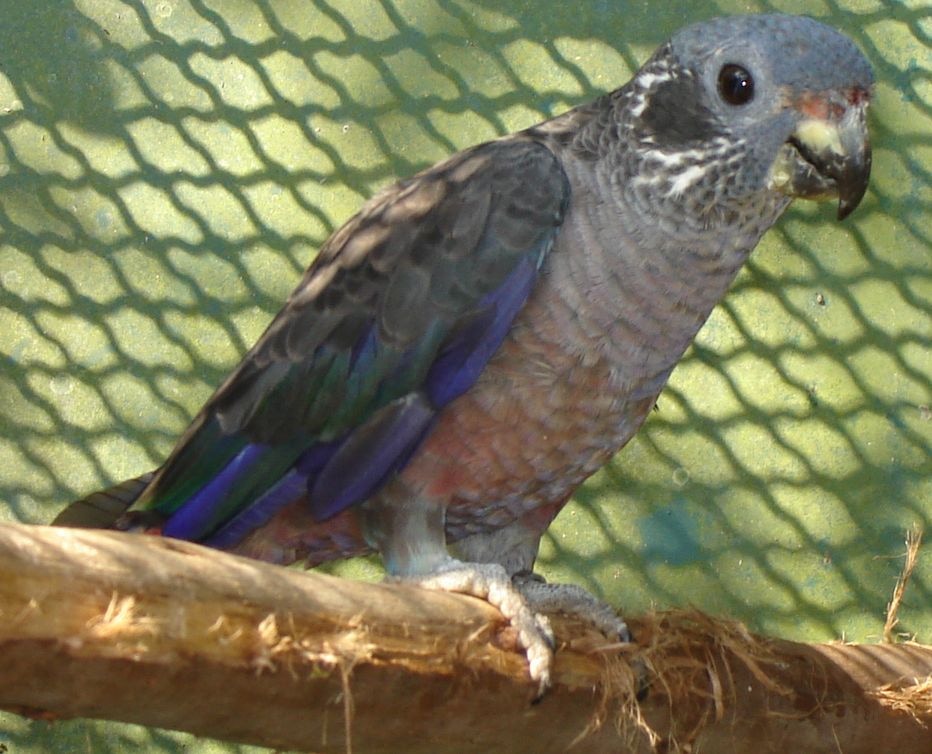
- ›Features a medium-wide gray eye-ring, cream-white feathers on the upper neck, and a pinkish-red tinge to the belly.
- ›Remiges (flight feathers) and tail are blue, with the tail base being red.
- ›Natural habitat includes humid lowland forests in northern South America, particularly the Guiana countries and the northeastern Amazon Basin.
- ›Nests are typically found in tree cavities, with clutches usually containing three to four white eggs.
- ›Known for a limited vocal capacity, able to learn between 10-20 words.
Dusky Pionus
South America
Humid Lowland Forest
Medium-wide gray eye-ring, Splay of cream-white feathers on upper neck, Pinkish-red tinge to belly, Red undertail coverts, Blue remiges and tail with red at the base
Not known for talking like other parrots, Can say from 10-20 words
Tree Cavities
About Dusky parrot
The dusky parrot, scientifically known as Pionus fuscus and also referred to as the dusky pionus, is a medium-sized parrot belonging to the true parrot family. It is characterized by its predominantly dark brownish-gray plumage, which can appear almost black in low light conditions.
Description and Features
Measuring approximately 24 cm (9.4 inches) in length, the dusky parrot possesses several distinctive physical traits. These include a medium-wide gray eye-ring, which often fades to white when the bird is in captivity. A notable feature is a splay of cream-white feathers located on its upper neck. The belly typically exhibits a pinkish-red tinge, complemented by red undertail coverts. The parrot's flight feathers (remiges) and tail are blue, with the base of the tail being red.
Distribution and Habitat
The natural range of the dusky parrot is northern South America. Its habitat is primarily humid lowland forests. The species is most concentrated in the Guiana countries, the Guiana Shield, and the northeastern Amazon Basin. Its distribution extends into parts of Venezuela, west of the Orinoco River and near the Caribbean coast, and a small, disjunct population exists west of Lake Maracaibo on the Colombia-Venezuela border. The range also includes northwestern Maranhão state in Brazil, the Baia de Sao Marcos, and the southeastern Amazon Basin near the confluence of the Araguaia-Tocantins River. In the western Guianas, its range limit is central Roraima state in Brazil, east of the Branco River.
Breeding and Life Cycle
Dusky parrots typically nest in tree cavities. A clutch usually comprises three to four white eggs. The female incubates these eggs for approximately 26 days, and the chicks usually fledge, or leave the nest for the first time, about 70 days after hatching.
Vocalizations
In terms of vocalization, dusky parrots are not as renowned for extensive speech as some other parrot species. Individuals are generally capable of learning and vocalizing between 10 to 20 words.
Source: Wikipedia ↗
Frequently Asked Questions
What is the size of a dusky parrot?
The dusky parrot is a medium-sized parrot, measuring approximately 24 cm (9.4 inches) in length from head to tail.
What are the distinctive physical features of the dusky parrot?
Key features include a medium-wide gray eye-ring, which can fade to white in captivity, a splay of cream-white feathers on its upper neck, a pinkish-red tinge on its belly, and red undertail coverts. Its flight feathers and tail are blue, with the tail having red at its base.
Where is the natural habitat of the dusky parrot?
The dusky parrot naturally inhabits humid lowland forests. Its range is centered on northern South America, specifically the Guiana countries, the Guiana Shield, and the northeastern Amazon Basin.
What is the nesting behavior of the dusky parrot?
Dusky parrots nest in tree cavities. A typical clutch consists of three to four white eggs, which the female incubates for about 26 days. The chicks fledge approximately 70 days after hatching.
What is the vocalization ability of the dusky parrot?
Unlike some other parrot species, dusky parrots are not particularly known for extensive talking. They can typically learn and say between 10 to 20 words.
Related Parrot species

Bronze-winged parrot
The Bronze-winged parrot (Pionus chalcopterus) is a medium-sized parrot native to northwestern South America, inhabiting forest and woodland environments. It is distinguished by its predominantly dark plumage, a distinctive whitish chin patch, and bronze-green body feathers that shimmer with blue tips, along with short red undertail feathers.
Blue-winged parakeet
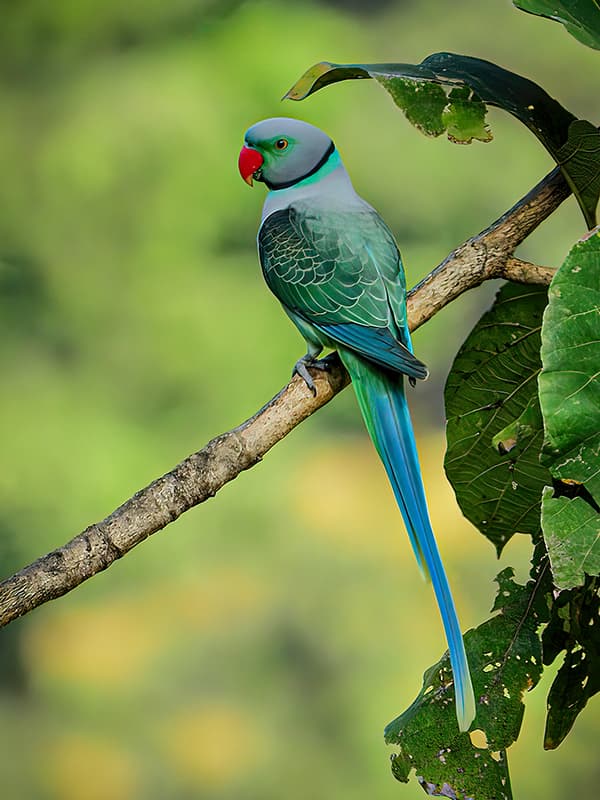
The blue-winged parakeet, also known as the Malabar parakeet, is a species of parakeet native to the Western Ghats of southern India. This species is distinctive for its long blue tails tipped in yellow, contrasting with their dark wings and dull grey head and body. Adult males and females are easily differentiated by the color of their beaks.
Crimson-bellied parakeet
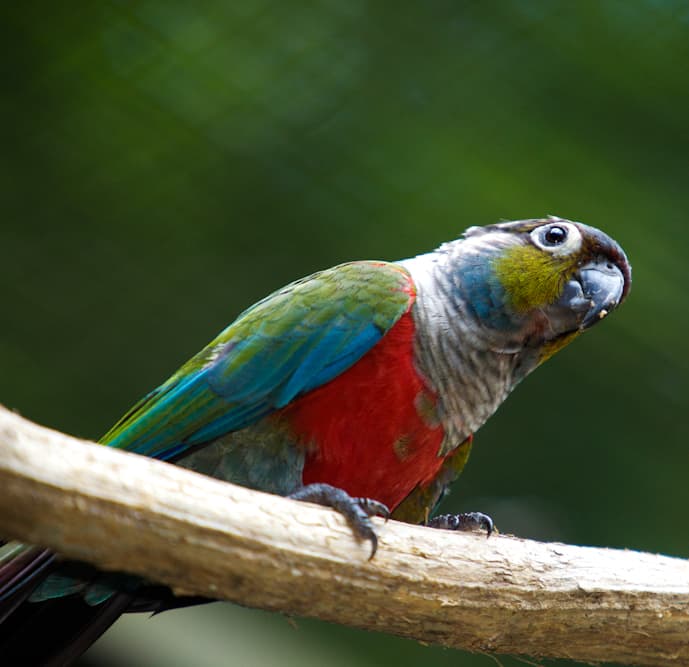
The crimson-bellied parakeet, also known as the crimson-bellied conure in aviculture, is a species of parrot native to Bolivia and Brazil. This bird is distinctive for its striking red belly contrasting with its predominantly green plumage, and it inhabits the canopy of humid forests. Despite its large range, its population is believed to be decreasing due to deforestation.