
Edwards's fig parrot
Edwards's fig parrot, also known as the scarlet-cheeked fig parrot, is a species of parrot native to the humid lowland forests of northeastern New Guinea. This medium-sized parrot is distinguished by its predominantly green plumage, with males featuring striking red cheeks and breast, and a distinctive blue-black band across the upper breast.
Key Facts
- ›Found in humid lowland forests of northeastern New Guinea.
- ›Adult males have red cheeks and breast, with a blue-black band on the upper breast.
- ›Adult females have a greener-yellow breast with a wider blue-black band.
- ›Feeds primarily on fruit, including figs.
- ›Nests in small hollows high up in large trees.
- ›Calls include a high-pitched 'screett' and a short sharp 'ks'.
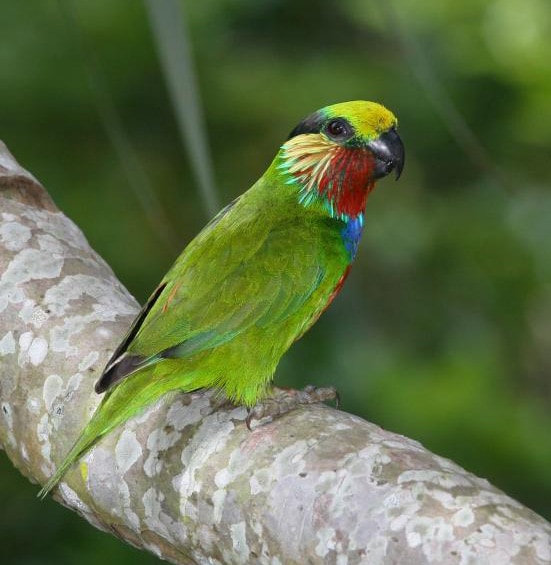
Scarlet-Cheeked Fig Parrot
New Guinea
Humid Lowland Forests, Cleared Areas
Green, Red, Yellow, Blue-Black
- Red cheeks
- Red breast
- Yellow ear coverts
- Blue-black band on upper breast
- Ruffed appearance of face due to long, narrow cheek and ear coverts feathers
Fruit, Figs
- High-pitched screett or zseet
- Short sharp ks, described as "coins dropping on concrete"
Small hollows high up in large trees
About Edwards's fig parrot
Edwards's fig parrot, scientifically known as Cyclopsitta edwardsii and also referred to as the scarlet-cheeked fig parrot, is a species of parrot native to the humid lowland forests and cleared areas of northeastern New Guinea. Described by Émile Oustalet in 1885 and named in honor of naturalist Alphonse Milne-Edwards, this species belongs to the genus Cyclopsitta and is one of four fig parrots.
Description and Identification
Edwards's fig parrot is a medium-sized parrot with a stocky build and a short tail, measuring approximately 18 cm (7.1 inches) in length. The adult male is predominantly green, featuring bright red cheeks and breast. A distinctive dark blue-black band crosses the upper breast, and the ear coverts are golden-yellow. The feathers on the cheeks and ear coverts are long and narrow, giving the face a somewhat ruffed appearance. The bill is dark grey-black, the iris is red, and the feet are dark grey.
The adult female shares a similar appearance but is distinguished by a greener-yellow breast that bears a wider blue-black band. Immature birds resemble the adult female.
Distribution and Habitat
This species is restricted to northeastern New Guinea, with its range encompassing areas from Yos Sudarso Bay and Vanimo eastward to the Huon Gulf. It is considered common within its natural range.
Behavior and Diet
Edwards's fig parrots are typically observed in pairs or as individuals. However, they may gather in larger groups, sometimes numbering up to 35 individuals, when congregating at fruit-bearing trees. Their predominantly green plumage serves as effective camouflage against the foliage, making them difficult to spot. The primary food source for this parrot is fruit, with figs being a notable component of their diet. They have been observed feeding alongside other bird species, including double-eyed fig parrots, fruit pigeons, honeyeaters, and starlings.
Nesting and Vocalizations
Nesting for Edwards's fig parrot occurs in small hollows situated high up in large trees. However, detailed information regarding their nesting behavior is limited. Their vocalizations include a high-pitched call, described as 'screett' or 'zseet,' as well as a short, sharp call likened to 'coins dropping on concrete.'
Source: Wikipedia ↗
Frequently Asked Questions
What is the scientific name for Edwards's fig parrot?
The scientific name for Edwards's fig parrot is Cyclopsitta edwardsii. This binomial nomenclature identifies it within the scientific classification of birds.
Where is Edwards's fig parrot found?
Edwards's fig parrot is endemic to northeastern New Guinea. Its range extends from Yos Sudarso Bay and Vanimo eastward to the Huon Gulf.
What does Edwards's fig parrot eat?
The diet of Edwards's fig parrot consists primarily of fruit. They have been observed feeding on figs and have been recorded alongside other fruit-eating birds.
What are the distinguishing features of an adult male Edwards's fig parrot?
Adult male Edwards's fig parrots are predominantly green with bright red cheeks and breast. They also possess a dark blue-black band on the upper breast and golden-yellow ear coverts.
How does the female Edwards's fig parrot differ from the male?
The adult female Edwards's fig parrot is similar to the male but has a greener-yellow breast. This breast area features a wider blue-black band compared to the male.
What kind of vocalizations does Edwards's fig parrot make?
Edwards's fig parrots produce a high-pitched call, often described as 'screett' or 'zseet'. They also make a short, sharp call sounding like 'coins dropping on concrete'.
Related Parrot species
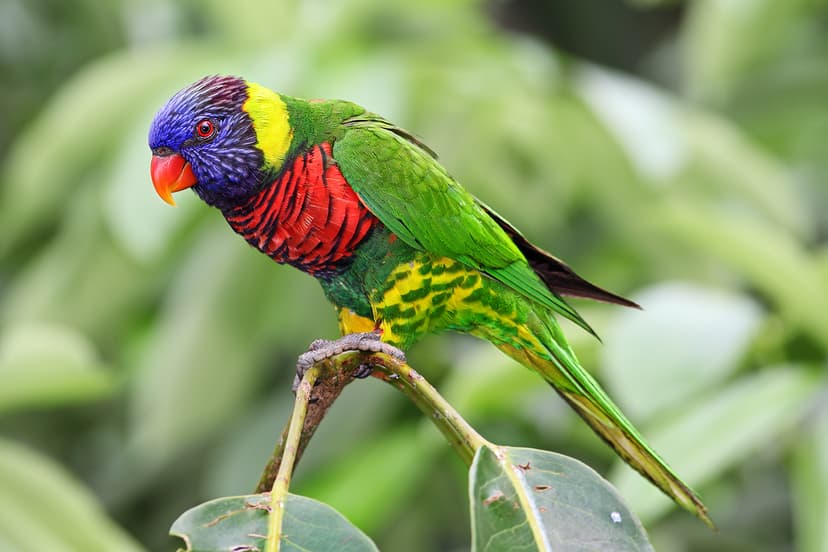
Coconut lorikeet
The coconut lorikeet is a vibrant parrot species primarily found in Melanesia and nearby regions, including New Guinea and the Solomon Islands. It is distinguished by its striking plumage, featuring a blue head, yellow collar, green upperparts, and a red breast, often with blue-black barring. This species plays a vital ecological role by feeding on nectar and pollen, utilizing a specialized brush-tipped tongue.

Mealy amazon
The mealy amazon, scientifically known as Amazona farinosa, is one of the largest parrots in the Amazona genus, predominantly found in tropical Central and South America. This species is distinguished by its primarily green plumage, often displaying a whitish tinge reminiscent of flour, and a distinctive bi-colored tail.
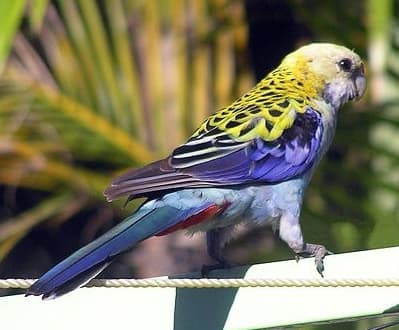
Pale-headed rosella
The pale-headed rosella is a moderately sized parrot native to northeastern Australia, characterized by its pale yellow head, white cheeks, scalloped black and gold back, and pale blue underparts. It inhabits open woodlands and feeds on seeds and fruits, nesting in tree hollows. This species readily adapts to aviculture and is a popular cagebird.