
Pearly parakeet
The pearly parakeet (Pyrrhura lepida), also known as the pearly conure in aviculture, is a Vulnerable species endemic to Brazil. Its plumage features a striking combination of greens, blues, and reddish-browns, with scaling on its breast giving it a pearly appearance. The species inhabits humid forests and is threatened primarily by habitat loss due to deforestation.
Key Facts
- ›Endemic to north-central Brazil.
- ›Measures 24-25 cm (9.4-9.8 in) in length and weighs 70-80 g (2.5-2.8 oz).
- ›Plumage is predominantly green with blue tinges, brown scaling on the breast, and reddish-brown on the upper tail.
- ›Inhabits humid terra firme forests, secondary forests, and clearings near forests.
- ›Classified as Vulnerable by the IUCN due to habitat loss and a decreasing population.
- ›Known for its harsh, piercing chattering calls, especially when in flight.
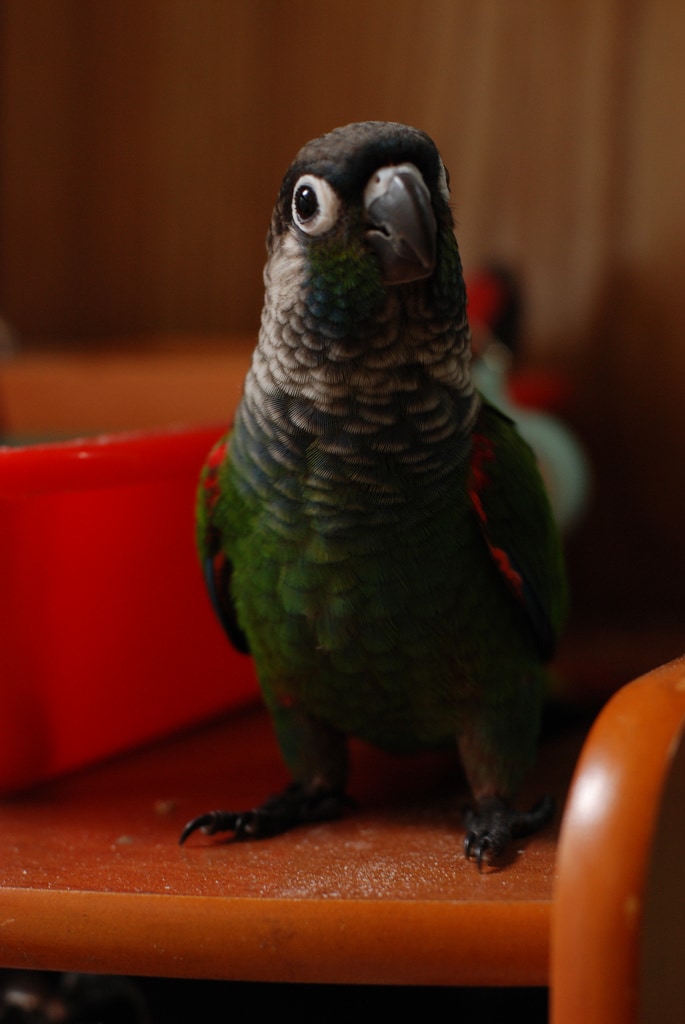
Pearly Conure
Brazil
Humid Terra Firme Forest, Secondary Forest, Clearings Near Forest
Green, Blue, Brown, Reddish-Brown, Black
- Buff scaling on upper breast giving a pearly appearance
- Blue tinge on breast and underparts
- Reddish-brown upper tail surface
- Black and cobalt blue primaries
Fruits
Grating quality calls, Given in fast series, Harsh and piercing chattering when in flocks
About Pearly parakeet
The pearly parakeet (Pyrrhura lepida), also recognized in aviculture as the pearly conure, is a distinct species of parrot native to Brazil. It belongs to the subfamily Arinae within the family Psittacidae, which encompasses African and New World parrots.
Description and Appearance
Measuring approximately 24 to 25 cm (9.4 to 9.8 inches) in length and weighing between 70 to 80 g (2.5 to 2.8 oz), the pearly parakeet exhibits a visually appealing plumage. Adults typically display a dark brown crown and buff ear coverts, with the face being a dull blue-green. A notable characteristic is the whitish bare skin encircling the eye. The upperparts are predominantly green with a bluish tint. The upper breast and neck sides are adorned with brown featuring buff scaling, which contributes to the species' 'pearly' namesake, and the breast itself has a blue tinge. The remaining underparts are green with a blue wash. The wings are largely green, distinguished by black and cobalt blue primaries and red underwing coverts. The tail is reddish-brown on its upper surface and blackish-brown underneath. Adult irises are dark brown, bills are brownish-black, and legs are slate-black. Immature birds share similarities with adults. There are recognized subspecies, including P. l. lepida, P. l. anerythra, and P. l. coerulescens, which show variations in head coloration, throat and breast shades, and the presence of red on the breast, belly, and wings.
Distribution and Habitat
The pearly parakeet's natural range is confined to north-central Brazil. The nominate subspecies is found in the northeastern states of Pará and northwestern Maranhão. Subspecies P. l. coerulescens inhabits eastern Pará, specifically between the Xingu and Tocantins rivers, while P. l. anerythra is found in central and northeastern Maranhão, with occasional sightings in Mato Grosso. The species thrives in the interior and at the edges of humid terra firme forests, as well as in secondary forests and sometimes in clearings situated near forested areas.
Behavior and Diet
Information regarding the pearly parakeet's movements is not well-documented. Its diet is known to include fruits, though further specifics about its feeding habits are limited. Similarly, its breeding biology remains largely unknown, with no specific details recorded about its reproductive cycles or behaviors.
Vocalizations
The calls of the pearly parakeet are described as having a rather grating quality, typically delivered in rapid sequences such as "krree krree krree" or "krek krek krek." These vocalizations are made both when perched and in flight, though perched birds are often observed to be silent. When in flocks, they communicate frequently and simultaneously, producing a noisy, harsh, and piercing chattering sound.
Conservation Status
The pearly parakeet has undergone several assessments by the IUCN. It was initially classified as Threatened, later moved to Near Threatened in 2004, and has been listed as Vulnerable since 2012. The species faces significant threats due to its limited geographic range and an unknown population size that is believed to be in decline. The primary threat identified is the loss of its habitat, as large tracts of lowland forests within its range have been severely altered or completely cleared. While the species is present in several protected areas, many of these sites are impacted by illegal logging activities, further jeopardizing its survival.
Source: Wikipedia ↗
Frequently Asked Questions
What is the pearly parakeet?
The pearly parakeet is a species of parrot native to Brazil, scientifically known as Pyrrhura lepida. It is recognized for its distinctive pearly-scaled breast and is currently listed as Vulnerable.
Where does the pearly parakeet live?
This species is found exclusively in north-central Brazil. Its habitat includes the interior and edges of humid terra firme forests, secondary forests, and sometimes clearings adjacent to forested areas.
What does a pearly parakeet look like?
Adult pearly parakeets are about 24-25 cm long and weigh 70-80 grams. They have a dark brown crown, buff ear coverts, and dull blue-green faces with whitish skin around the eyes. Their upperparts are green with a bluish tinge, and their breast is brown with buff scaling, giving a pearly appearance, along with blue tinges. Their wings have black and cobalt blue primaries, and their tail is reddish-brown on top.
What is the conservation status of the pearly parakeet?
The pearly parakeet is classified as Vulnerable by the IUCN. Its population is believed to be decreasing, primarily due to the severe threat of habitat loss from deforestation.
What are the pearly parakeet's vocalizations like?
The pearly parakeet's calls have a grating quality, often given in rapid series like "krree krree krree" or "krek krek krek." They vocalize both from perches and in flight, with flocks in flight producing noisy, harsh, and piercing chattering.
What is the diet of the pearly parakeet?
The pearly parakeet is known to feed on fruits. However, detailed information about its specific diet is limited.
Related Parrot species

Black-cheeked lovebird
The black-cheeked lovebird is a small parrot species native to southwest Zambia, characterized by its predominantly green plumage, brown head, red beak, and distinctive white eyerings. It inhabits deciduous woodlands where permanent water sources are available and faces vulnerability due to habitat loss and desiccation of water bodies. These birds are known for their loud, piercing shrieks and can gather in large flocks, particularly during the dry season.
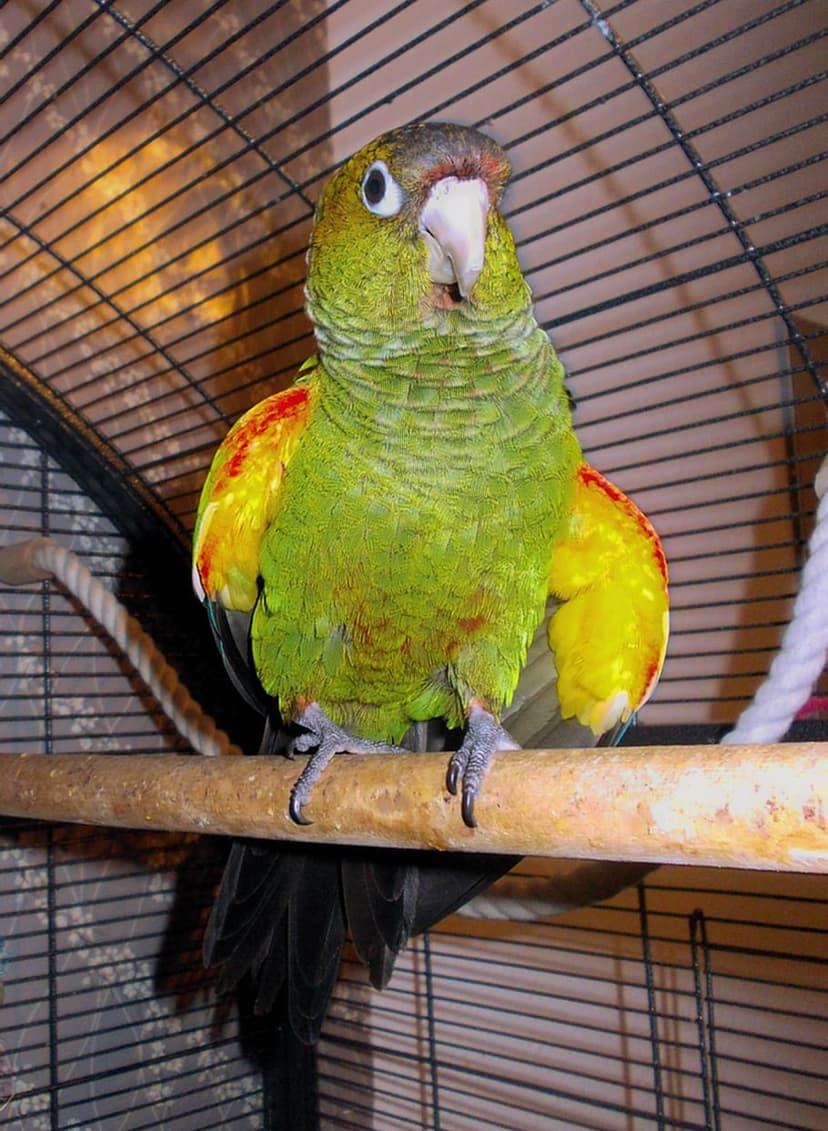
Fiery-shouldered parakeet
The Fiery-shouldered parakeet is a species of parrot native to the montane forests of Guyana, Brazil, and Venezuela. It is distinguished by its grey head, green body with yellow and orange markings on the wings, and a reddish-brown abdomen. This species is generally considered fairly common, though its habitat faces threats from logging.
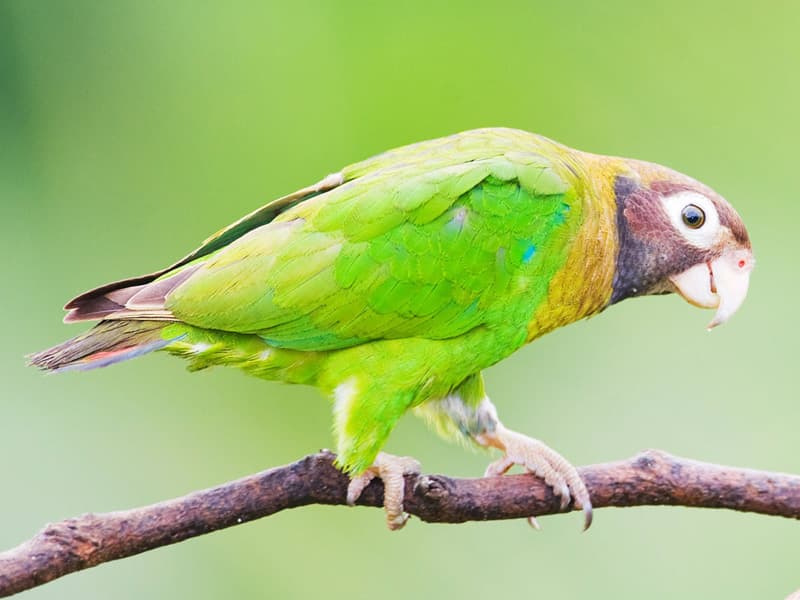
Brown-hooded parrot
The brown-hooded parrot is a species of parrot found from Mexico to Colombia, belonging to the family Psittacidae. It is distinguished by its vibrant plumage, featuring a reddish-brown crown and throat, olive-yellow breast, and green body with blue accents on the wings and tail.